In April 2024, the Urban Design Center’s Justin Ritchey was selected to attend the 2024 National Planning Conference in Minneapolis. Here is his review of the experience.
Minneapolis – How the Built Environment Can Make a Happy City
When Minneapolis comes to mind, you probably think of snow, frigid winters, and icy lakes. Or maybe the famous Mall of America in the neighboring suburb of Bloomington, one of the largest malls in the country with a rollercoaster inside. So, it might come as a surprise that Minneapolis appeared on the Institute for Quality of Life’s Happy City Index 2024.
When the National Planning Conference 2024 (NPC24), hosted by the American Planning Association (APA), took place in April this year, I was excited to visit Minneapolis for the first time. I wanted to see for myself what made this Midwestern city stand out. While The Institute for Quality of Life used several metrics to determine the “happiness” of the city, I focused on how the physical environment and various city investments could enhance the quality of life. This led to three contributing factors: outdoor public open space, multi-modal transportation, and affordable housing.
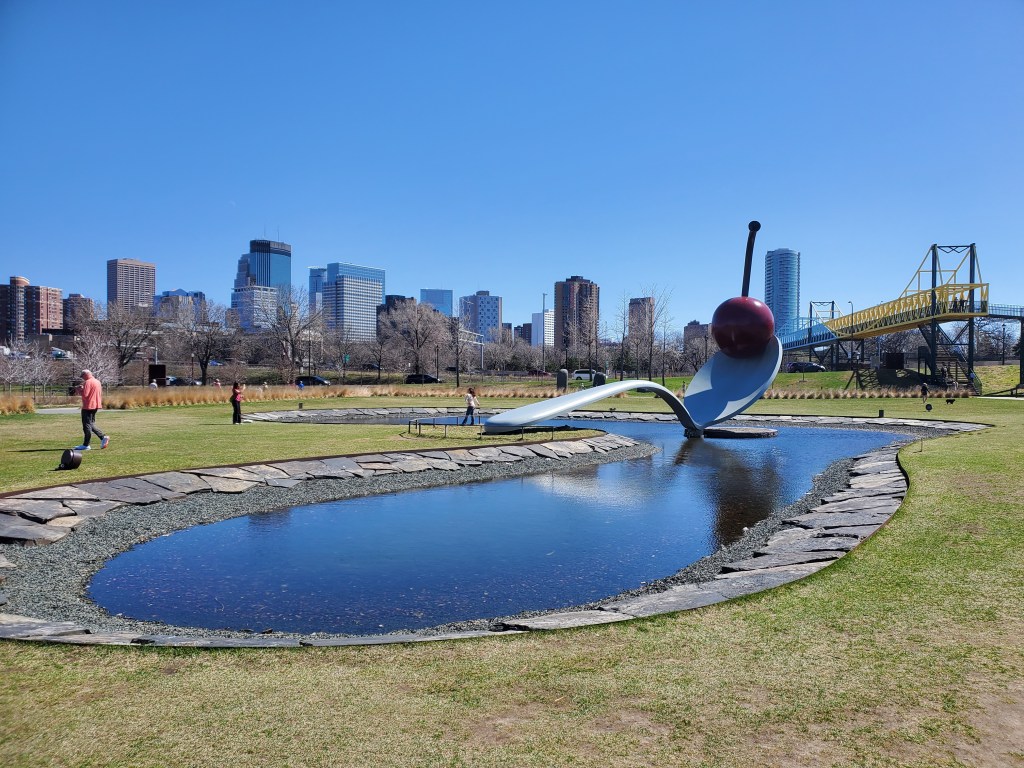
The iconic Spoonbridge and Cherry at the Minneapolis Sculpture Garden
Outdoor Public Space
My first day in the city was warm and sunny – fairly unusual for Minnesota in mid-April. To take advantage of the weather, I strolled across the historic Stone Arch Bridge which overlooks the Mississippi River and St. Anthony Falls. Originally built in the early 1880s for the railroad, it was later converted into a pedestrian bridge in the mid-1980s. Today, the bridge is full of life; people of all ages enjoying the outdoors.
While the City of Lakes is known for harsh winters, it reawakens in the spring, bustling with people eager to get outside. This is due, in large part, to intentional investment in public open space. The city has 180 parks, 55 miles of biking and walking paths, and 22 lakes. The Mississippi River also provides an active riverwalk that runs through the heart of downtown, offering even more trail connections and adjacent park spaces. These outdoor public spaces give locals a place to unwind, explore nature and socialize.
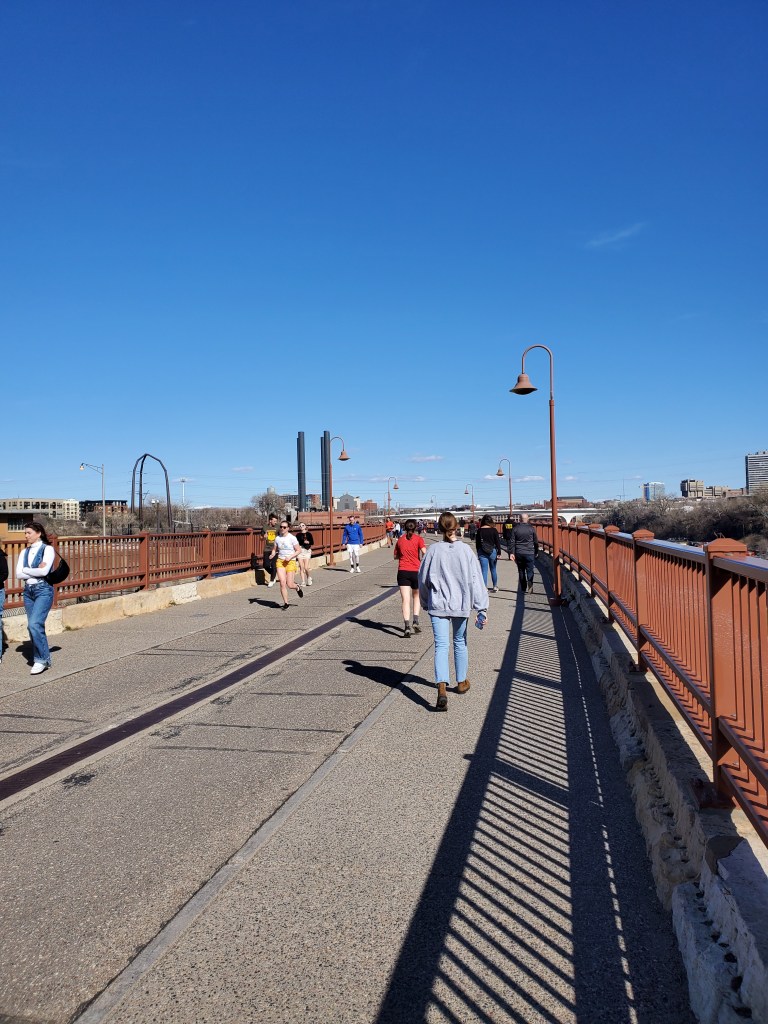
The historic stone arch bridge spanning over the Mississippi River in Downtown Minneapolis
Multi-Modal Transportation
During my stay cars were never a prerequisite to enjoying the city. When I arrived, I hopped on the light rail from the airport to downtown. The walk from the hotel to the convention center was an easy ten-minute walk along wide, tree-lined sidewalks following the downtown grid. Everything was accessible and accommodating for a car-free lifestyle.
Minneapolis has an expansive multi-modal transportation system that includes buses, two light rail lines, a commuter train and numerous bike lanes and greenways connecting the city. This robust transportation network makes it easy for residents to get around without a car. Taking transit, biking or walking can reduce the stress associated with an automobile commute, reduce overall daily trips, and provide an enjoyable experience that’s connected to the built environment. Minneapolitans can still choose to drive a car but, most importantly, they do have a choice.
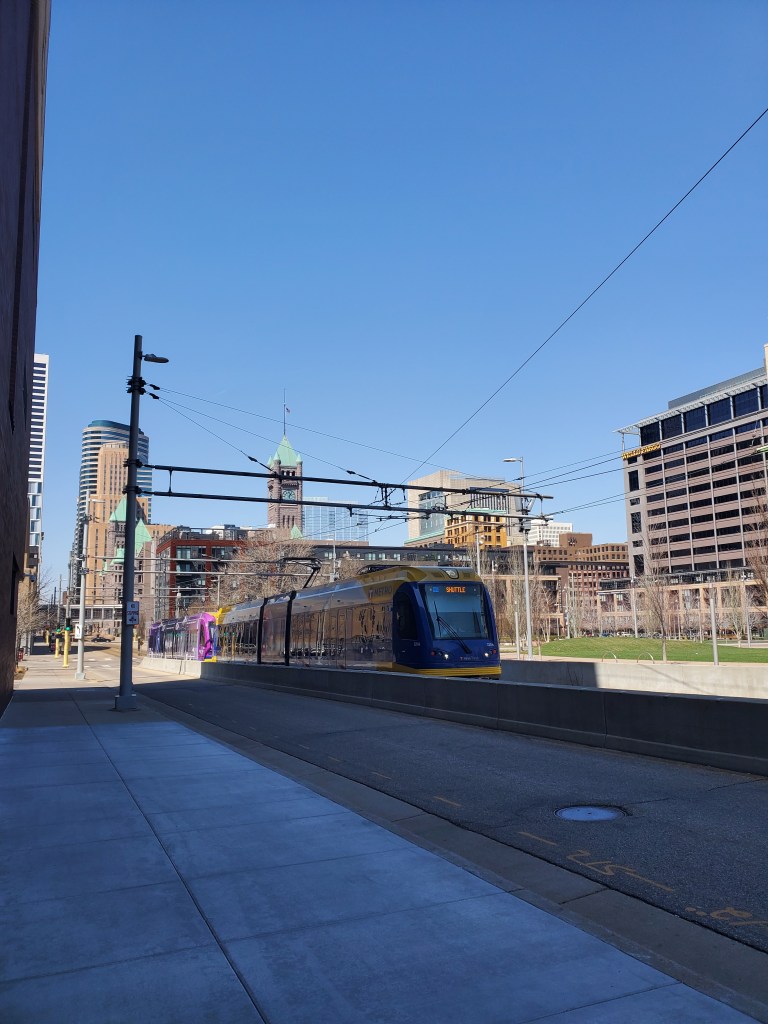
The Blue Line Light Rail in Downtown Minneapolis
Affordable Housing
During my stay in the city, I noticed a variety of housing types. Many old industrial warehouses and buildings were transformed into offices, loft apartments, and food halls. The variety of housing types, and construction of new multi-family housing has increased supply and kept prices relatively low for renters and buyers compared to other cities.
Although housing prices are rising in America, Minneapolis is trying to keep up with demand by allowing more types of housing to be built. One contributing effort is that Minneapolis was one of the first cities in the US to eliminate single-family zoning. This allows duplexes and triplexes in former single-family-dwelling zoned neighborhoods, which in turn offers lower housing costs and increased density. Accessory Dwelling Units (ADUs) are also permitted, providing additional housing options that can accommodate individuals at different stages of life.
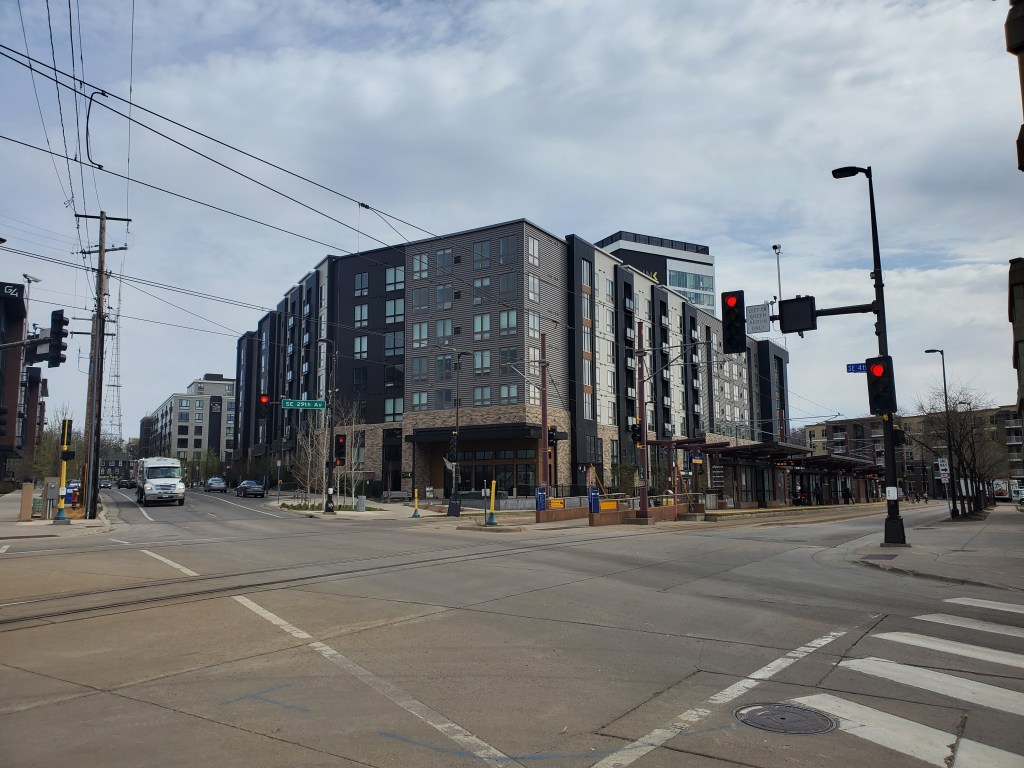
The Link Minneapolis, a mixed-use apartment complex, next to the Prospect Park Green Line Station
Conclusion
In the few days I was able to experience Minneapolis, it was clear why it was labeled one of the happiest cities in the United States. Numerous outdoor spaces for recreation, accessible transportation options and housing options combined to create an incredible experience for residents and visitors alike. It serves as a model for other American cities by illustrating the importance of investing in the built environment in the right ways – through infrastructure that serves all modes of travel, transit options, and public space – and creates an incredibly special urban experience.
For more information on the National Planning Conference and how it helps inspire our work, please check out their website.
 People make Cities