Written by Madison Dugar
Philadelphia is a city where history meets innovation. Known as the birthplace of the United States, it has evolved into a hub of diverse cultures. With one of the largest and oldest transit systems in the country, SEPTA (Southeastern Pennsylvania Transportation Authority), Philadelphia serves as an ideal setting to explore the intersection of transportation, community, and urban design. The Mpact Transit + Community Conference provided a unique opportunity to witness firsthand how the city’s rich past shapes its present and future.
Mpact 2024
The Mpact Transit + Community Conference unites practitioners, leaders, and advocates who share a vision of more just and resilient transit-oriented communities. The 2024 conference drew nearly 1,100 attendees from the US, Canada, Mexico, and beyond for four days of learning, exploration, and connection. Beyond focusing solely on transit experiences, conference sessions delved into all aspects of how cities can become more livable and vibrant—from placemaking and community building to sustainability and infrastructure improvements. One of the most engaging aspects was experiencing Philadelphia as a living case study. Through mobile workshops and walking tours, attendees explored firsthand how the city’s design, history, and transit systems intersect to create more connected communities.
Mobile Workshops
Philadelphia consistently ranks among the nation’s most walkable cities. Downtown Center City is particularly pedestrian-friendly, with memorable neighborhoods like Chinatown, Independence Mall, Old City, Gayborhood, and the area around City Hall all within walking distance. On the conference’s first day, current city staff provided an overview of Philadelphia’s history and planning, from the Lenni Lenape who first inhabited the land, to William Penn’s original plan for the street grid and squares, to more recent initiatives like the Philadelphia2035 Comprehensive Plan.
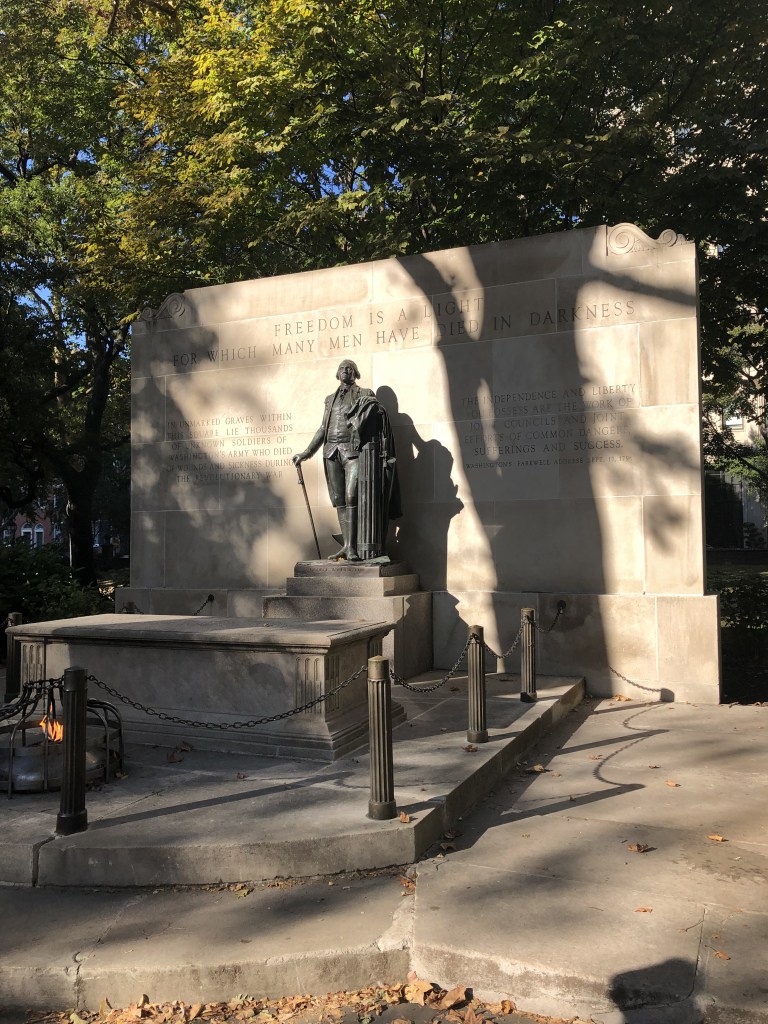
I also received an in-depth review of the city’s 7th Ward, a historic Black neighborhood. From the late 18th century until the 1960s, Philadelphia’s 7th Ward thrived as a Black and immigrant community, home to abolitionists, educators, athletes, and activists, as well as African American churches, schools, and institutions. The 7th Ward served as a crucial stop on the Underground Railroad and the Great Migration. The tour emphasized how the fight for equitable transit access has deep historical roots. From the desegregation of Philadelphia’s trolleys over a century ago to today’s efforts ensuring inclusive urban mobility, the 7th Ward’s legacy continues to influence public transit policy and planning.

Sustainability and Public Art
Philadelphia’s vibrant arts scene is as defining as its history. Walking through the city, one cannot miss the thousands of murals that transform streets into canvases, telling the stories of its diverse neighborhoods. As the Mural Capital of the World, Philadelphia functions as an outdoor art gallery with over 4,000 murals. This abundance stems from Mural Arts Philadelphia, the nation’s largest public arts program, which completes 50 to 100 public art projects annually, stimulating neighborhoods through participatory public art.
The program originated in 1984 with the Philadelphia Anti-Graffiti Network during Mayor W. Wilson Goode’s administration. Artist Jane Golden partnered with local graffiti writers to channel their creativity toward public art projects. The initiative evolved into The City of Philadelphia Mural Arts Program in 1996 and became Mural Arts Philadelphia in 2016. From its inception, the program has maintained a community engagement approach centered on co-creation and meeting communities’ needs.
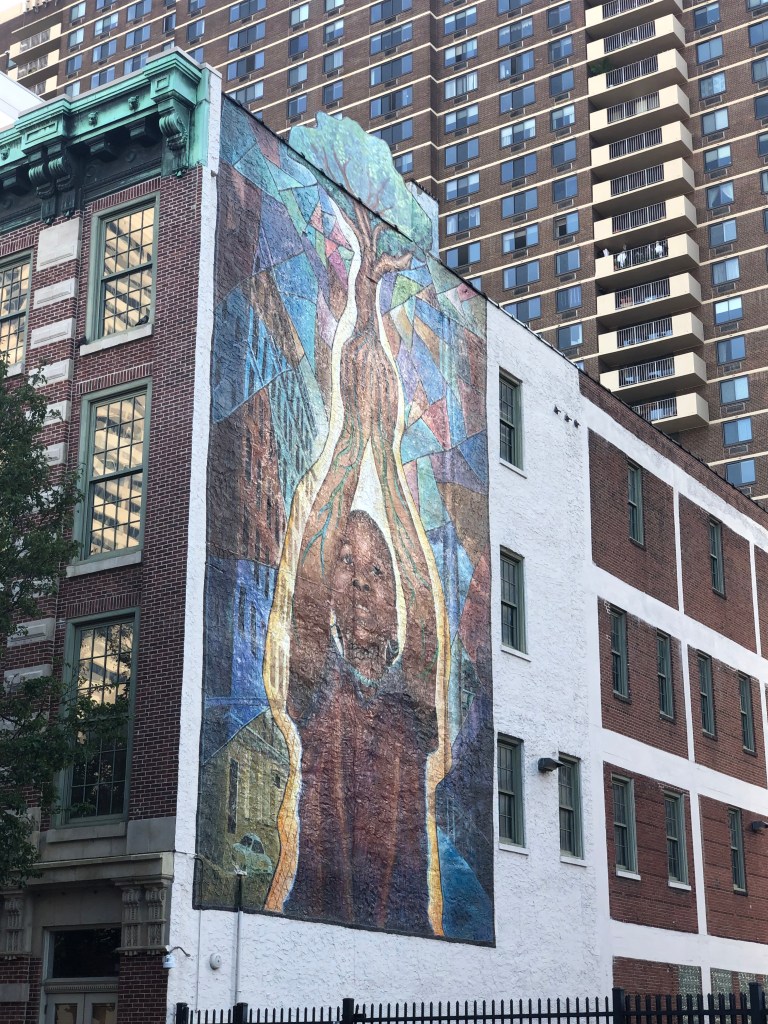
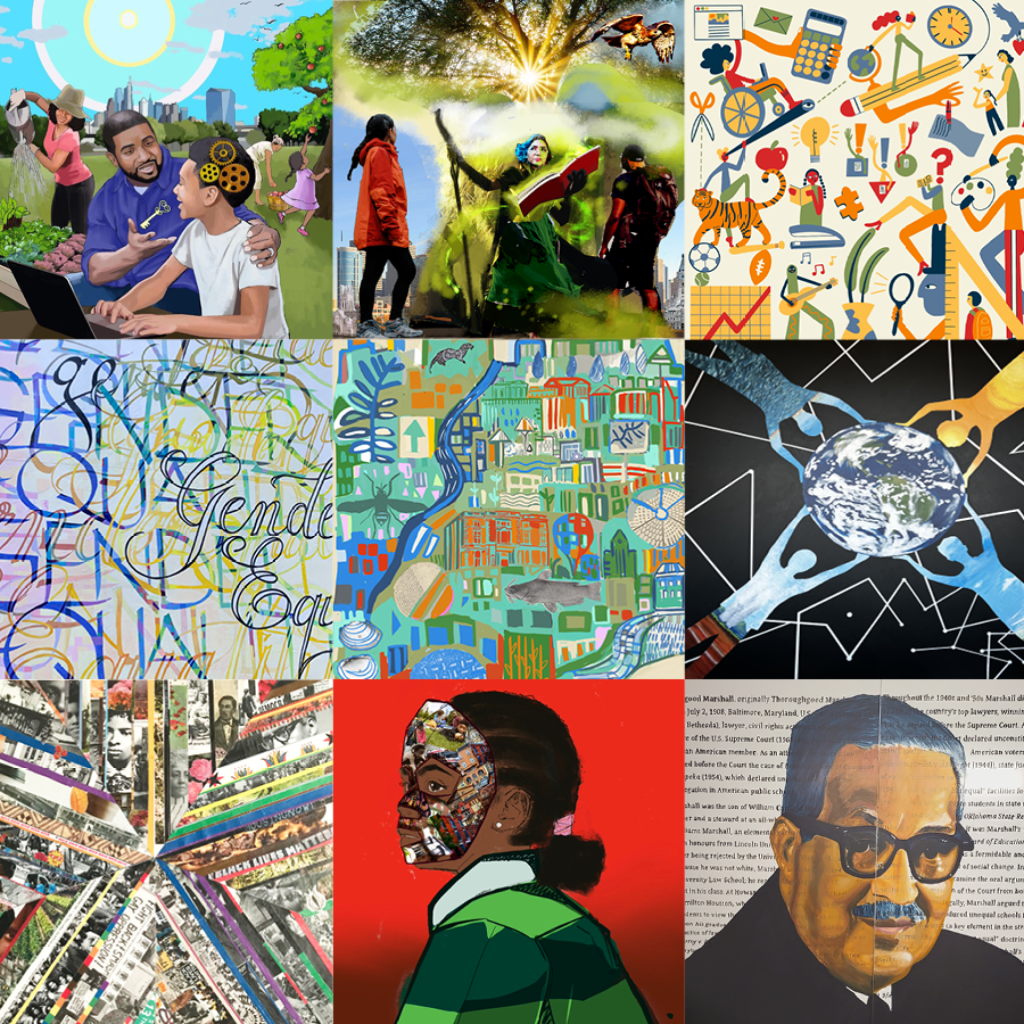
Philadelphia’s mural programs extend beyond aesthetics to serve as catalysts for social change. During a conference tour, we explored a city initiative that integrates art with global sustainability efforts through a partnership with the Global Philadelphia Association. This organization collaborates with local partners to fund and create murals focused on United Nations Sustainable Development Goals. As we moved from mural to mural, we learned about SEPTA’s Sustainability Playbook, which defines and measures progress toward 13 specific goals.
The first mural on our tour commemorated Goal #5: Gender Equality. Artist Barbara Smolen joined us and explained her design decisions. The mural combines various typography styles, with Roman letters evoking the Declaration of Independence while centering gender equality. Contrasting blue and yellow tones create luminosity, drawing attention upward from street level.
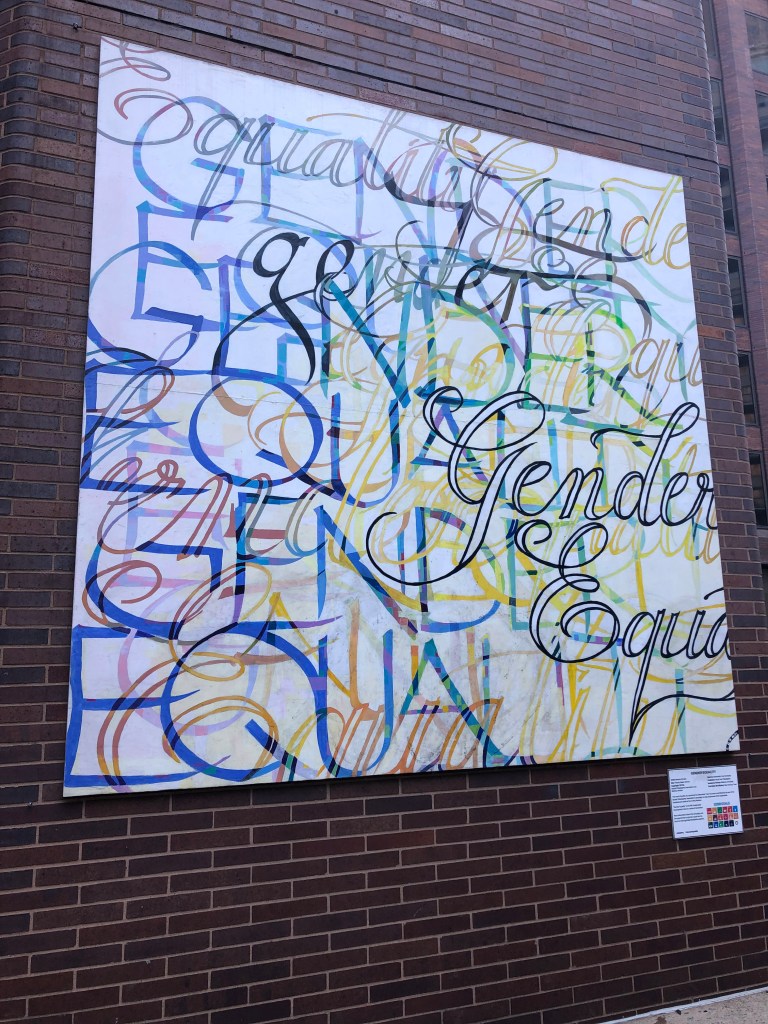
SEPTA staff accompanying the tour addressed how gender equality influences mobility projects. Two-thirds of SEPTA riders are women, yet transit services haven’t always accommodated women’s needs. Stations, trains, and buses are now being redesigned to better serve pregnant people and caregivers, including expanded space for strollers on buses.
Through public art, the mural program actively expresses and envisions future sustainability goals. The Sustainable Development Goals extend beyond traditional environmental sustainability to encompass health, education, reduced inequalities, clean water, and sanitation. Each mural project includes a grant to a related local organization, connecting global issues to Philadelphia’s communities. Most participating artists have deep roots in the city and strong community connections.
Looking Forward
Philadelphia’s rich history, commitment to public art, and focus on sustainability made it an ideal host for the Mpact Transit + Community Conference. The city’s dedication to honoring its past while actively shaping a more inclusive and resilient future was evident throughout the conference sessions and walking tours.
The lessons from Mpact 2024 extend beyond the conference itself. Philadelphia exemplifies how transit, public art, and sustainability can converge to build a more inclusive and resilient city. Inspired by the place-based community engagement work I experienced, I look forward to bringing these insights to our placemaking efforts at the Charlotte Urban Design Center. By working collaboratively—planners, artists, and community advocates—we can transform our cities into spaces that are not just functional, but truly vibrant and inclusive for all.
P.S. Don’t forget to sign up for our Connections Newsletter to stay up to date with UDC projects around the city!
 People make Cities