Written by Chad Cramer
What is the Triple Bottom Line (TBL)?
Decisions are often driven by a predominant metric—the bottom line. We frequently hear decisions framed with questions like: How much will it cost? How much profit will it generate? This approach can be problematic, as prioritizing economic return often comes at the expense of the natural world and social values. This is where the Triple Bottom Line (TBL) framework comes into play. The TBL framework considers a decision or endeavor’s environmental, social, and economic impacts. Also known as the 3P framework, Planet, People, and Profit, it seeks to balance outcomes that benefit shareholders and stakeholders, accounting for our world and the billions living in it.
Urban design plays a crucial role in embodying the principles of the Triple Bottom Line. It can help cities develop in a way that balances environmental sustainability, social equity, and economic viability. For instance, incorporating green infrastructure like parks and urban forests can address environmental concerns by reducing heat islands and improving air quality, while also enhancing the social value of shared public spaces. Prioritizing mixed-use developments and accessible transportation systems can foster social inclusion, increase mobility, and reduce economic disparities, reflecting TBL’s holistic approach. In essence, urban design guided by the TBL framework creates livable cities that thrive economically while respecting the planet and uplifting their communities.
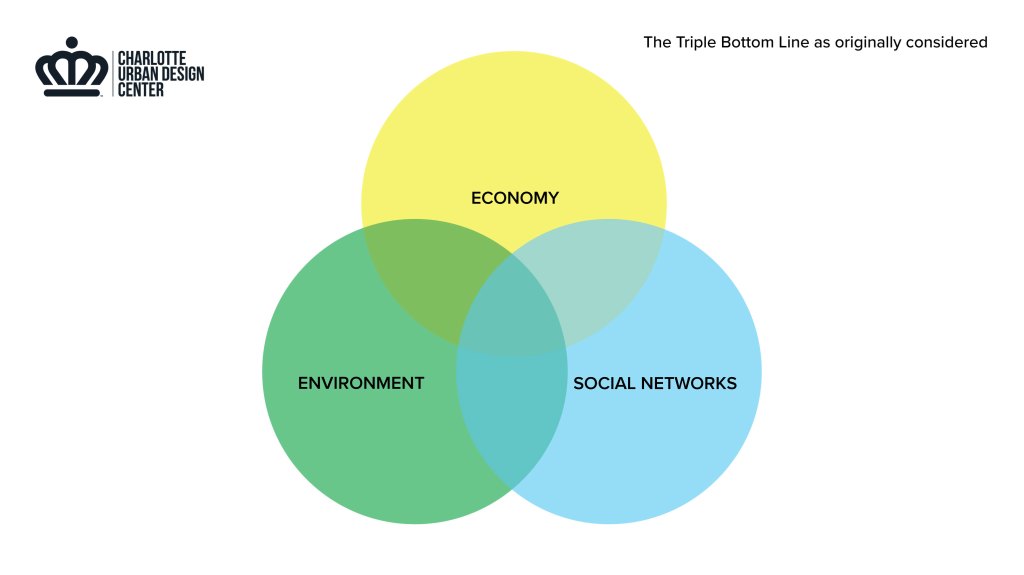
I am from New Orleans, have lived in several different regions across the U.S., and have seen firsthand the importance of a livable environment. It’s hard to thrive if you’re underwater or facing wildfire threats. Typically, the TBL framework treats its three focus areas as equally impactful metrics with the TBL achieved when all three intersect each other (see illustration above).
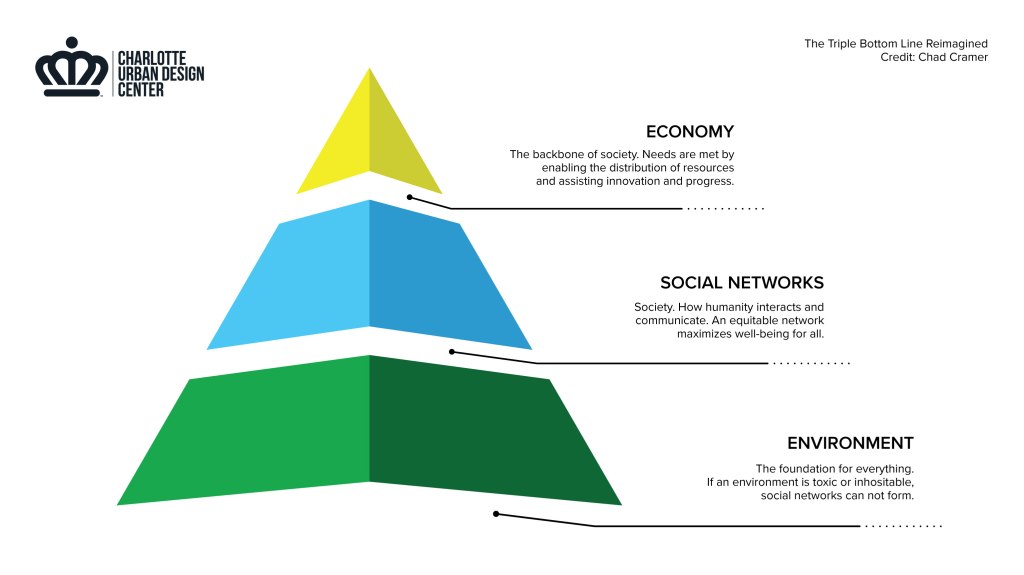
I propose reconsidering the TBL by envisioning it as a three-tiered pyramid instead of three equally weighted components: the environment forms the base, social considerations occupy the middle, and economics cap the top. Each focus area depends on the foundation below it. For instance, our environment is fundamental to our very existence. Society cannot have social networks if our environment is inhospitable, Similarly, we can’t sustain an economic system without functioning social networks.
Projects that embrace the TBL approach – those that collectively focus on environmental, social, and financial performance – generally deliver more favorable long-term outcomes compared to those that focus exclusively on profit. They are more sustainable and yield better long-term outcomes for all stakeholders. Let’s explore a few urban design projects and programs in and around Charlotte that embody the TBL principles while achieving the outcomes we strive for in urban design initiatives.
Environmental Focus: Little Sugar Creek Greenway
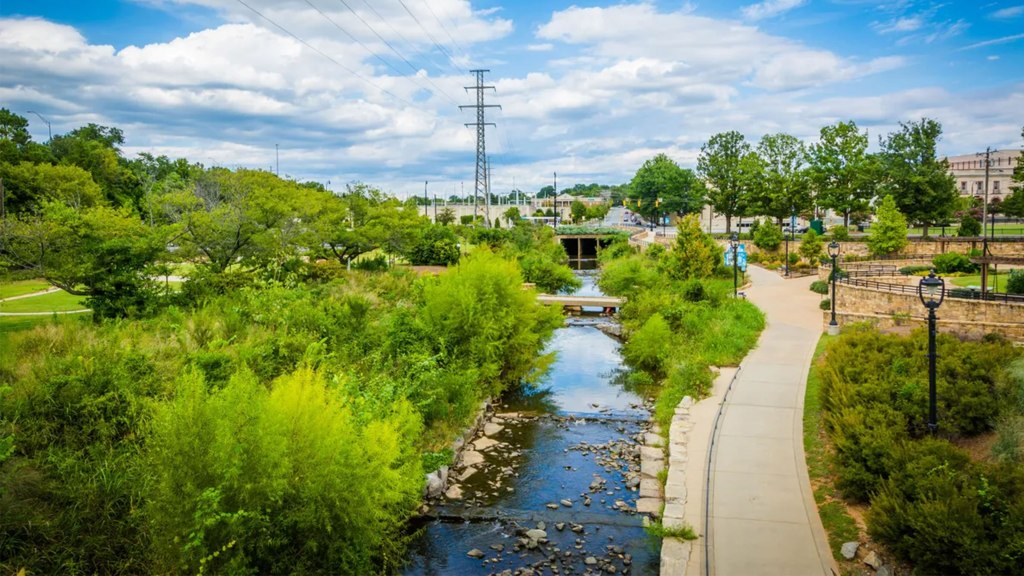
The Little Sugar Creek Greenway is a 19.5-mile linear park and stream restoration project led and managed by Mecklenburg County Park and Recreation. It connects parks, neighborhoods, and landmarks, providing scenic routes for walking, jogging, and cycling. This project is an exemplary example of solving large-scale environmental concerns through placemaking.
Achieving the Triple Bottom Line
Environmental Benefits: The greenway restores the natural functions of the floodplain, improving water quality and providing wildlife habitats. During heavy rain events, portions of the greenway are designed to flood and detain the water when the need for water storage capacity is highest. A variety of local plant species supplement the path, providing ecological functions such as indigenous tree canopy and habitat for various local species of fauna. It also uses recycled urban wood waste for signs, benches, and fences, reducing landfill waste and promoting sustainability.
Social Benefits: The greenway offers recreational spaces for the community, promoting physical and mental well-being. It features local art, play elements, and cultural expressions, fostering community engagement and placemaking. The trail links various destinations, making it accessible and convenient for residents to connect with one another through healthy outdoor activities.
Economic Impact: As Charlotte’s primary urban waterway, the Little Sugar Creek and its accompanying greenway have supported economic growth along much of its length. By treating the greenway as “street frontage”, trail-oriented development along urban destinations provides thoughtful design aesthetics that prioritize an inviting and cohesive public realm, seamlessly connecting to nearby retail and residential areas. The greenway offers a scenic, natural environment for recreation while boosting the quality of life and driving local business vitality along its corridor.
Social Focus: The Charlotte Urban Design Center (UDC)
The UDC focuses on enhancing the city’s built environment through urban design, placemaking, and community engagement. It transforms underutilized spaces into vibrant public areas, supports local artists by actively involving them in placemaking initiatives, and fosters community collaboration with initiatives like the Placemaking Grant Program. The center also contributes to infrastructure, transit, and economic development projects, ensuring Charlotte’s growth is, sustainable, inclusive, community-driven, and acutely focused on enhancing the pedestrian realm.
Achieving the Triple Bottom Line
Environmental Sustainability: The UDC is involved in various projects that promote environmental stewardship and green infrastructure. For example, the Urban Arboretum Trail seeks to, among other things, highlight and enhance the city’s lush tree canopy. This improves air quality, helps regulate temperature, and supports biodiversity. Additionally, the UDC regularly partners with other city departments to encourage environmental stewardship across an array of capital improvements.
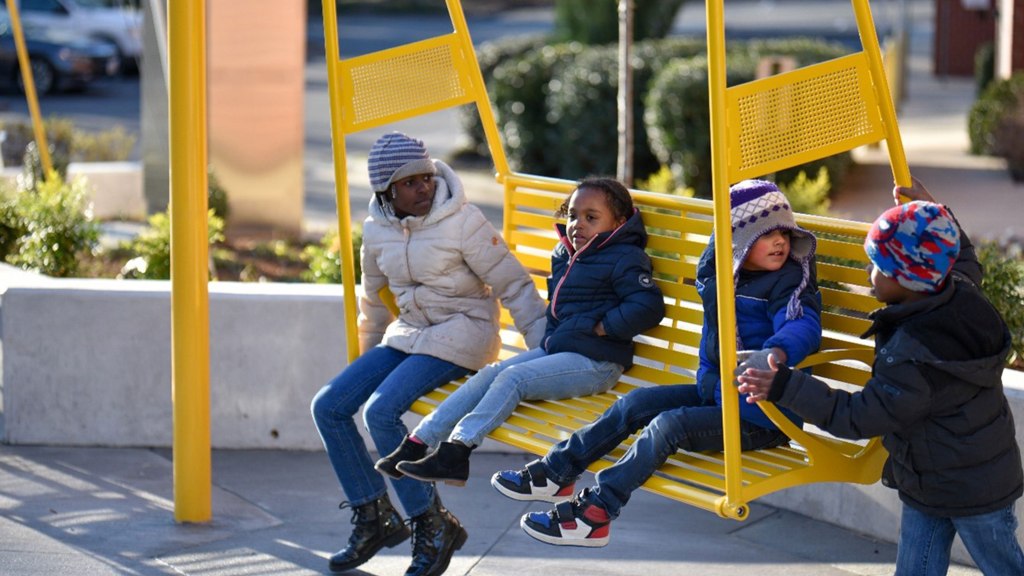
Social Benefits: The UDC supports evolving neighborhoods to retain their culture and identity and enhances a sense of place by co-creating spaces for social interaction, artistic expression, and recreation with community members and stakeholders. The UDC consistently implements projects that enhance a sense of place in neighborhoods and include murals, street furniture, pop-up plazas, and community gardens, among others. These interventions bring people together and enhance the quality of life in the neighborhoods in which they’re located.
Economic Impact: Investing in public spaces and placemaking interventions can support economic growth in neighborhoods, benefit local businesses, and promote reinvestment within neighborhoods.
Economic Focus: The South Park Loop
Upon completion, the SouthPark Loop is designed to be a 3-mile urban trail for pedestrians and cyclists. It is being constructed in phases by a coalition of community partnerships and investments from the private and public sectors, including South Park Community Partners and the city. It connects key neighborhood centers, promotes wellness, and boosts the local economy while enhancing the area’s natural beauty with plantings, green spaces, and public art. The Loop provides a walkable network in an otherwise vehicle-centric area.

Achieving the Triple Bottom Line
Environmental Sustainability: The Loop promotes environmental sustainability by encouraging alternative modes of transportation, such as walking and biking, which reduces carbon emissions and traffic congestion. The area is a regional destination, and The Loop offers the ability for visitors to arrive in the area, “park once,” and then walk around. The use of eco-friendly materials and practices in the construction and maintenance of the Loop further supports its commitment to environmental stewardship.
Social Benefits: The Loop provides a safe and accessible space for pedestrians and cyclists to recreate, shop, and relax. The trail includes amenities like benches, bike racks, and public art, making it a welcoming place for all. Additionally, events like the Loop 5K + Block Party promote fitness, wellness, and community interaction. Vibrant furniture and signature crosswalks create a welcoming environment for pedestrians and contribute to the area’s sense of place.
Economic Impact: The Loop supports the economic vitality of the SouthPark area by serving as a connector for businesses, residents, and visitors alike. This pedestrian-friendly trail seamlessly links commercial centers, shopping districts, and dining establishments with nearby neighborhoods, fostering a vibrant, interconnected community. Walkable spaces naturally attract visitors and can create increased foot traffic that benefits the many nearby businesses. This boost in pedestrian activity translates to higher spending within the local economy.
In Summary
Great urban design uses a balanced approach to implementation and holistically considers best practices to maximize well-being. The local examples discussed illustrate how a comprehensive approach to urban design can amplify positive outcomes.
What are some projects that embody these principles to you? Share your favorites in the comments below—we love discussing innovative projects!
For more information on the Urban Design Center and the work we do, visit our website or follow us on Instagram @clturbandesign!
 People make Cities