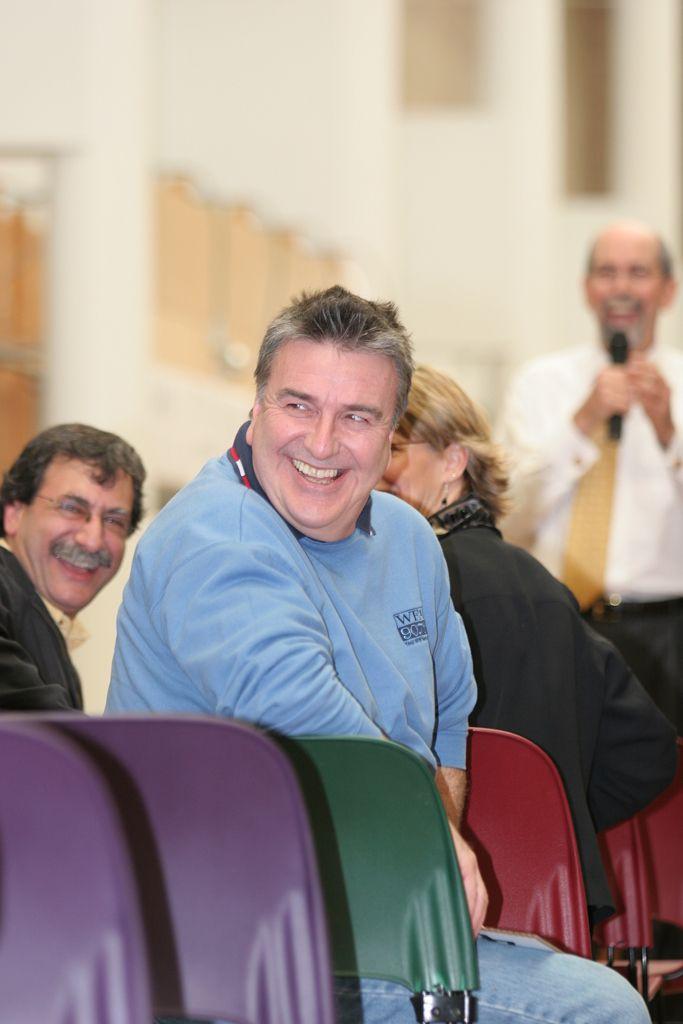
On Thursday, October 23, the City of Charlotte Urban Design Center, in partnership with the UNC Charlotte David R. Ravin School of Architecture and Charlotte Center City Partners, hosted the fifth annual Urban Design Awards, affectionately known as The Urbies. Held at the Urban Design Center’s South End Studio, the event brought together designers, planners, community leaders, and residents to celebrate the people and projects shaping Charlotte’s built environment.
Celebrating Design That Shapes Charlotte
The Urbies are an annual celebration of outstanding urban design in Charlotte—recognizing projects that enhance the public realm, foster community connection, and elevate the quality of life in our city. This year’s awards drew over 180 nominations, reflecting the growing momentum around thoughtful, people-centered design across neighborhoods.
“Urban design at its best elevates the everyday—shaping places that are not only functional and resilient but also deeply enriching,” said Blaine Brownell, Director of the UNC Charlotte School of Architecture. “The Urbies remind us that thoughtful design can transform the city into a living framework for culture, sustainability, and collective memory.”
A Community-Driven Selection Process
A diverse jury of 10 urban design professionals and community advocates reviewed the nominations, selecting winners based on their contribution to the public realm, innovation, and community impact. Categories included Urban Design Champion, Neighborhood Champion, and several project-based awards recognizing excellence in public space, architecture, and mobility.
Will Linville City of Charlotte (co-chair)
Daniel Wright UNCC (co-chair)
Tesho Akindele Developer
Kyle Baugh Designer
Jen Brooks Meck Park & Rec
Joe Bruno Journalist
Erin Chantry City of Charlotte
Shawn Kennedy Developer
Ming-Chun Lee UNCC
Cathy Morrison Designer
The People’s Choice Award, the category determined by public vote, gave Charlotte residents the opportunity to spotlight a space they love. The project with the most nominations took home the honor—demonstrating the power of community voice in shaping our city.
A Night of Celebration
The ceremony was held at the Urban Design Center’s South End Studio, a hub for civic engagement and design collaboration. The space served as the perfect backdrop for an evening of recognition, storytelling, and connection.
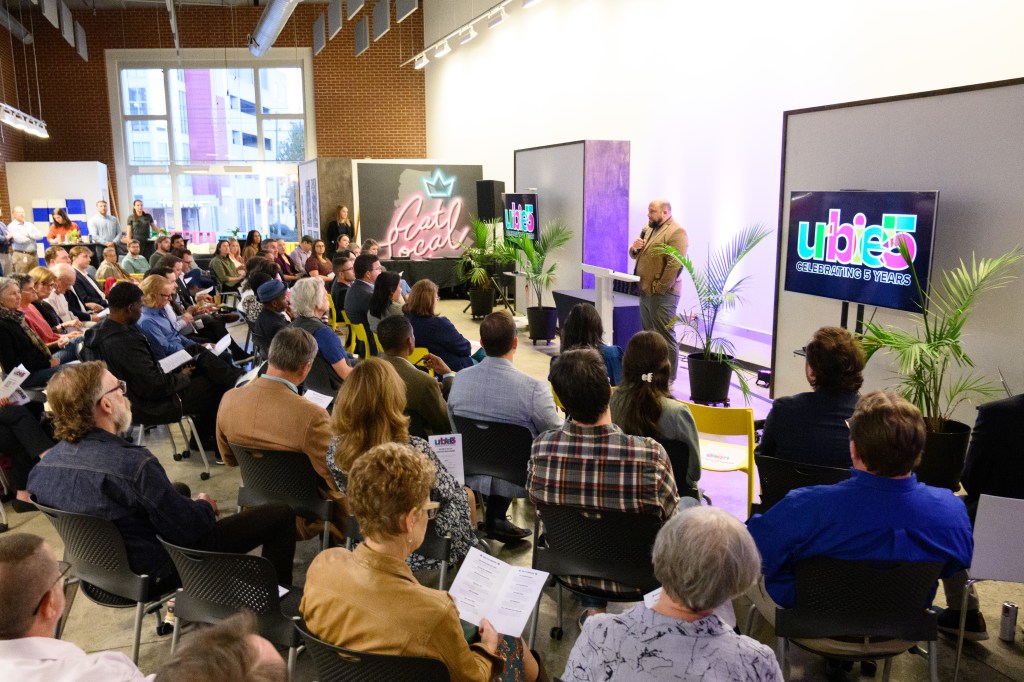
“As Charlotte continues to grow, thoughtful urban design plays a vital role in enhancing the quality of life for all residents,” said Monica Holmes, Interim Director of the Charlotte Planning, Design & Development Department. “The Urbies celebrate the people, projects, and partnerships that make our city’s spaces more vibrant and people-focused. I encourage everyone to visit these award-winning places and explore how their design ideas could inspire your own neighborhood, showcasing the creativity and community spirit that make Charlotte shine.”
Explore the Winners
Watch the video below to learn more about the role of urban design in the Queen City and the winners of the 2025 Urbies Awards.
Click on each award to learn more about the projects and their contributions to urban design. To see a complete list of the this year’s nominations, click here.
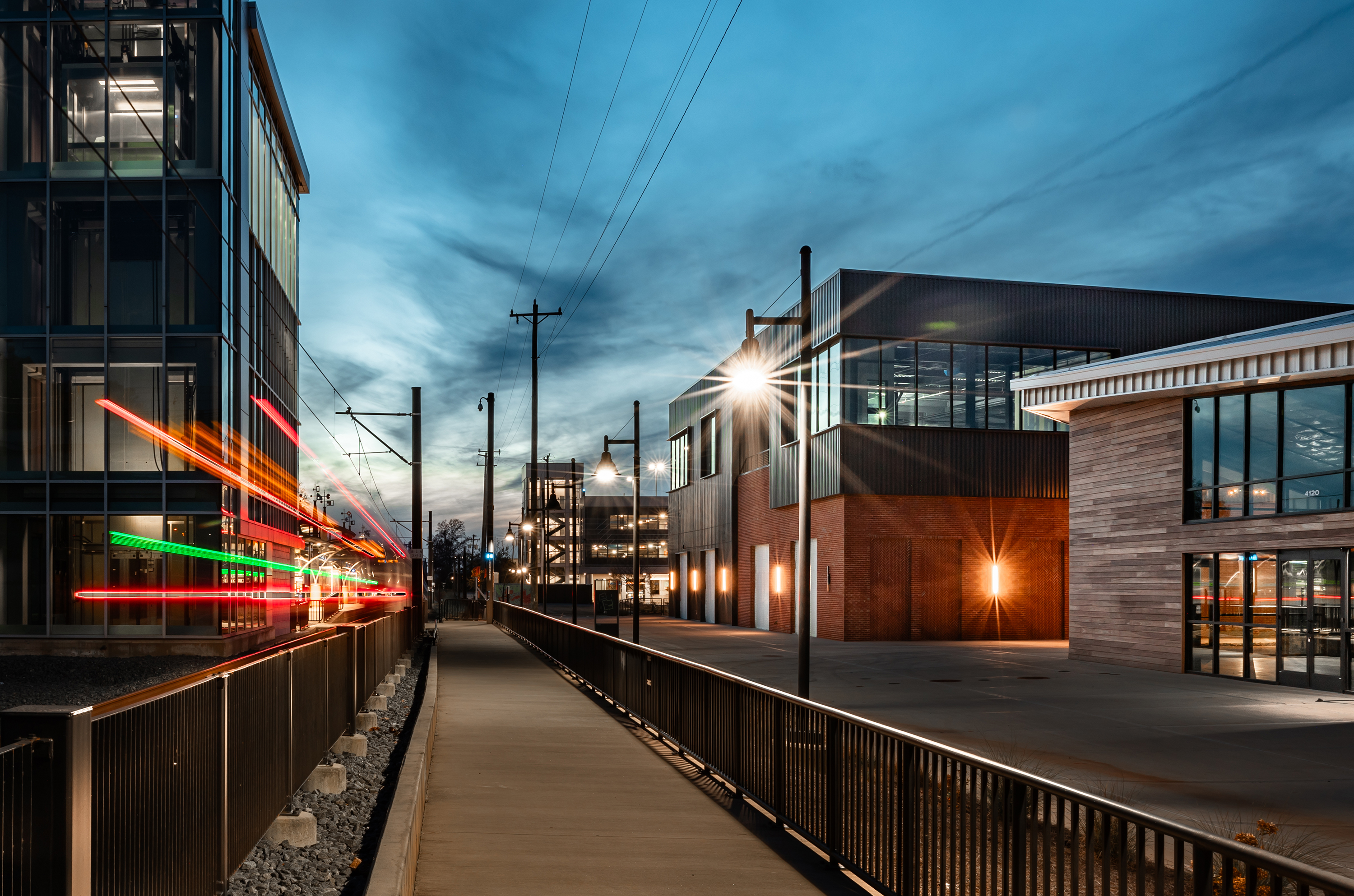
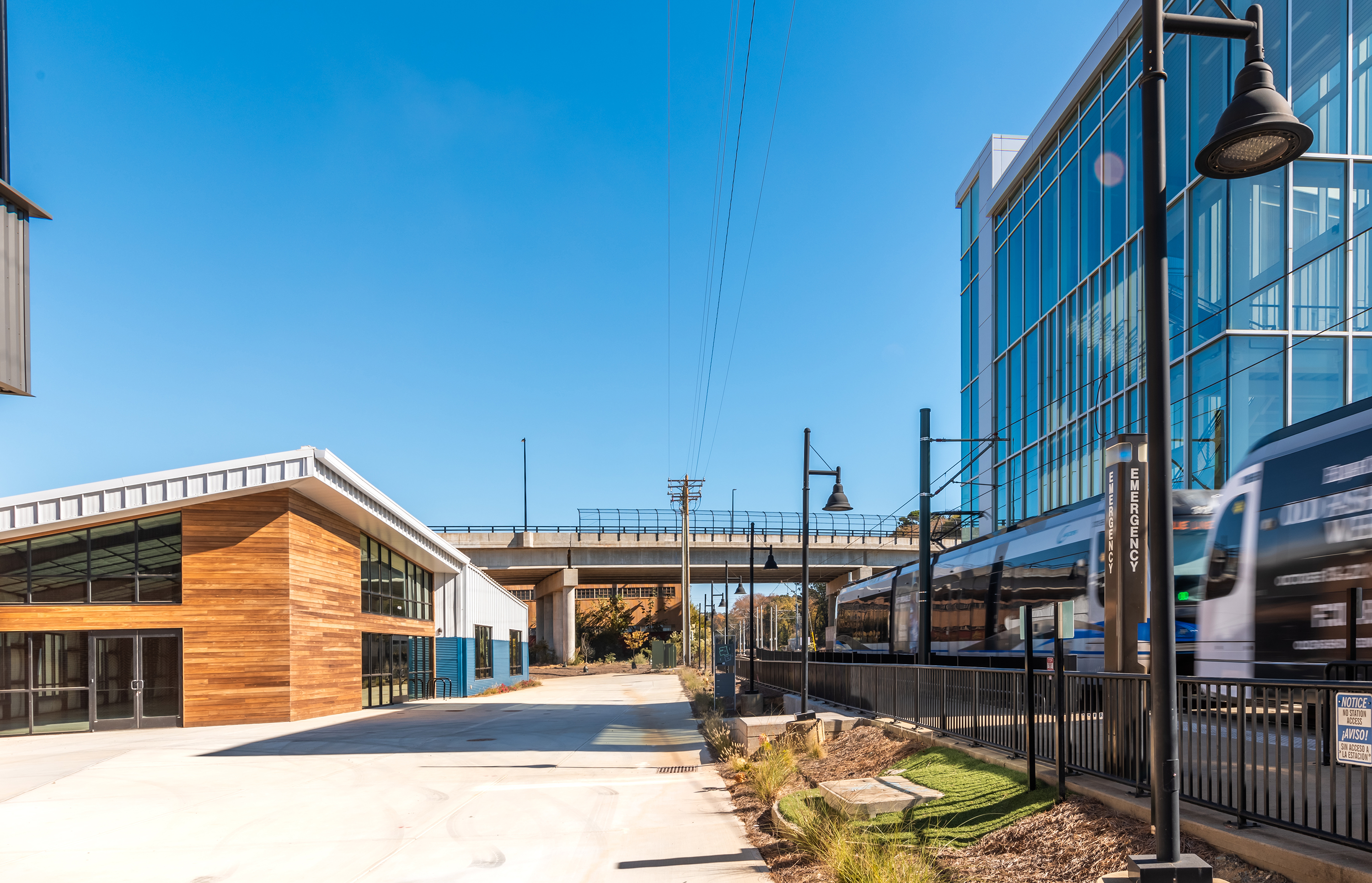
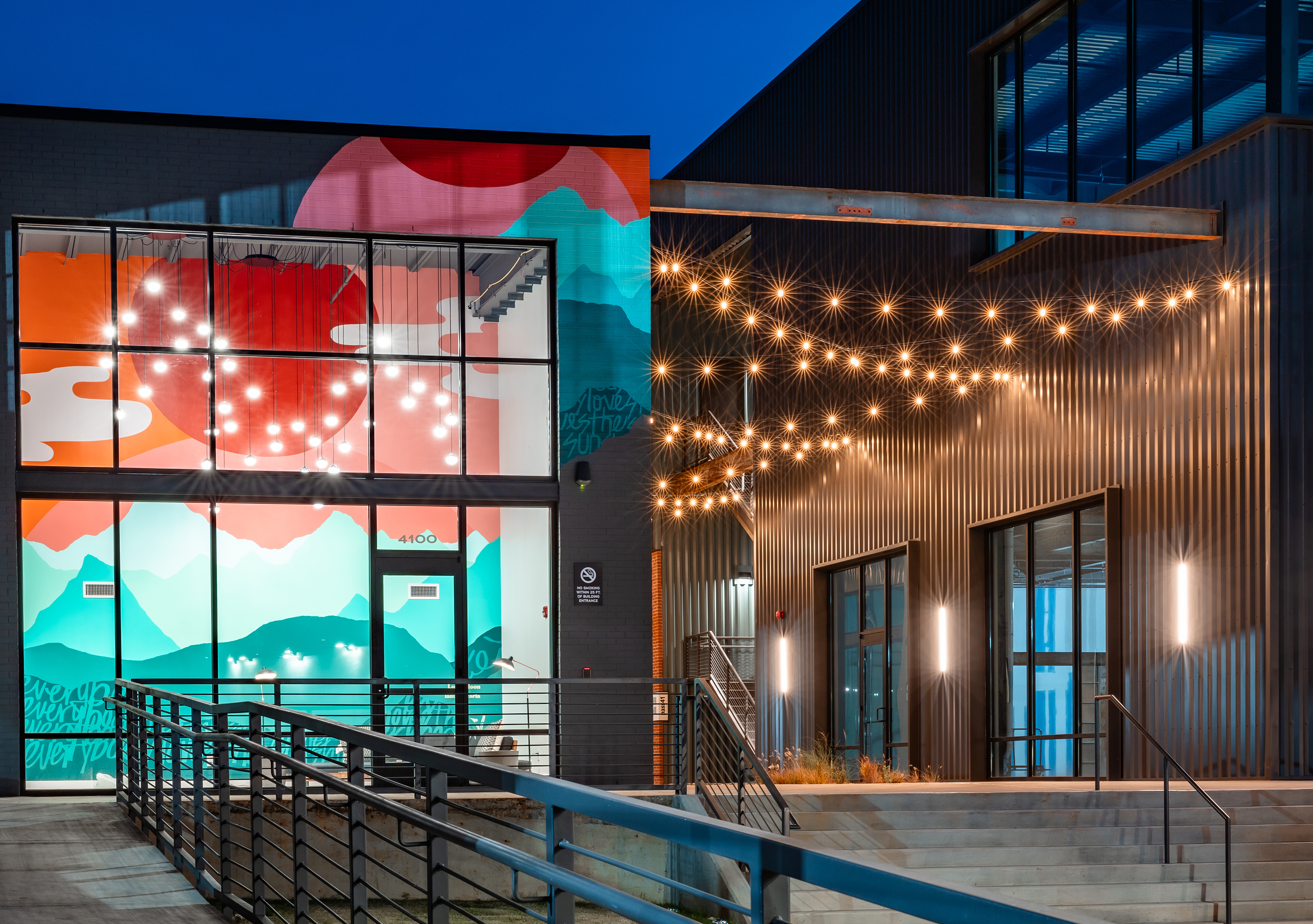
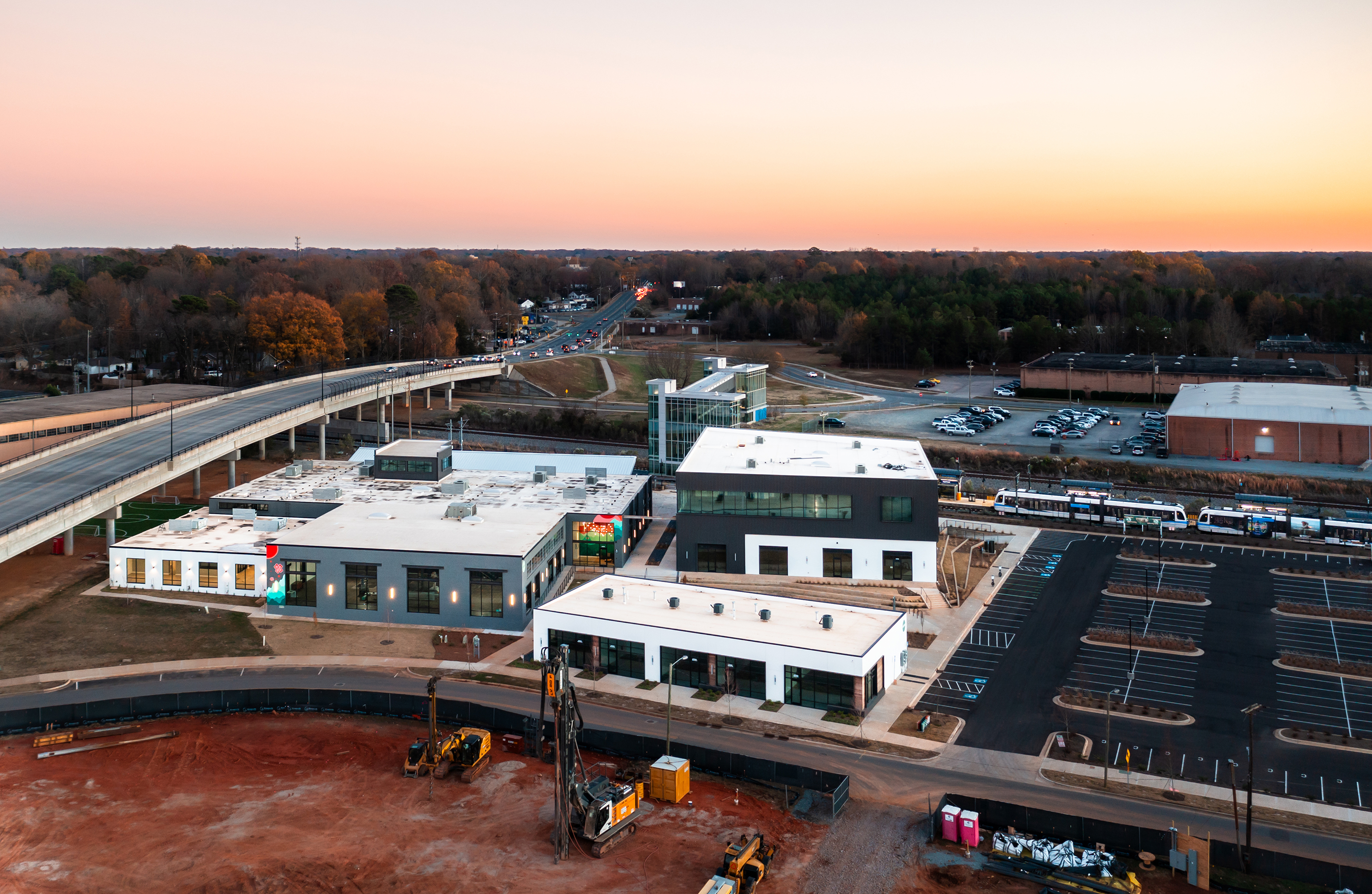
Great Development Near Transit – The Pass
The Pass is a dynamic mixed-use development that reimagines a once-industrial stretch of NoDa into a vibrant, transit-connected destination. Anchored by the Sugar Creek LYNX Blue Line Station, this project blends adaptive reuse with new construction to create a walkable, energetic hub that bridges the historic NoDa arts district and the emerging Sugar Creek community. At its core, The Pass embraces the movement of people—literally and figuratively—with the light rail overpass threading through the site and infusing it with urban energy. Featuring a public plaza, retail spaces, and a mezzanine for events, the development encourages gathering, creativity, and connection. By placing homes, shops, and entertainment within steps of transit, The Pass not only enhances access to opportunity but also sets a new standard for equitable, transit-oriented growth in Charlotte.
Learn more about The Pass: https://www.thepassclt.com/

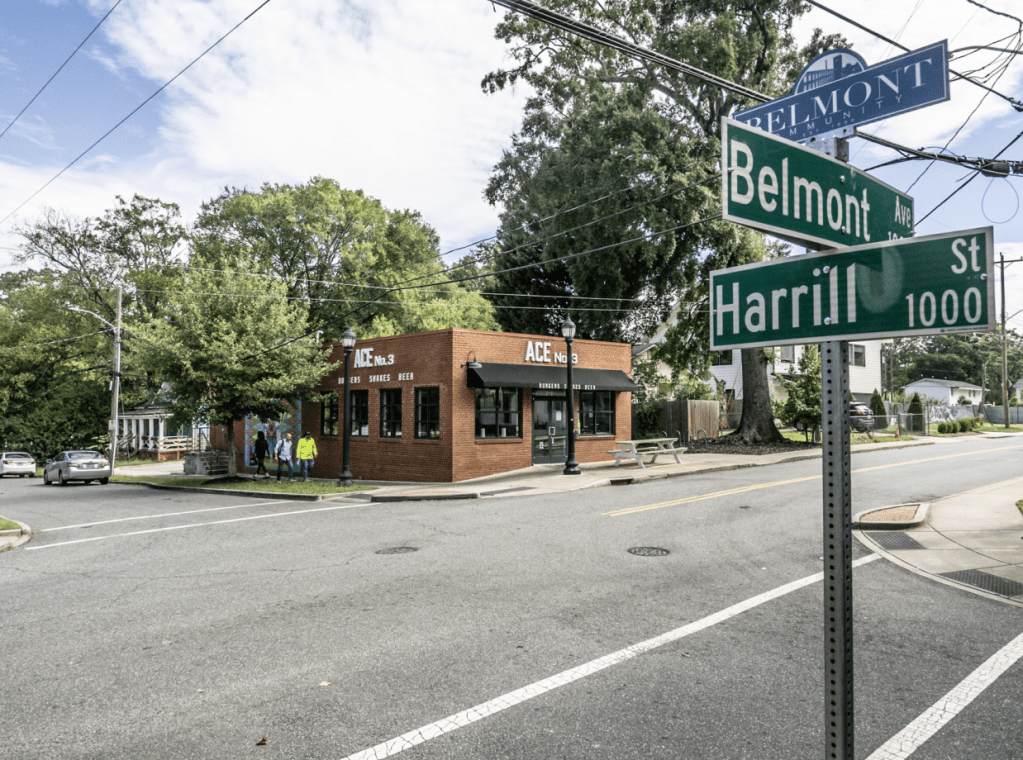
Great Walkable Neighborhood – Belmont
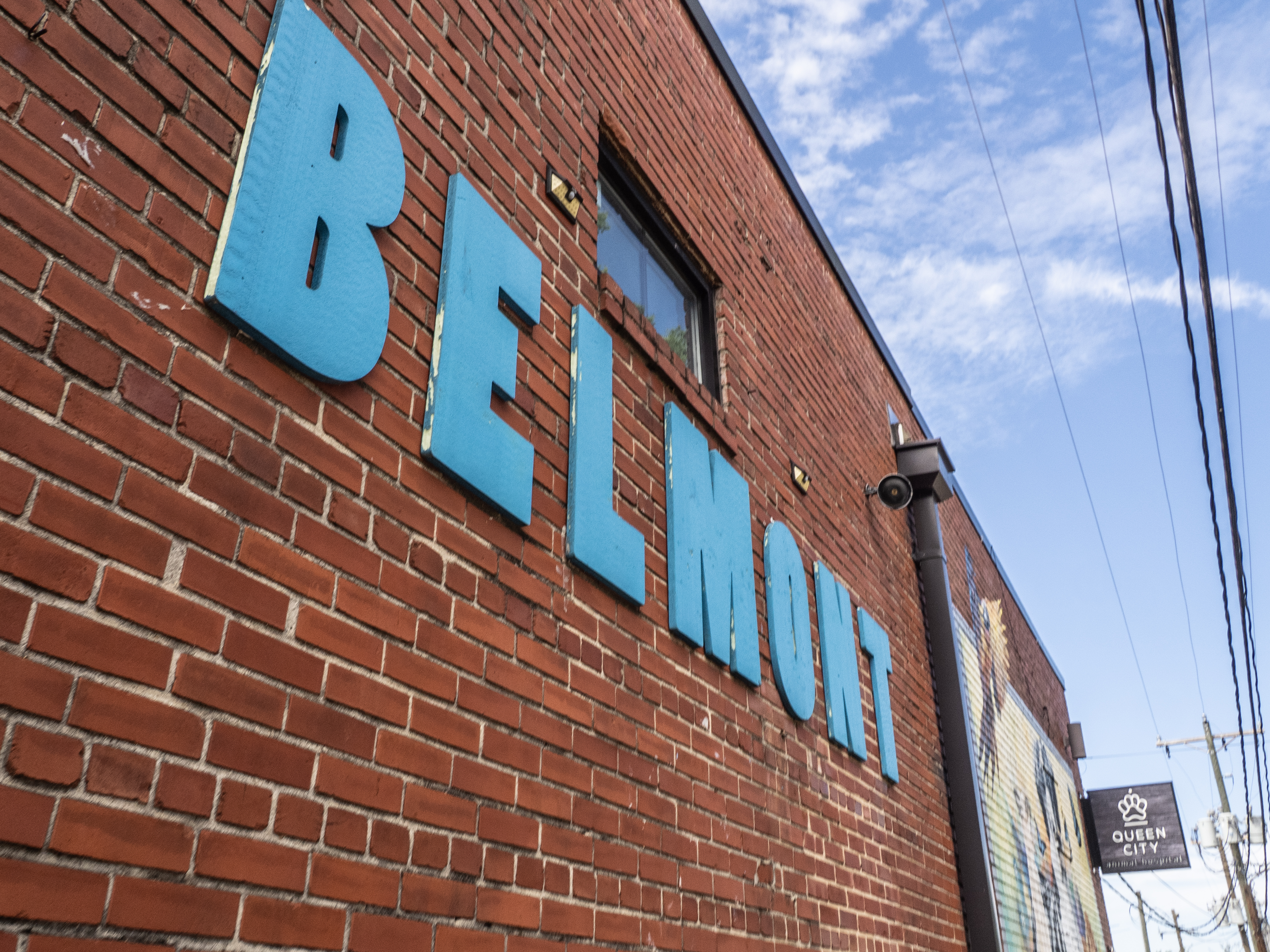
Belmont stands out as one of Charlotte’s most walkable and character-rich neighborhoods, where tree-lined streets connect homes, corner stores, and community spaces within a short stroll. Once a mill village and later a hub for working-class Black families displaced by urban renewal, Belmont has a layered history shaped by resilience, activism, and transformation. Despite decades of disinvestment and challenges related to crime and housing instability, the neighborhood has held onto its strong sense of community—anchored by the Belmont Community Association and one of Charlotte’s oldest community gardens. Today, Belmont is experiencing a new chapter, emerging as a vibrant, diverse neighborhood with preserved historic architecture, accessible greenways like Little Sugar Creek, and a growing mix of residents. Its compact scale, proximity to daily needs, and deep-rooted identity make Belmont a model for what a truly walkable, inclusive neighborhood can be.
Learn more about Belmont: https://www.belmontcharlotte.org/
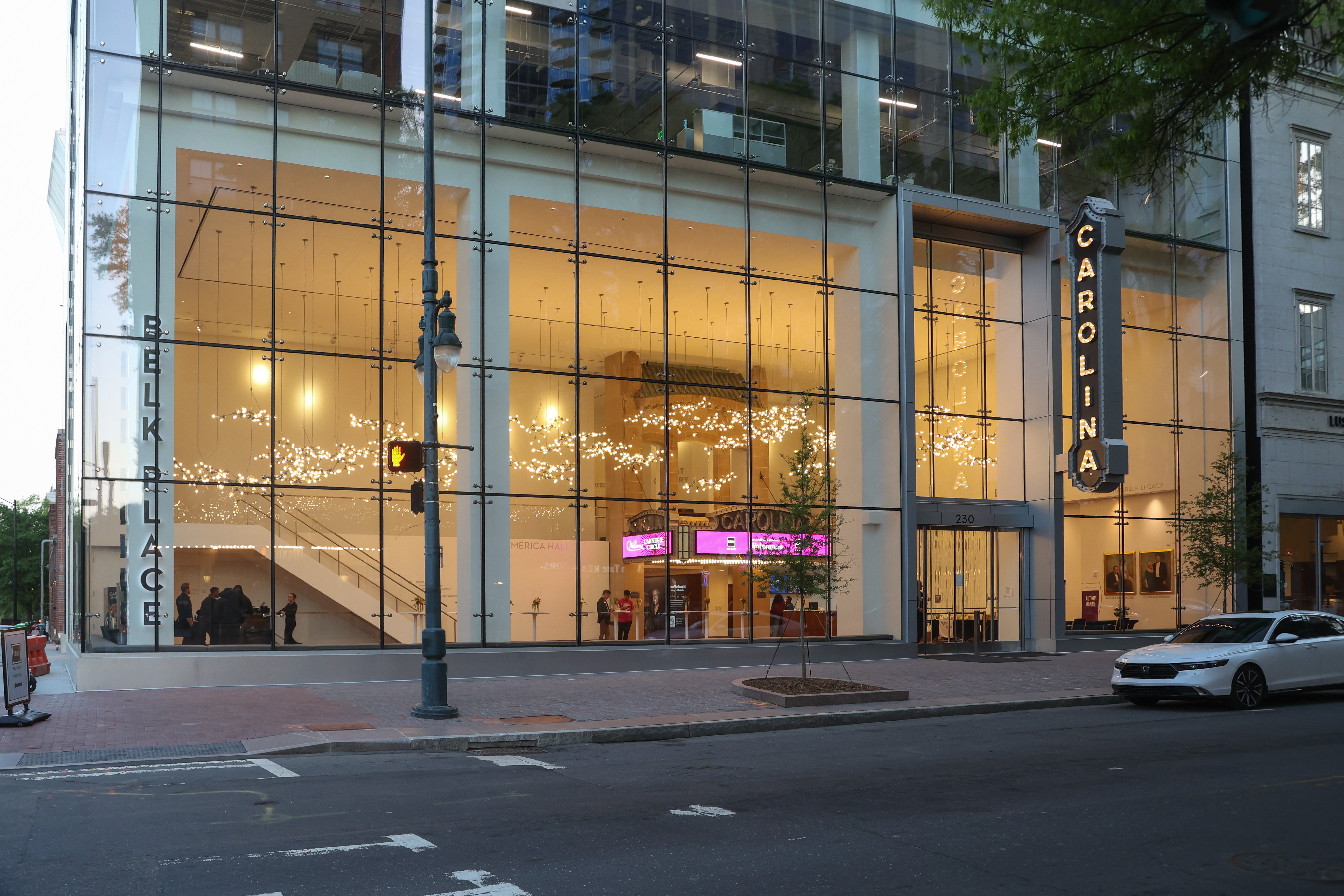
Great New Life for an Old Place – Carolina Theatre
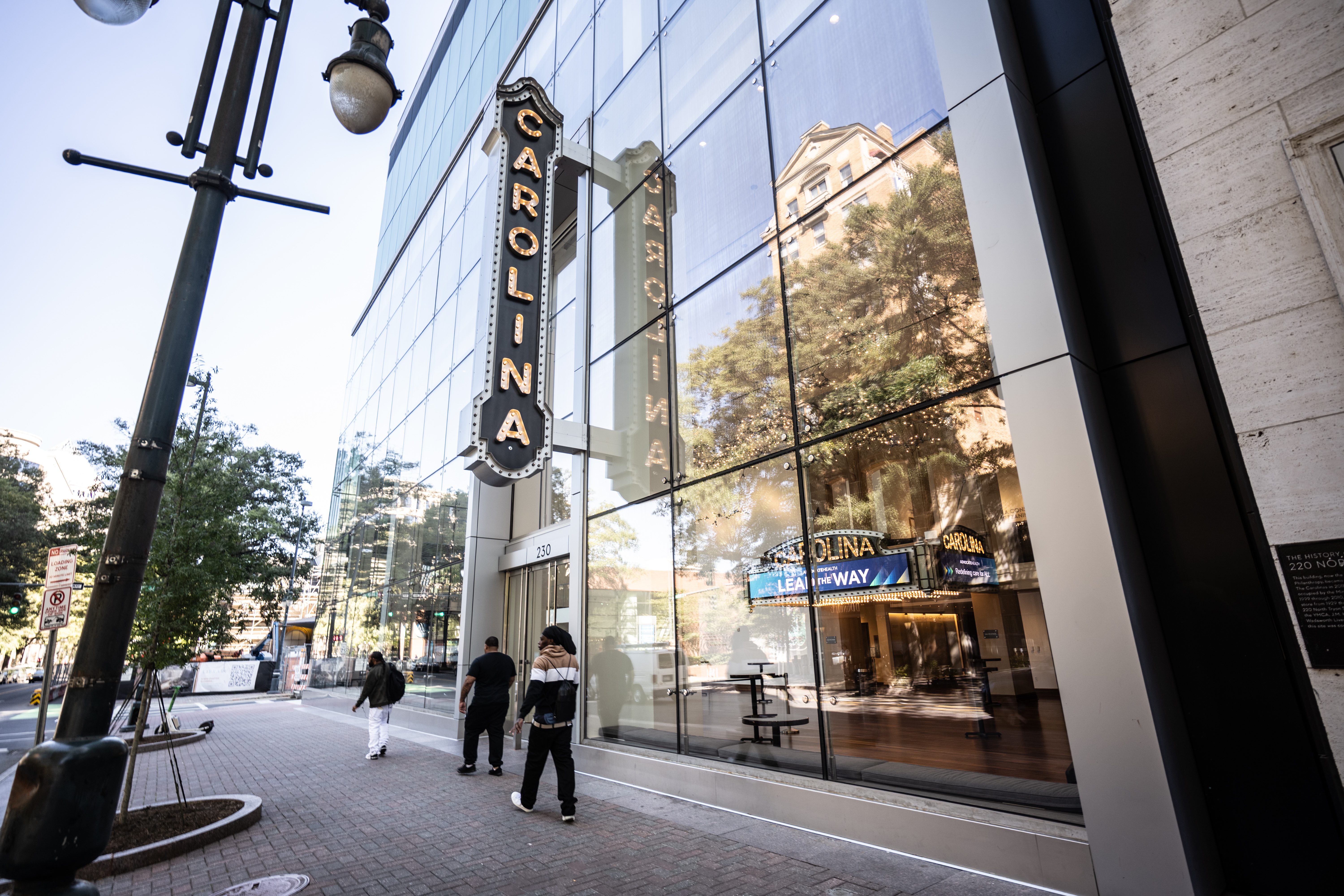
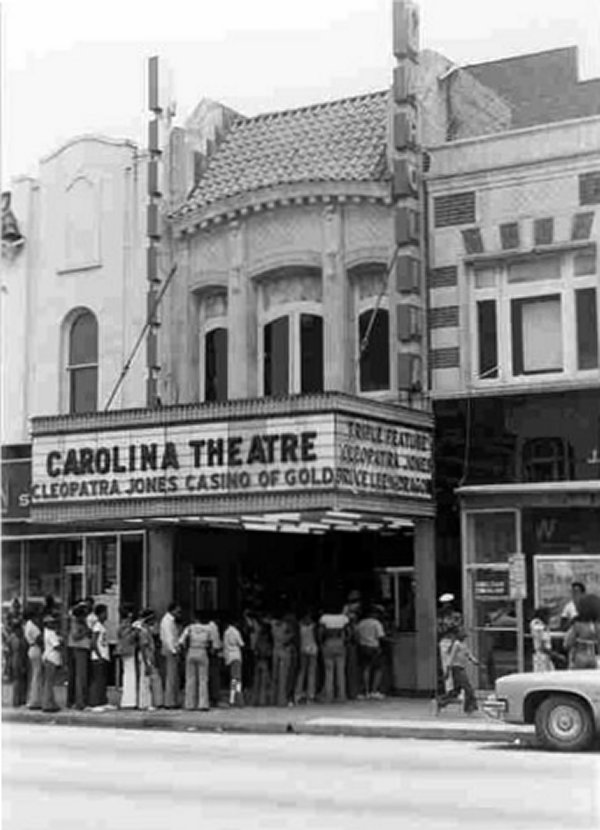
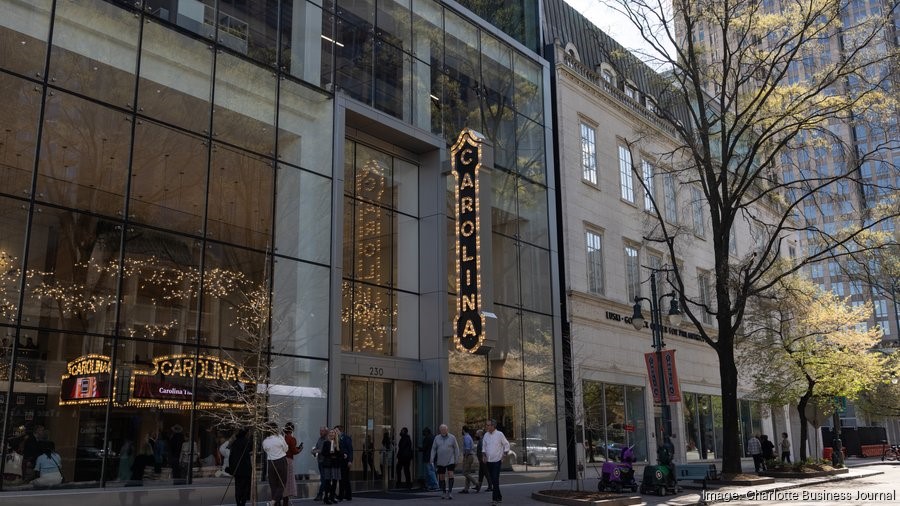
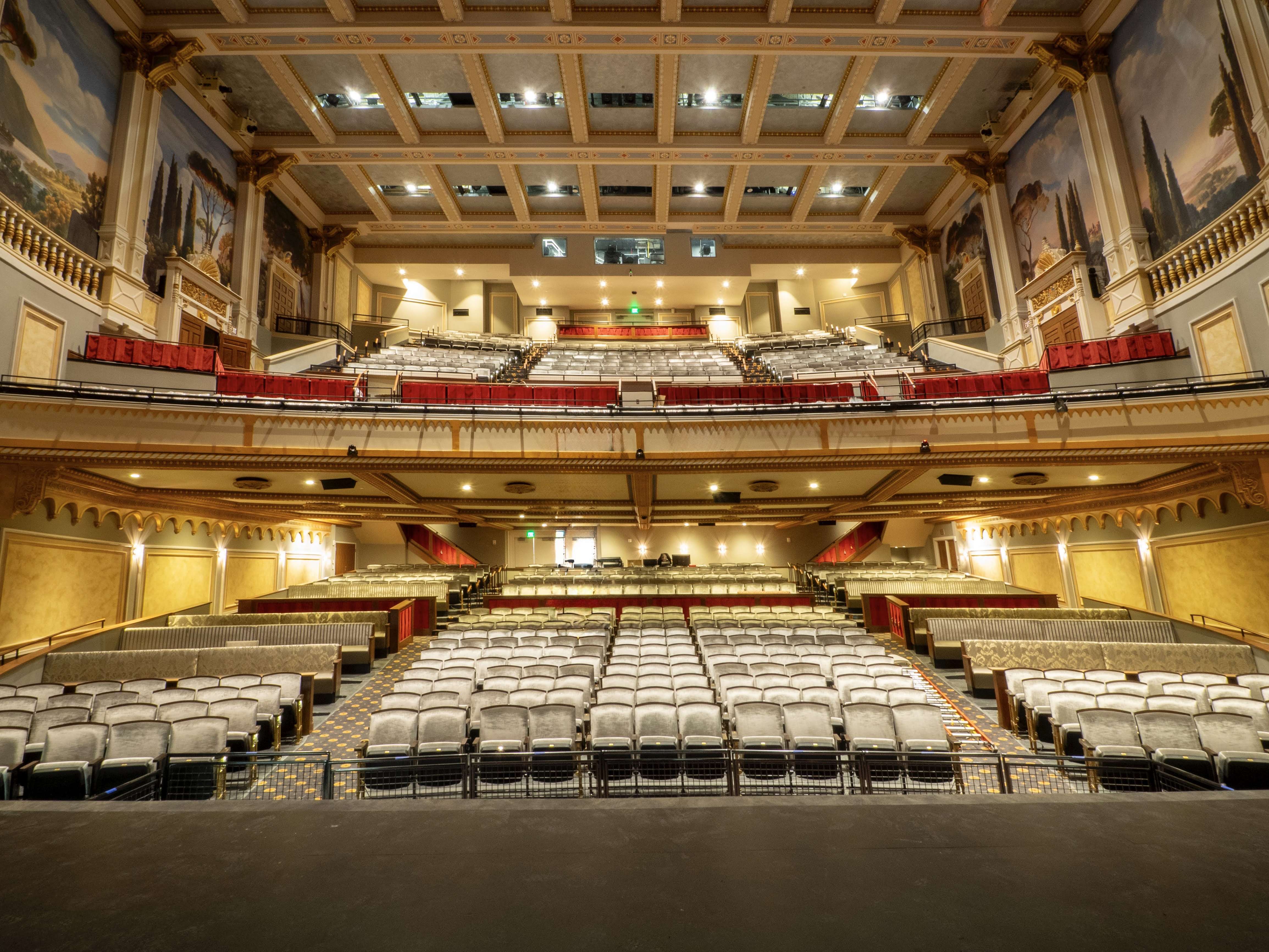
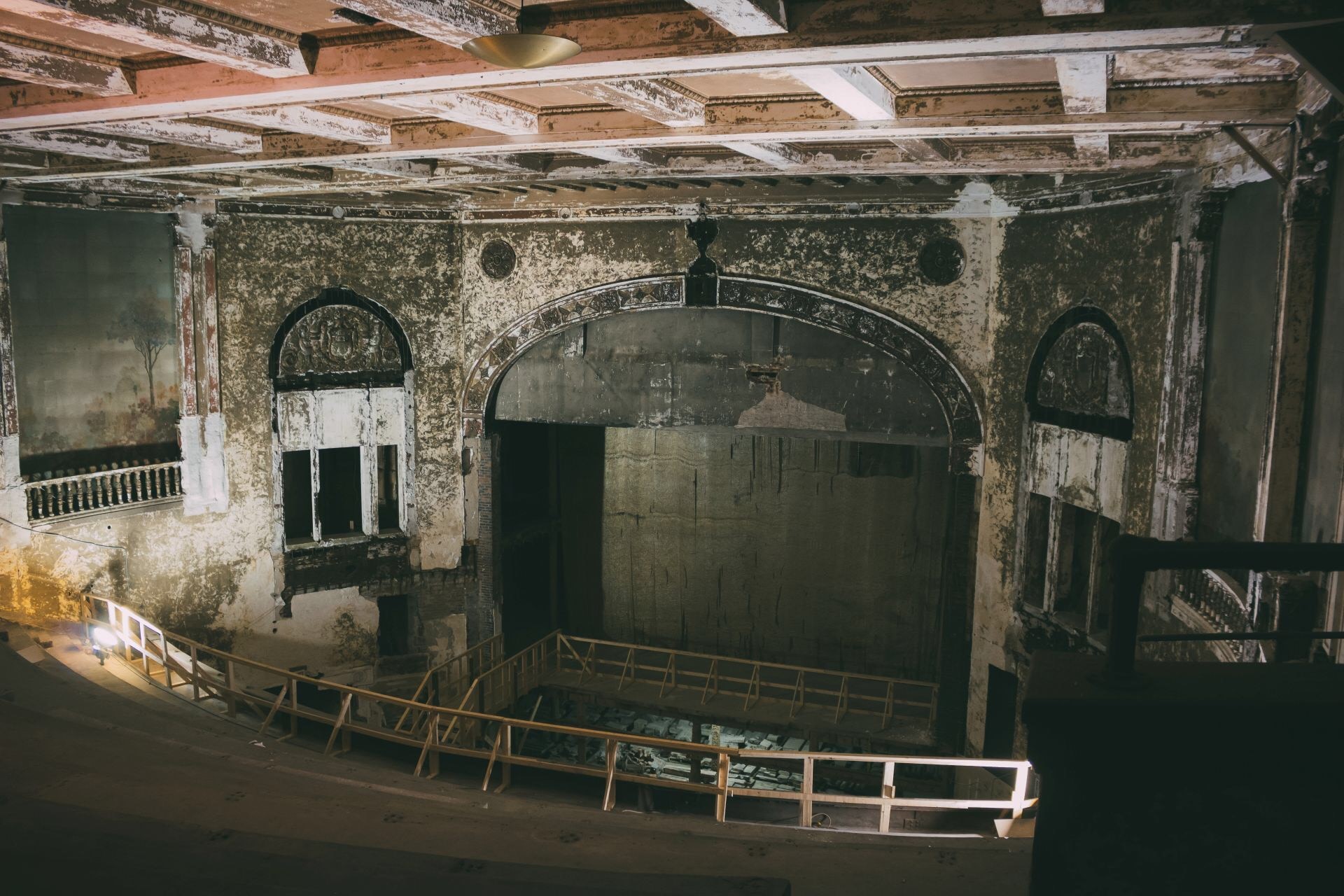
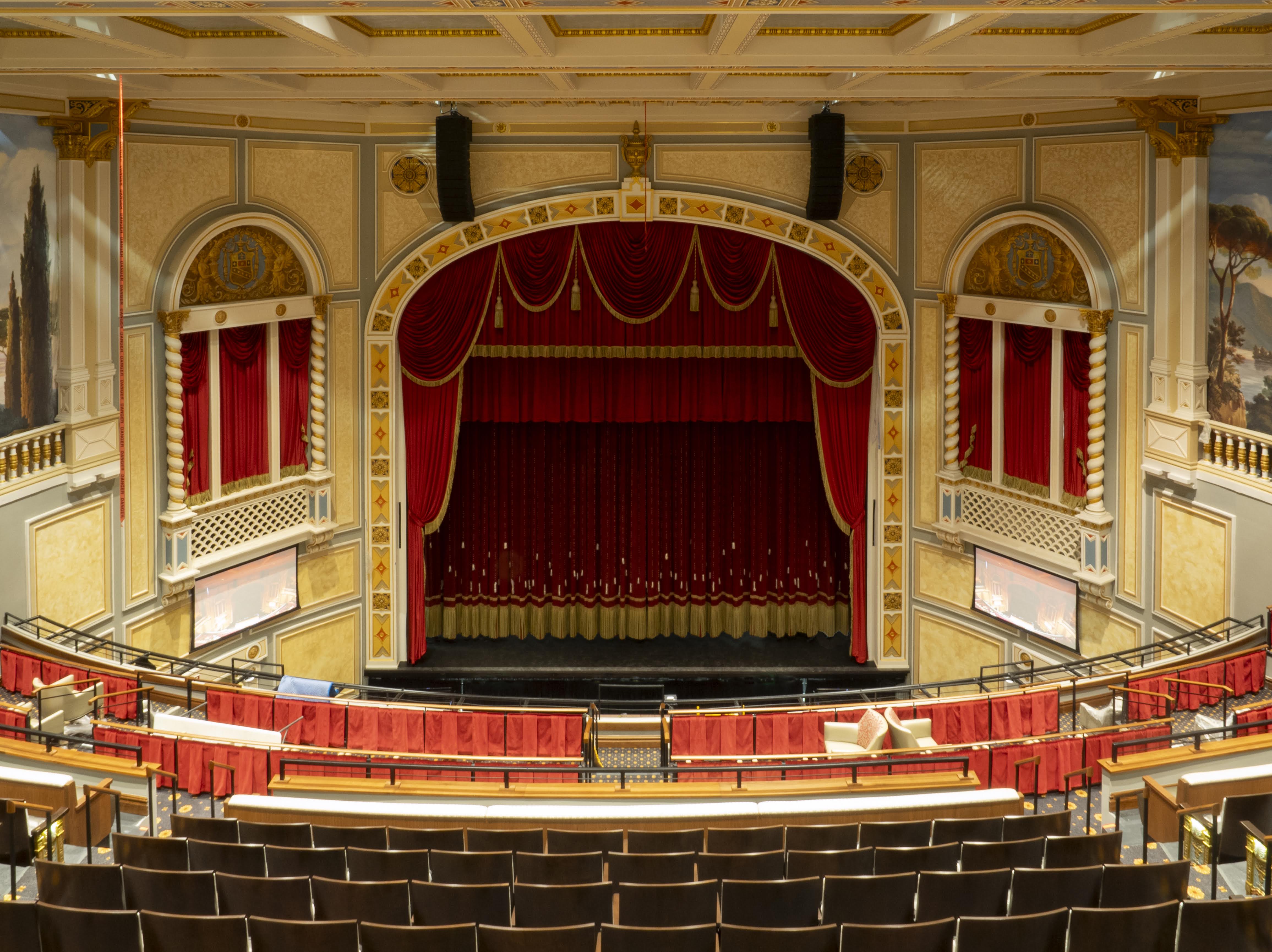
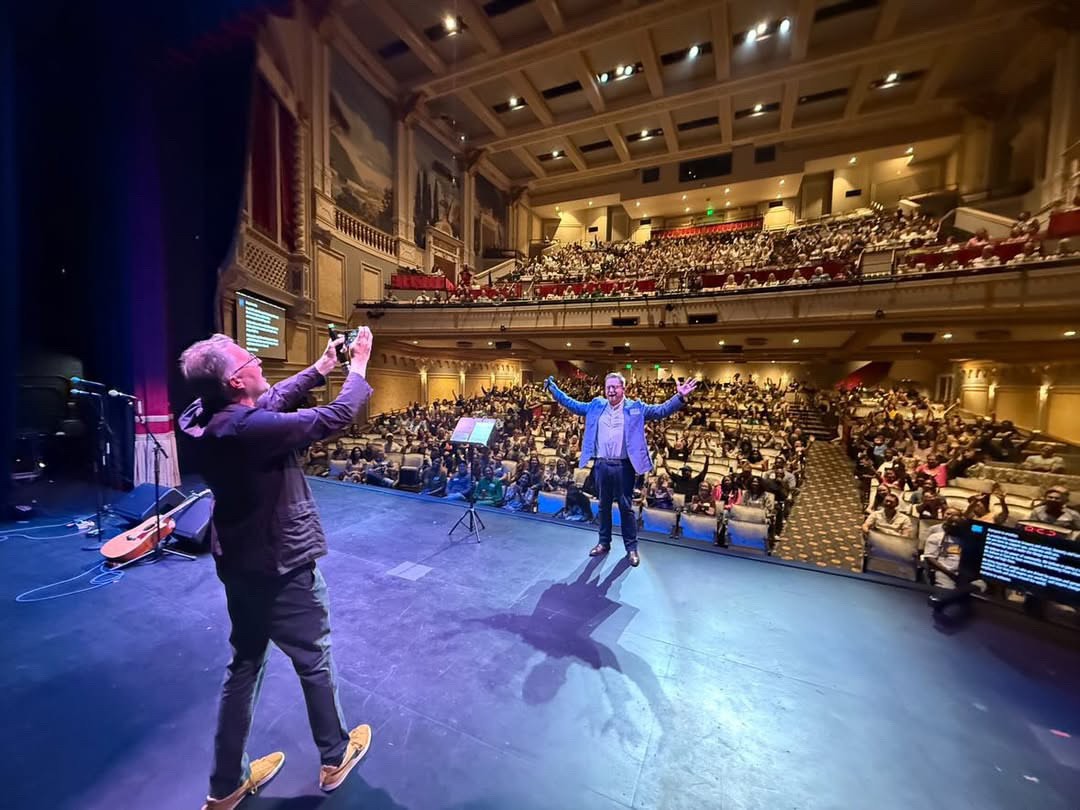
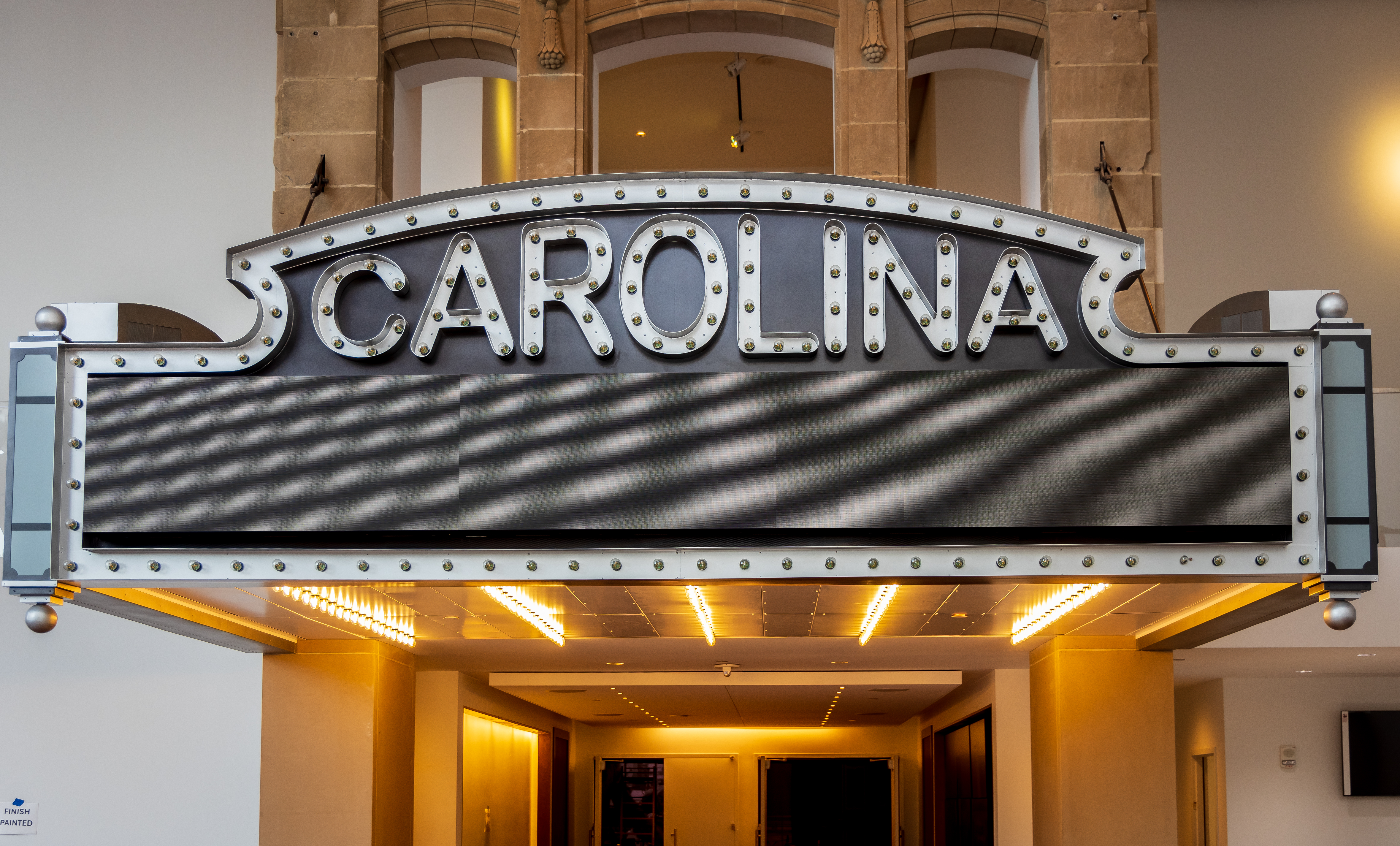
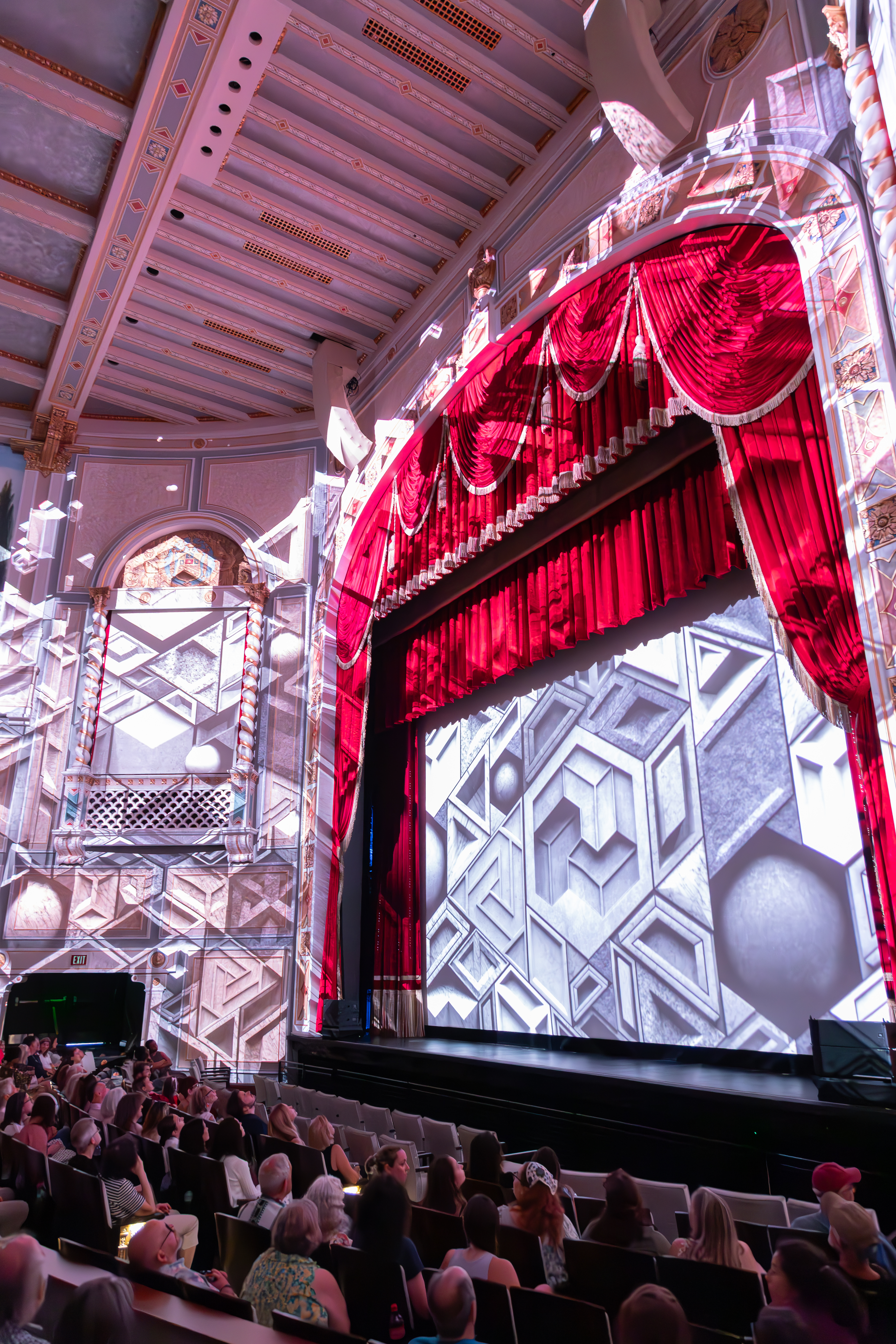
Once a grand cultural venue and later a long-abandoned relic, the Carolina Theatre has been meticulously restored into a vibrant civic landmark in the heart of Uptown Charlotte. Originally opened in 1927, the theatre dazzled audiences with its ornate design and hosted iconic performances—from the Charlotte Symphony’s debut to Elvis Presley’s electrifying 1956 show. After closing in 1978 and sitting vacant for decades, the building was saved through the tireless efforts of community leaders, preservationists, and the Foundation For The Carolinas. Gifted to the Foundation for $1 in 2013, the theatre underwent a 12-year transformation that honored its historic grandeur while integrating modern amenities. Reopened in March 2025, the Carolina Theatre now serves as the “community’s living room,” hosting a wide range of public and private events. With its transparent street-facing lobby and renewed presence on North Tryon Street, the theatre exemplifies how thoughtful preservation can breathe new life into a city’s cultural and architectural heritage—connecting Charlotte’s past, present, and future.
Learn more about the Carolina Theatre: https://www.thecarolina.com/

Great Public Space – The Rail Trail
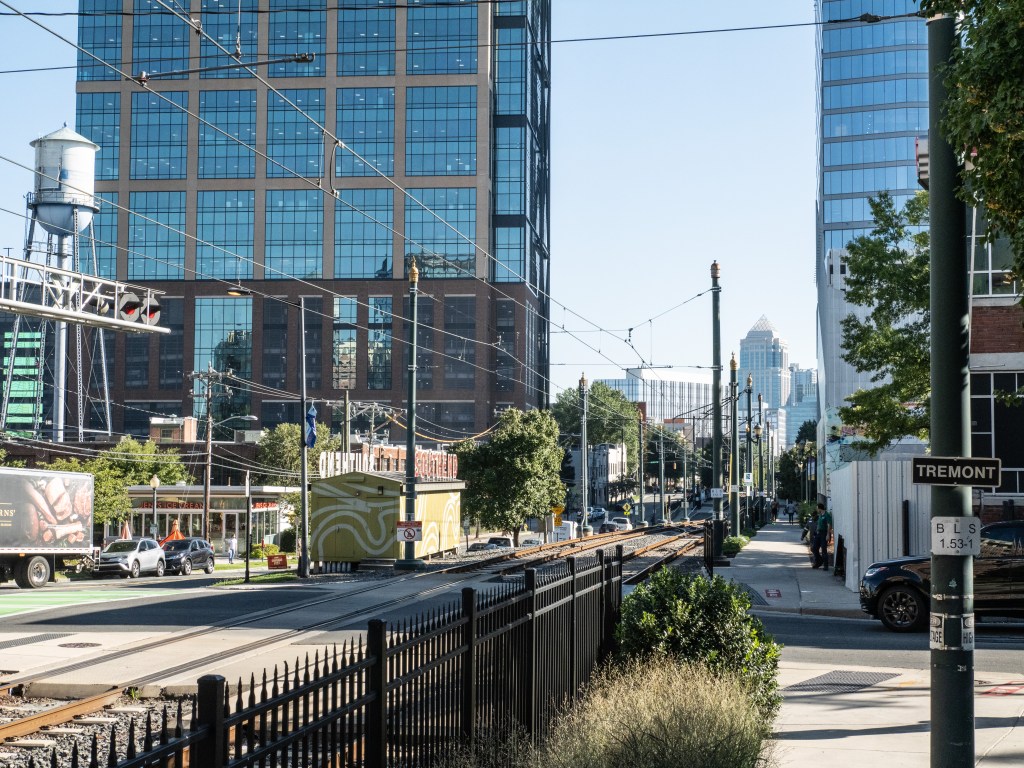
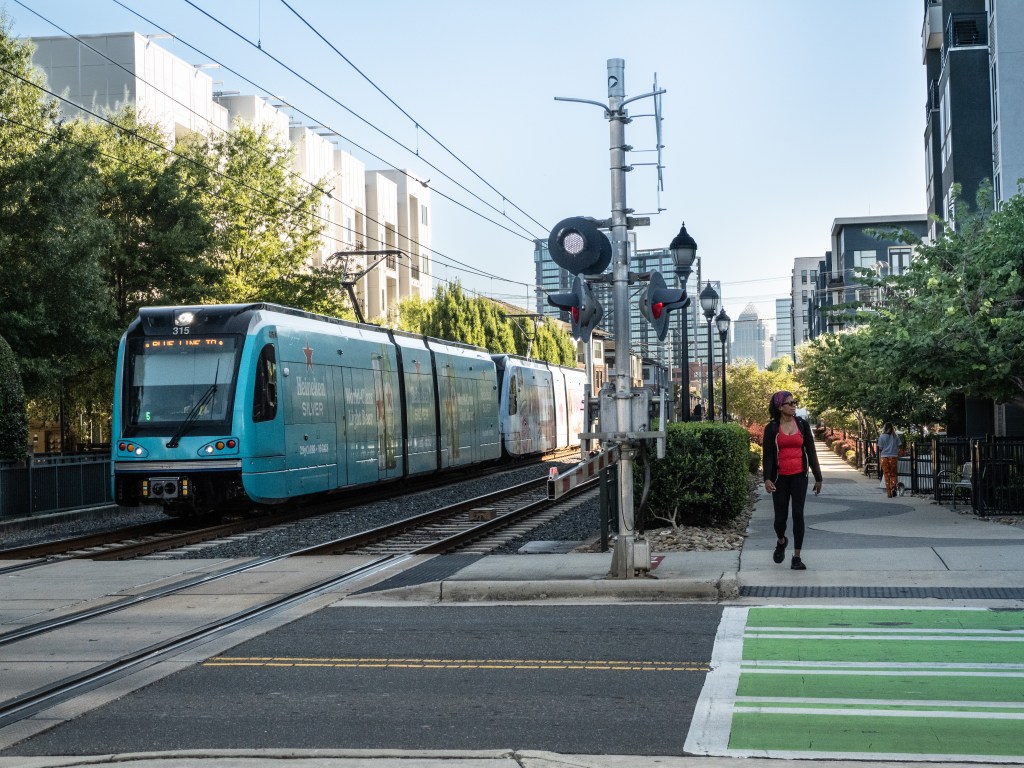
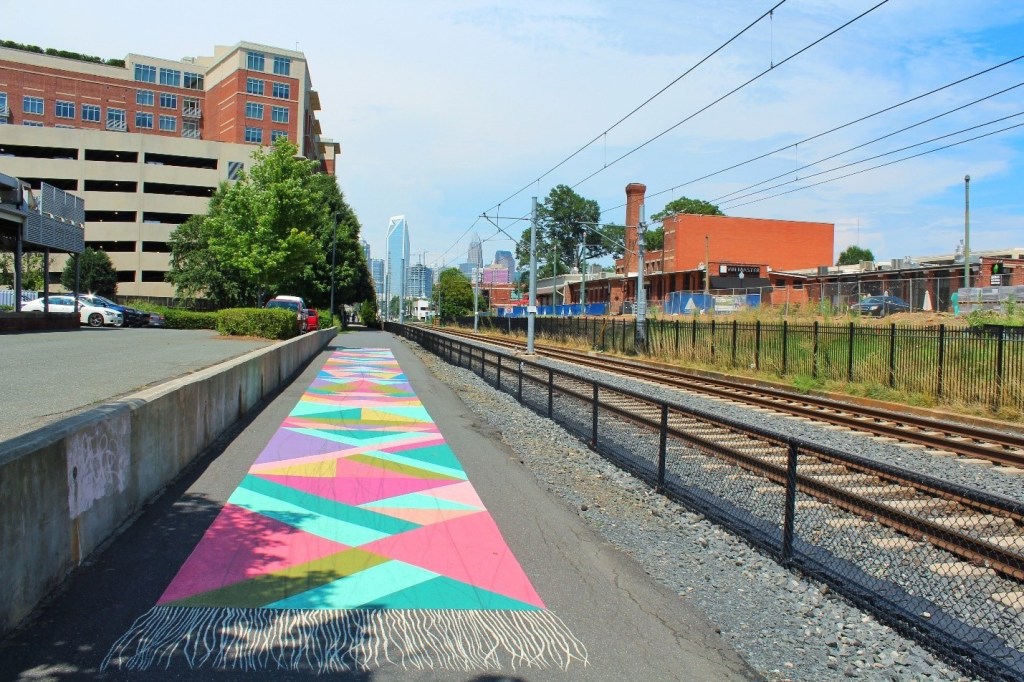
The Rail Trail has transformed from a simple access path into one of Charlotte’s most beloved public spaces—an 11-mile corridor that pulses with life, creativity, and connection. Running alongside the LYNX Blue Line from Sugar Creek to Arrowood Station, the Rail Trail is more than a greenway; it’s a pedestrian street, a cultural canvas, and a community gathering place. In South End, it’s lined with shops, restaurants, art installations, and outdoor seating, while other segments offer quieter stretches for walking, biking, and commuting. With over 2,000 daily users in some areas, the trail is a vital thread in Charlotte’s urban fabric, linking neighborhoods, transit, and people. Its success is rooted in thoughtful design, public-private collaboration, and grassroots placemaking that invites everyone to participate. Whether you’re grabbing coffee, walking your dog, or discovering a pop-up event, the Rail Trail is a place where Charlotteans from all walks of life come together—making it a standout example of inclusive, people-powered public space.
Learn more about The Rail Trail: https://www.charlotterailtrail.org/

Great Placemaking – Purposeful Walk at the Pearl
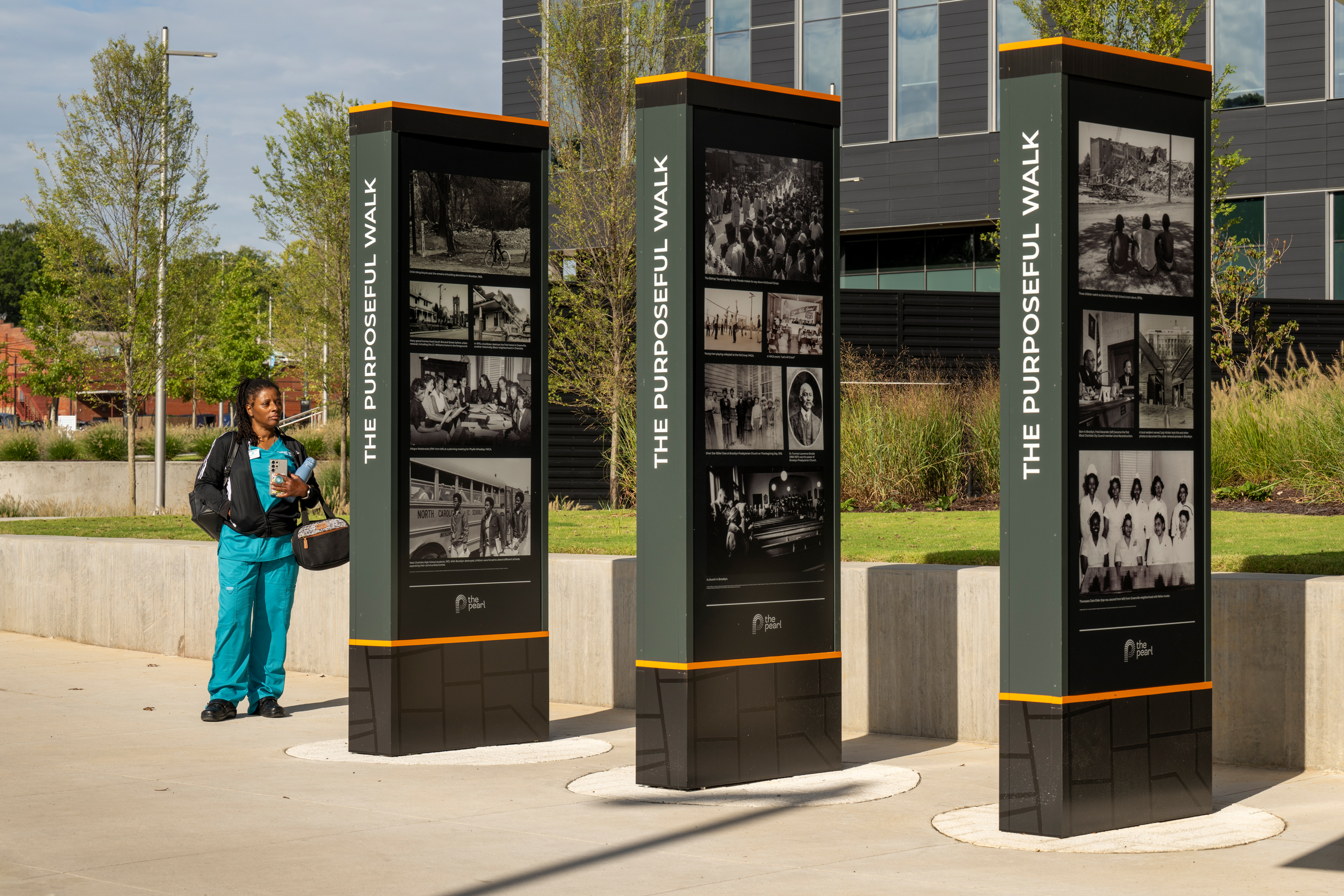
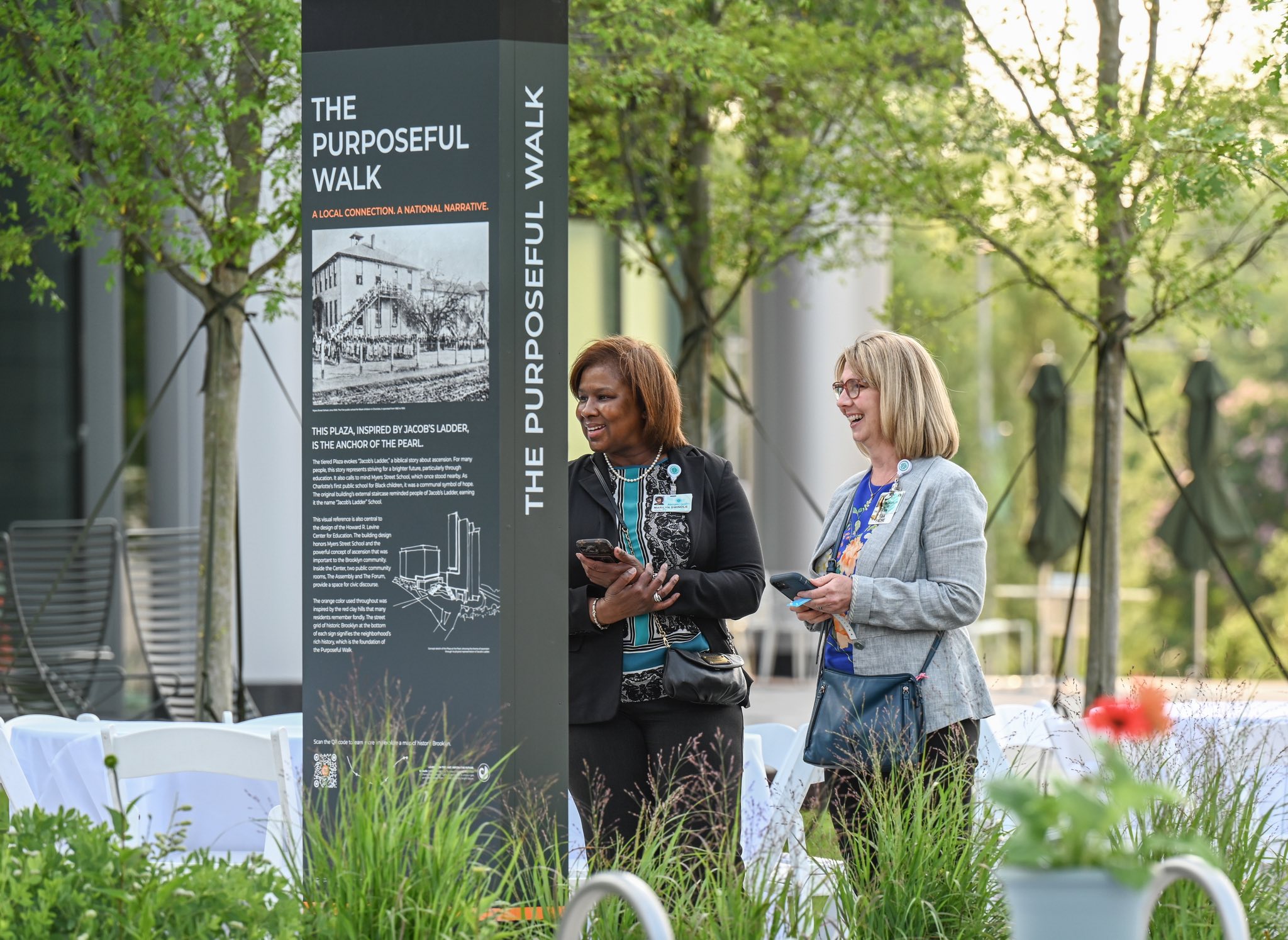
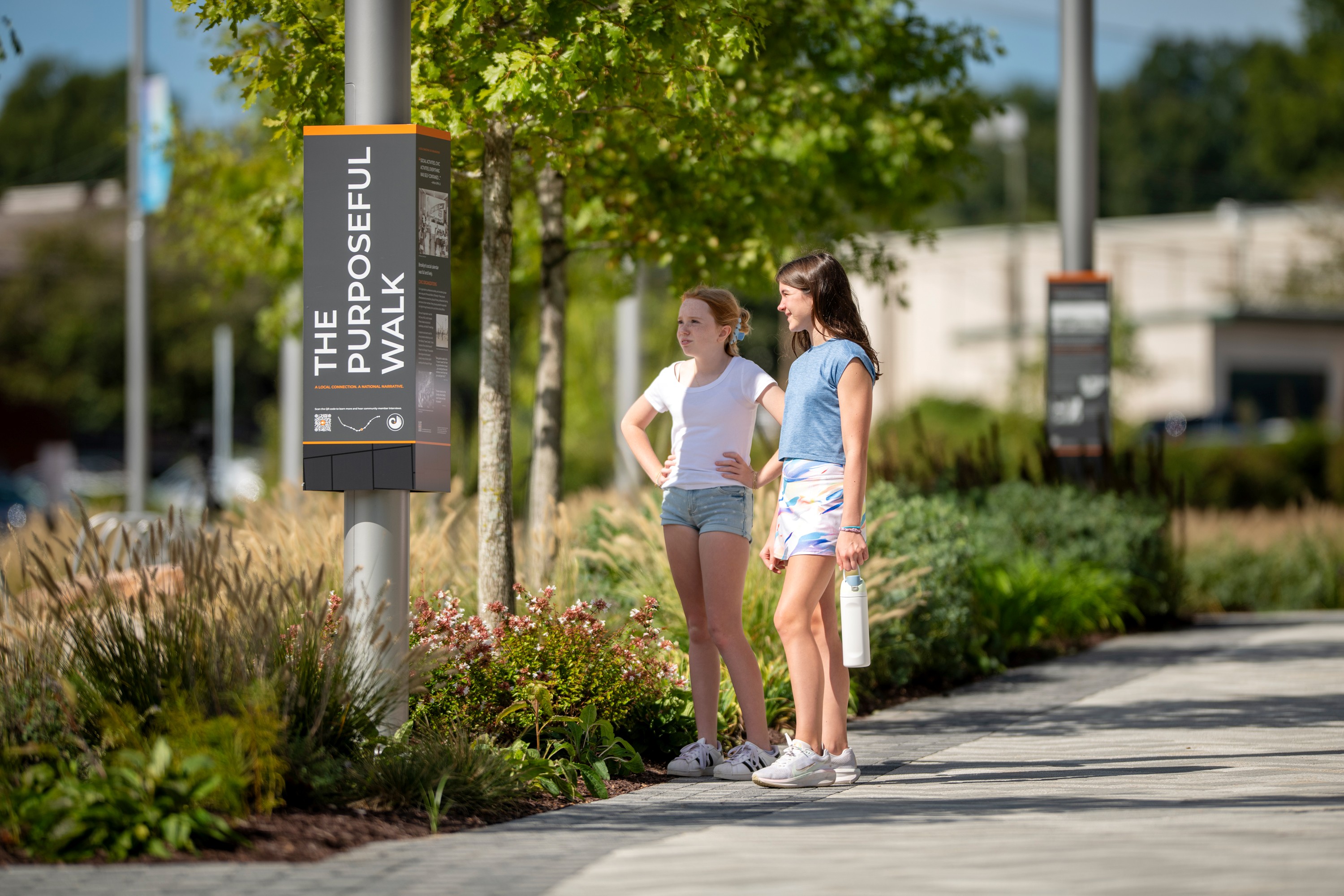
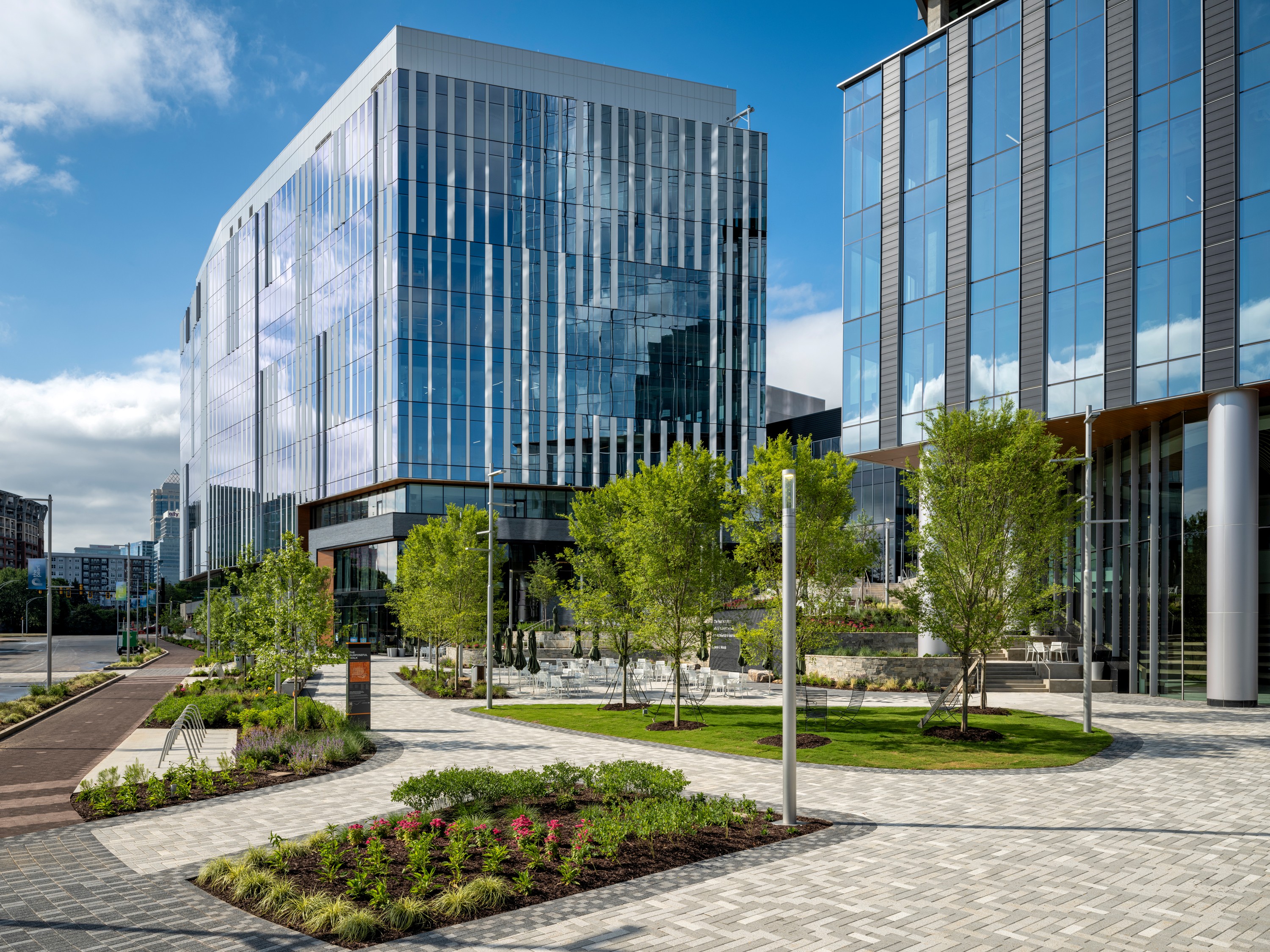
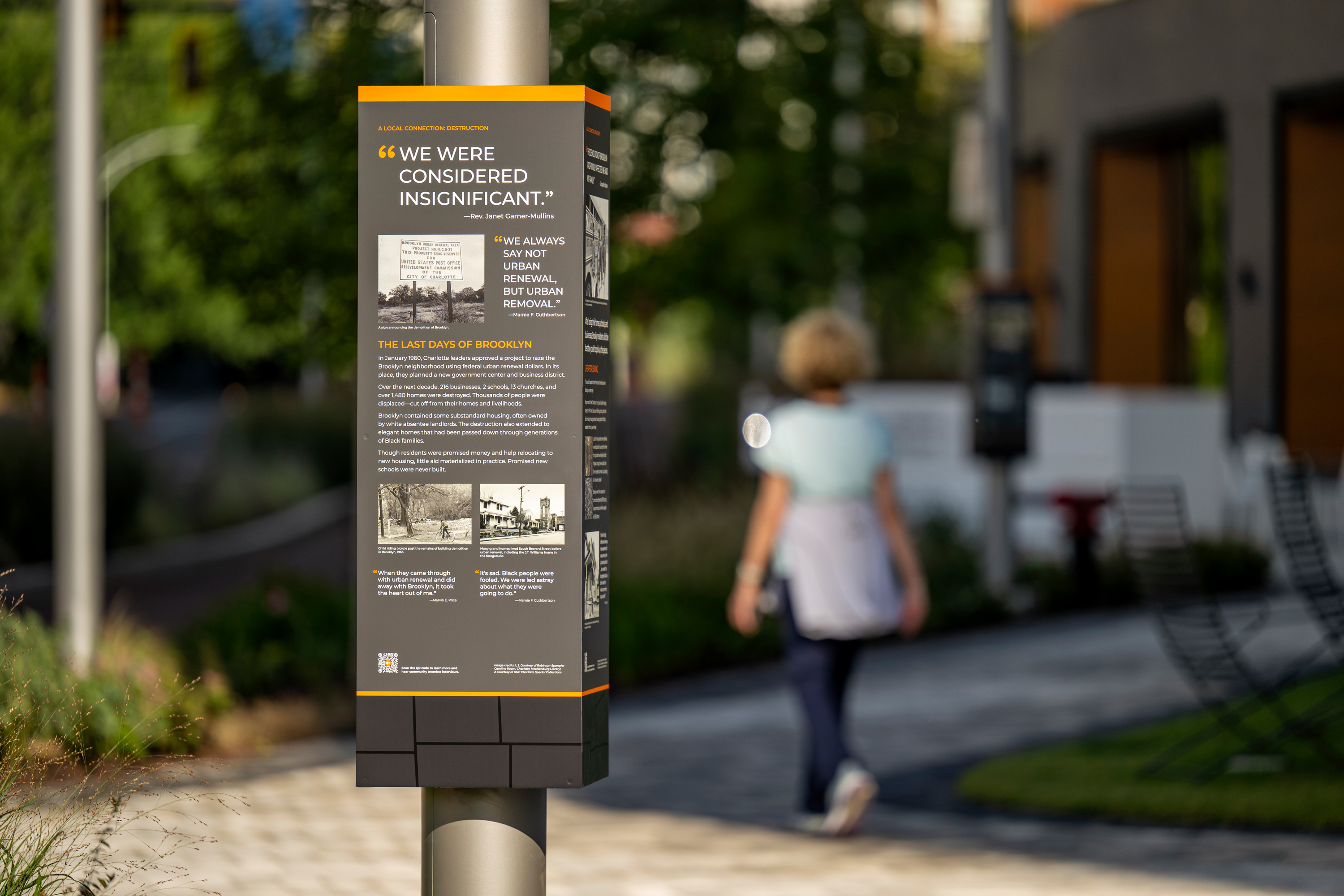
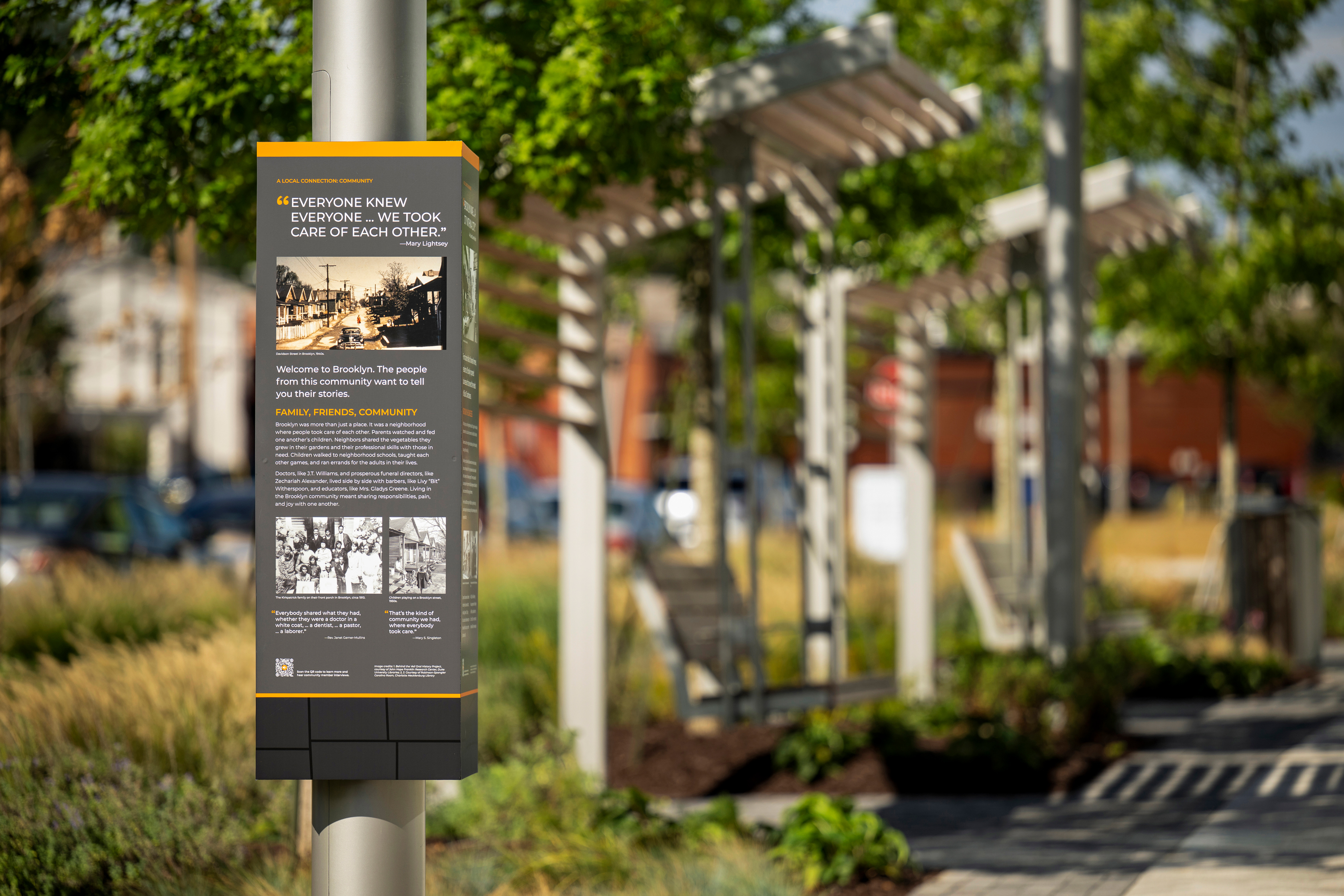
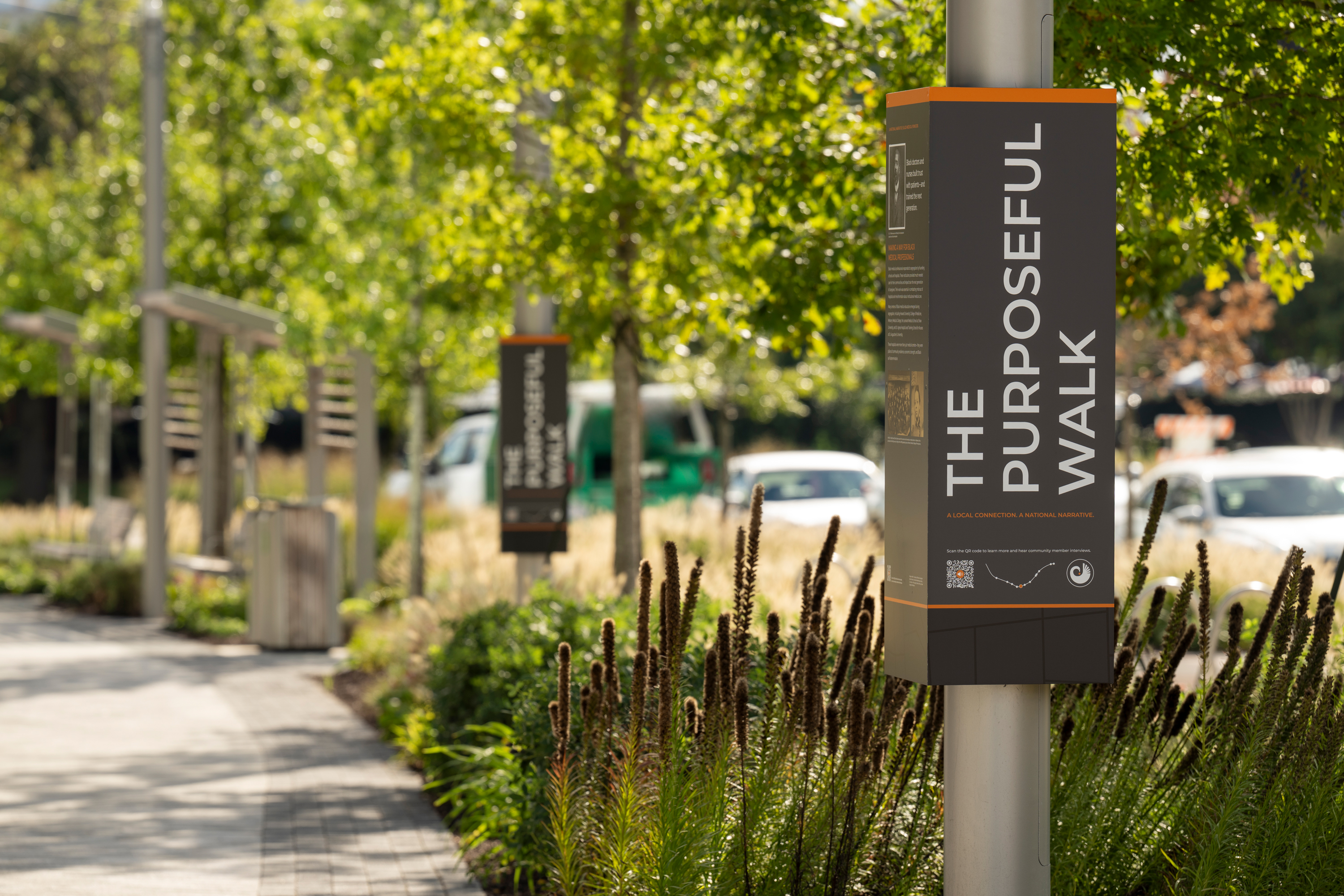
The Purposeful Walk at The Pearl is a powerful example of community-centered placemaking that honors history while shaping the future. Rooted in the legacy of Brooklyn—Charlotte’s once-thriving Black neighborhood displaced by urban renewal—the walk invites reflection and connection through a series of thoughtfully designed public spaces. Developed through conversations with former residents and their descendants, the project maps and marks key destinations from Brooklyn’s past, embedding cultural memory into the urban landscape. With elements like wayfinding, landscaping, and activated sidewalks, the Purposeful Walk transforms everyday infrastructure into a meaningful journey. It’s not just a path—it’s a tribute to resilience, a platform for storytelling, and a model for how public space can reflect and respect the communities it serves.
Learn more about The Pearl: https://www.thepearlclt.com/
Great Mobility Project– XCLT Trail
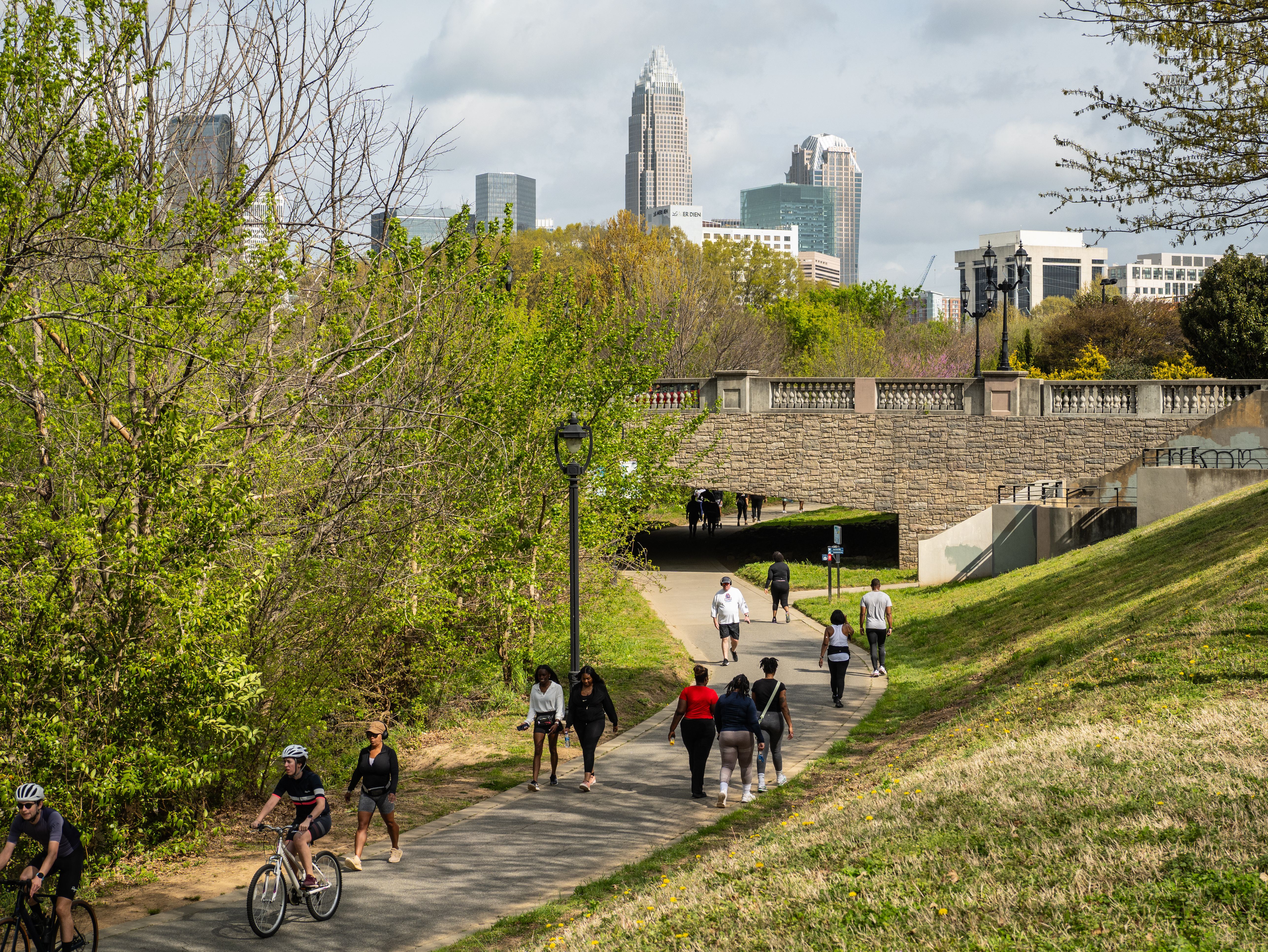
The Cross Charlotte Trail (XCLT) is a transformative mobility project redefining how Charlotte moves, connects, and experiences its city. Spanning over 30 miles from Pineville to the UNC Charlotte campus and beyond, the XCLT is a partnership between the City of Charlotte and Mecklenburg County that integrates greenways, bike lanes, and complete streets into a seamless, people-first network. Designed to be safe, scenic, and accessible, the trail connects 140,000 residents and 130,000 jobs, offering a car-free route for commuting, recreation, and exploration. With thoughtful attention to Charlotte’s tree canopy and natural assets, the XCLT is more than infrastructure—it’s a vibrant public space that invites social connection, supports economic vitality, and reflects a shared vision for inclusive, sustainable urban mobility. Learn more about the Cross Charlotte Trail: https://www.charlottenc.gov/Growth-and-Development/Projects/XCLT
Great Suburban Design – Montford Park
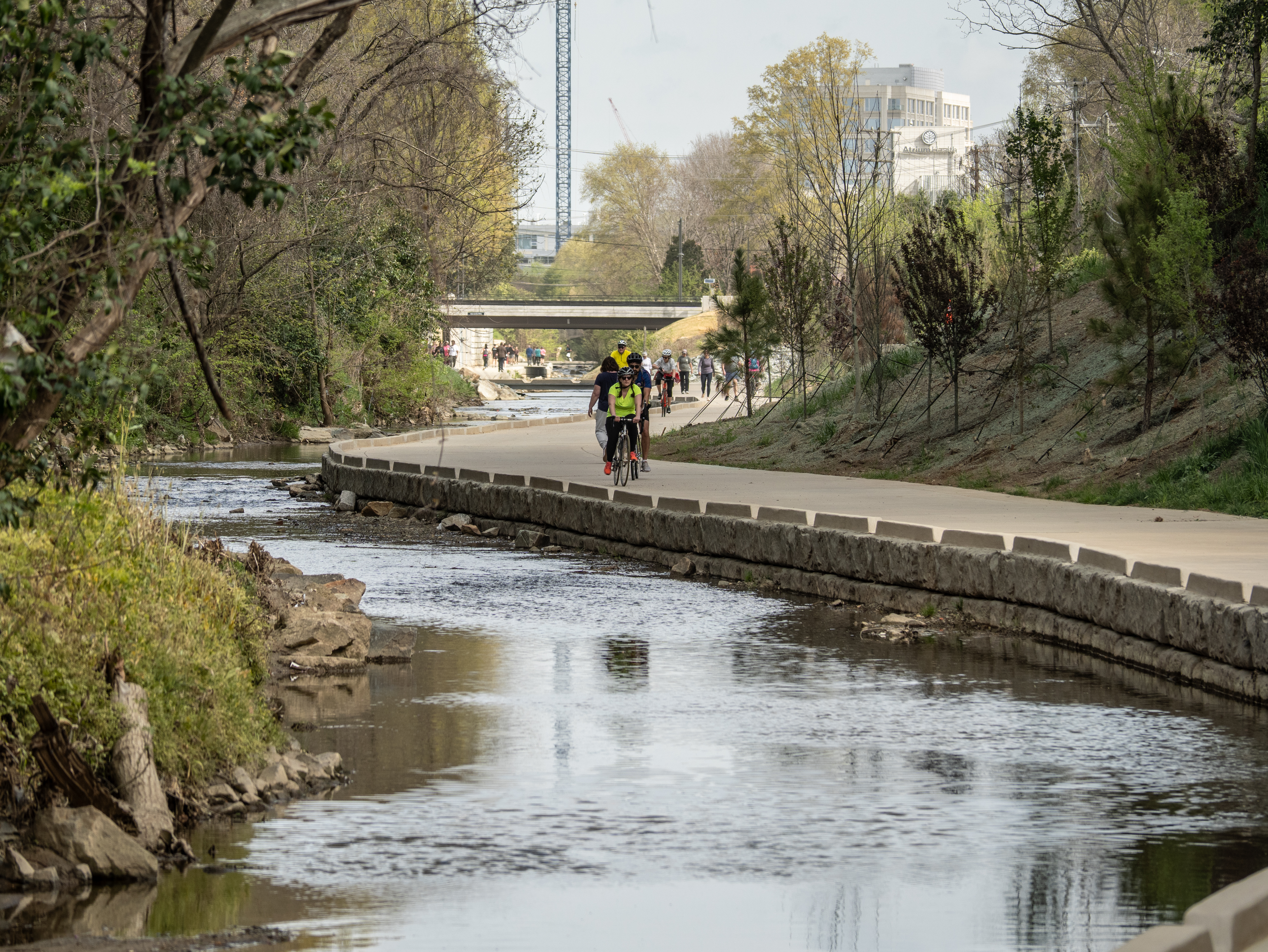
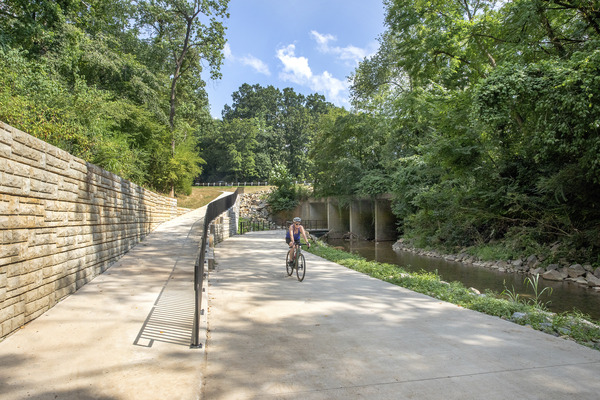
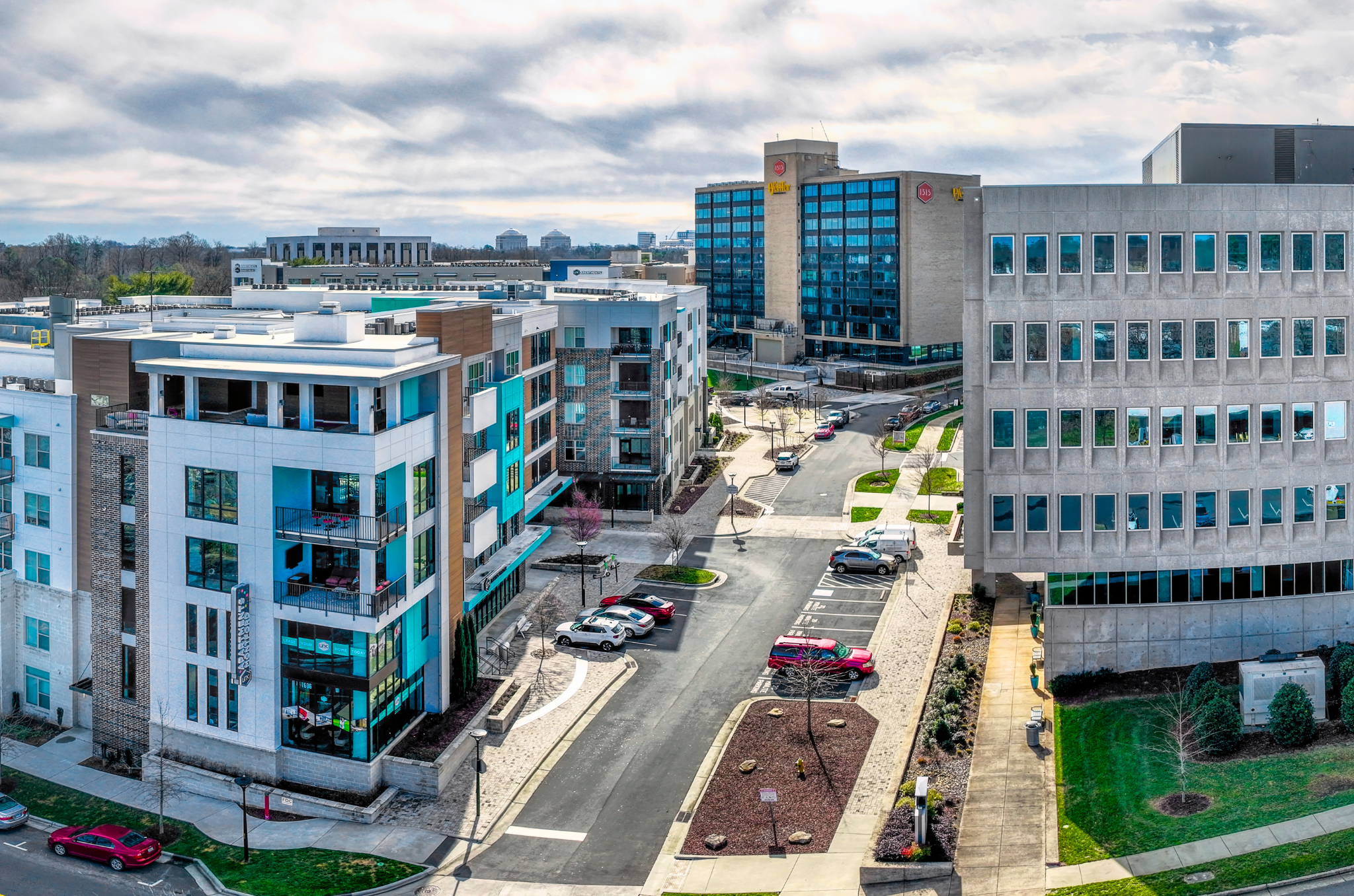
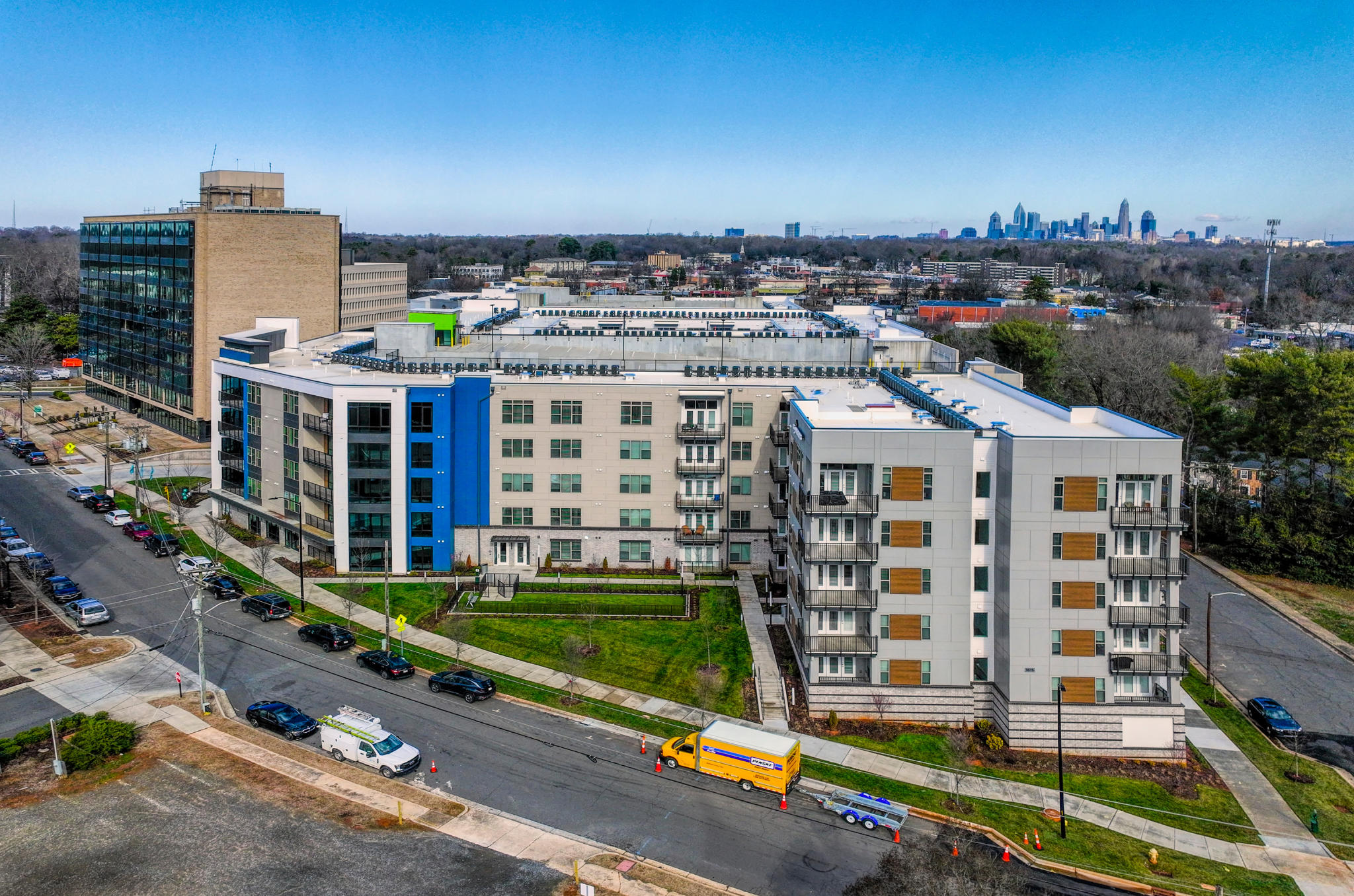
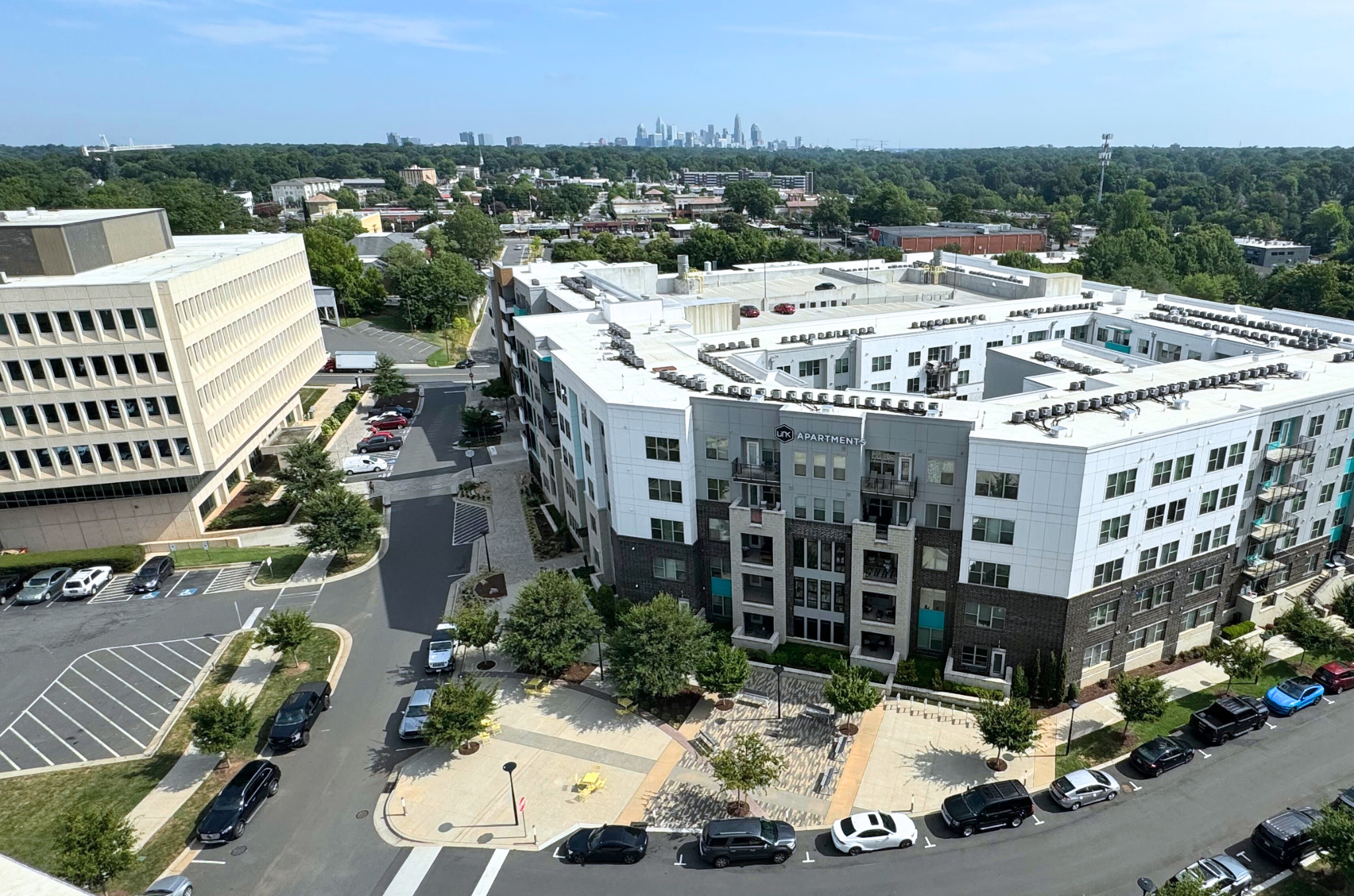
Montford Park is setting a new standard for suburban design by transforming a former 1960s office park into a vibrant, walkable neighborhood that blends mid-century charm with modern urban living. Located behind Park Road Shopping Center, this compact district now supports over 3,200 employees and 80 retail businesses, with Montford Park Partners leading efforts to enhance its livability and visibility. The new development replaces surface parking with 336 residential units, 17,000 square feet of retail, and a 12,000-square-foot amenity courtyard featuring a resort-style pool, fire pit lounge, and native landscaping. Designed with clean lines, bold colors, and a distinctive black brick, the architecture reflects the neighborhood’s mid-century roots while introducing a fresh, contemporary feel. The project also preserves key historic structures like the Pfeiffer Building and integrates on-street parking and ground-floor retail to foster a “Main Street” atmosphere. With its emphasis on human-scale design, artistic integration, and community-focused spaces, Montford Park exemplifies how great suburban design can support connection, walkability, and a strong sense of place—just minutes from the city center.
Learn more about Montford Park: https://www.marshproperties.com/neighborhoods/montford-park/
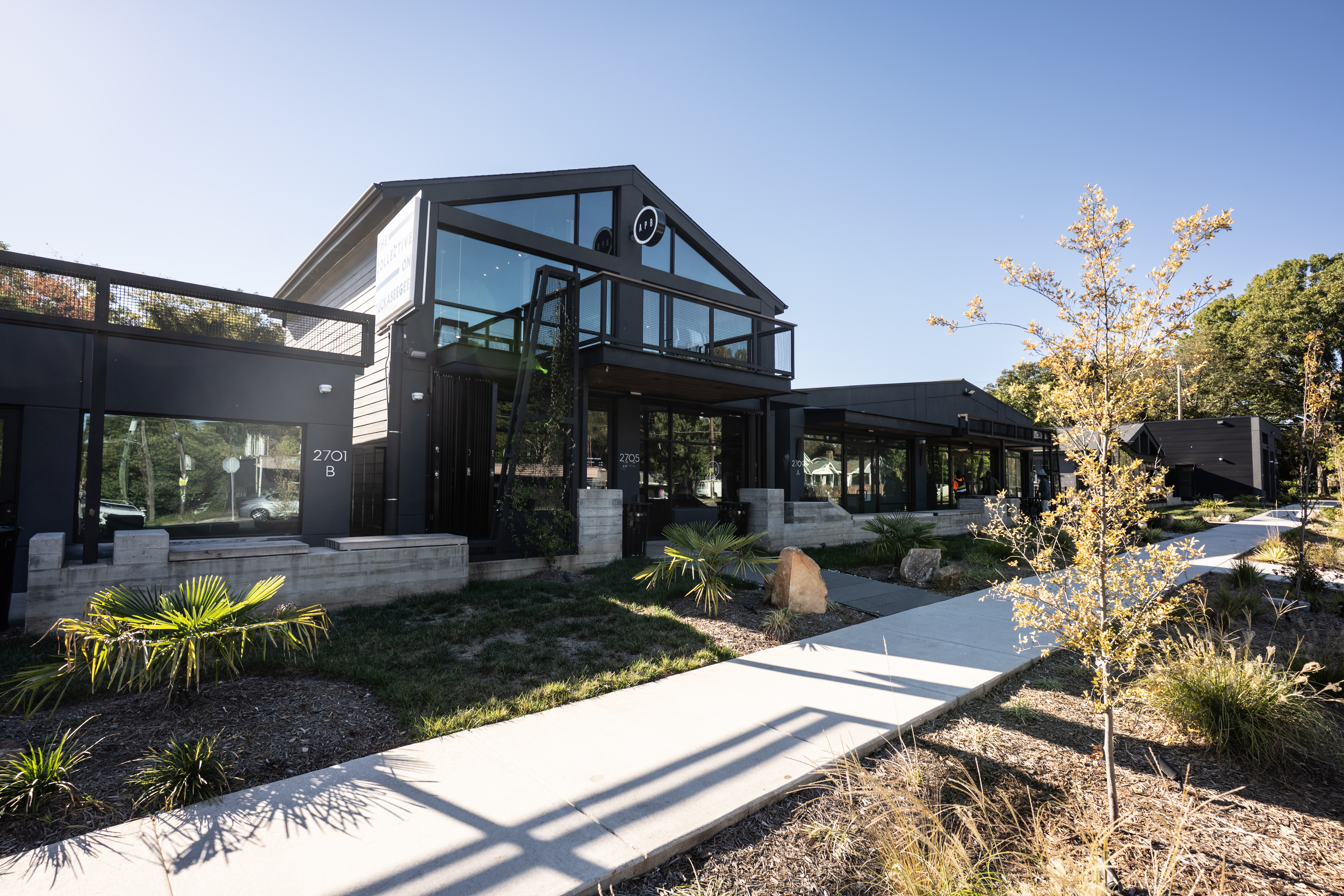
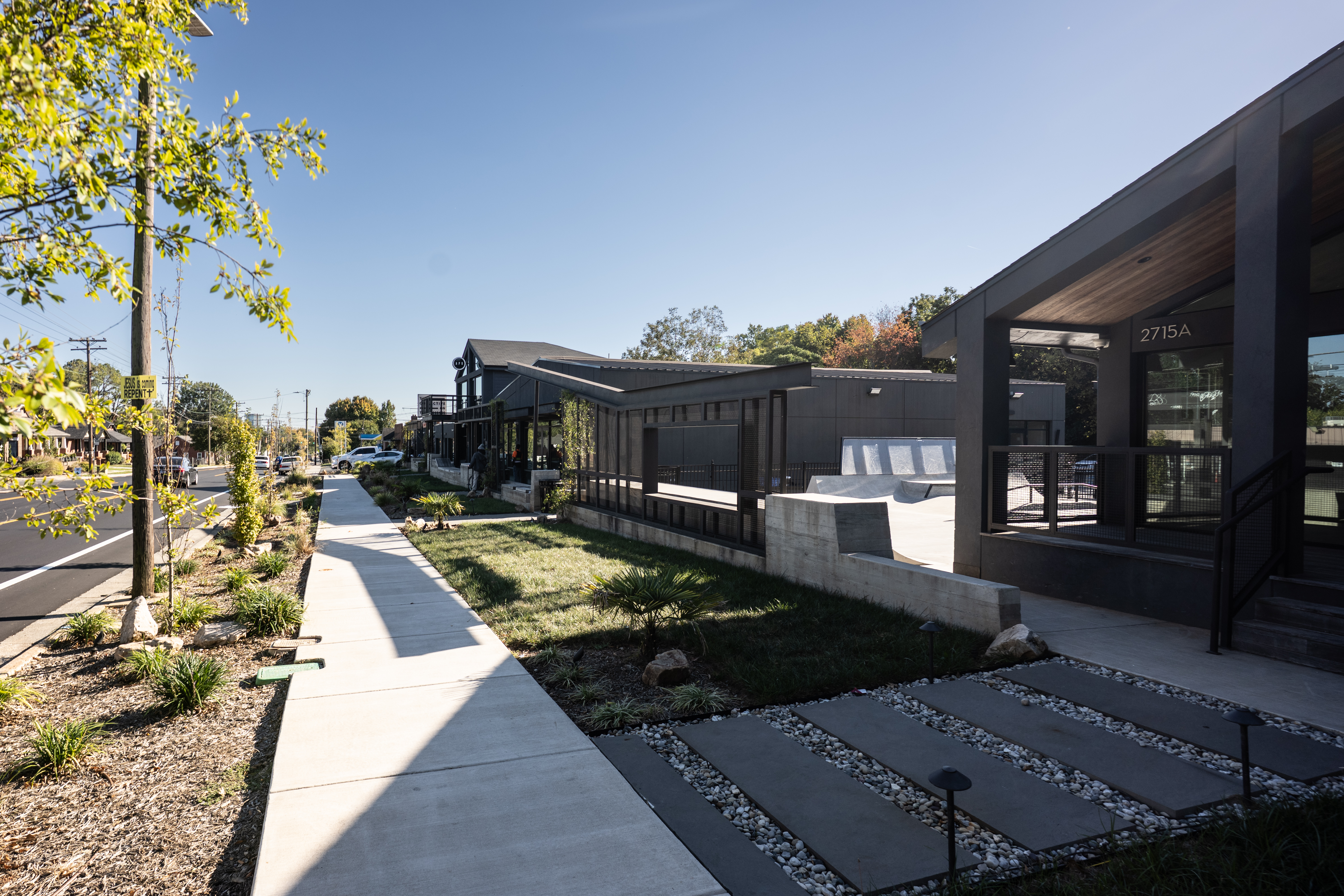
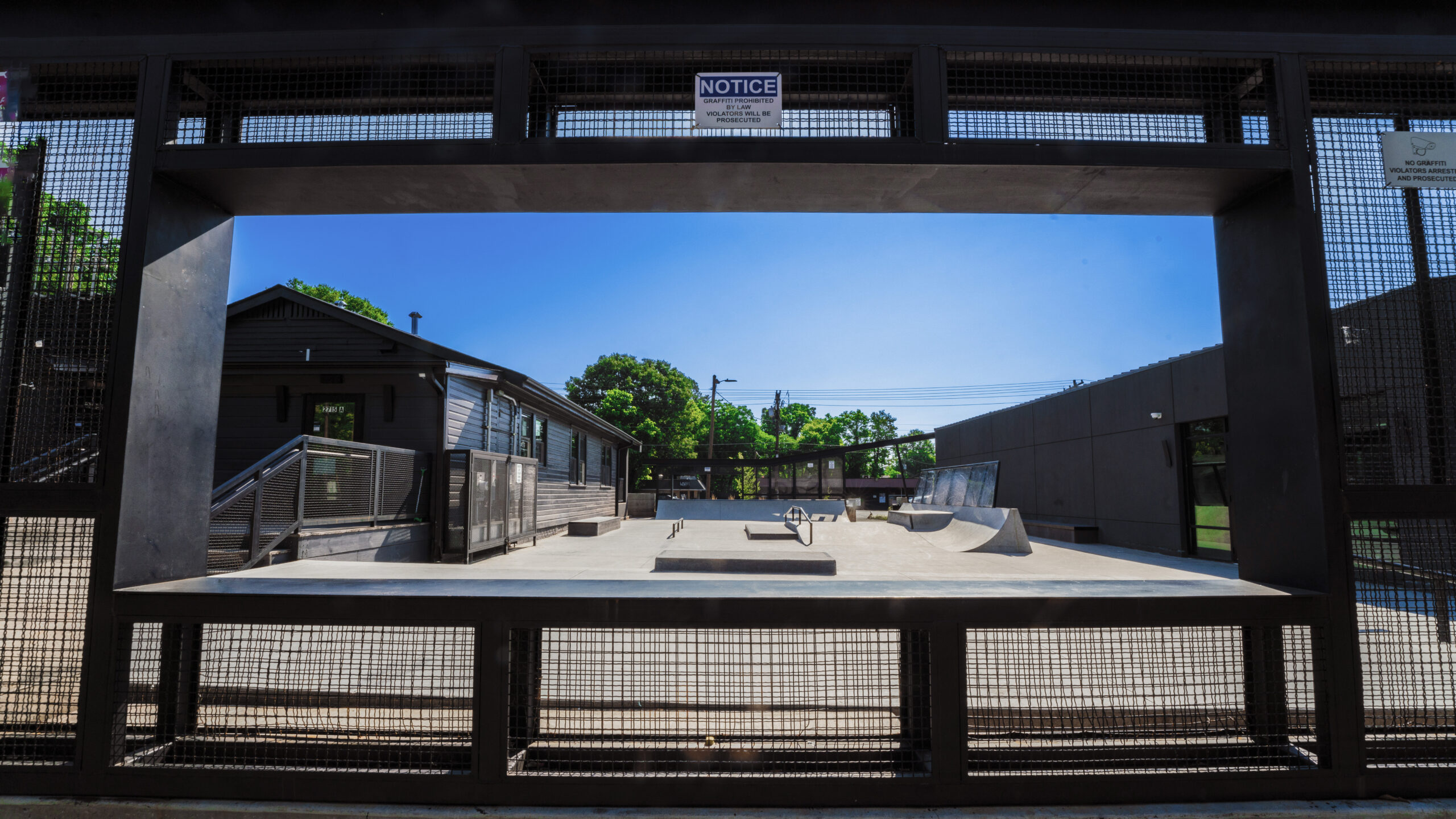
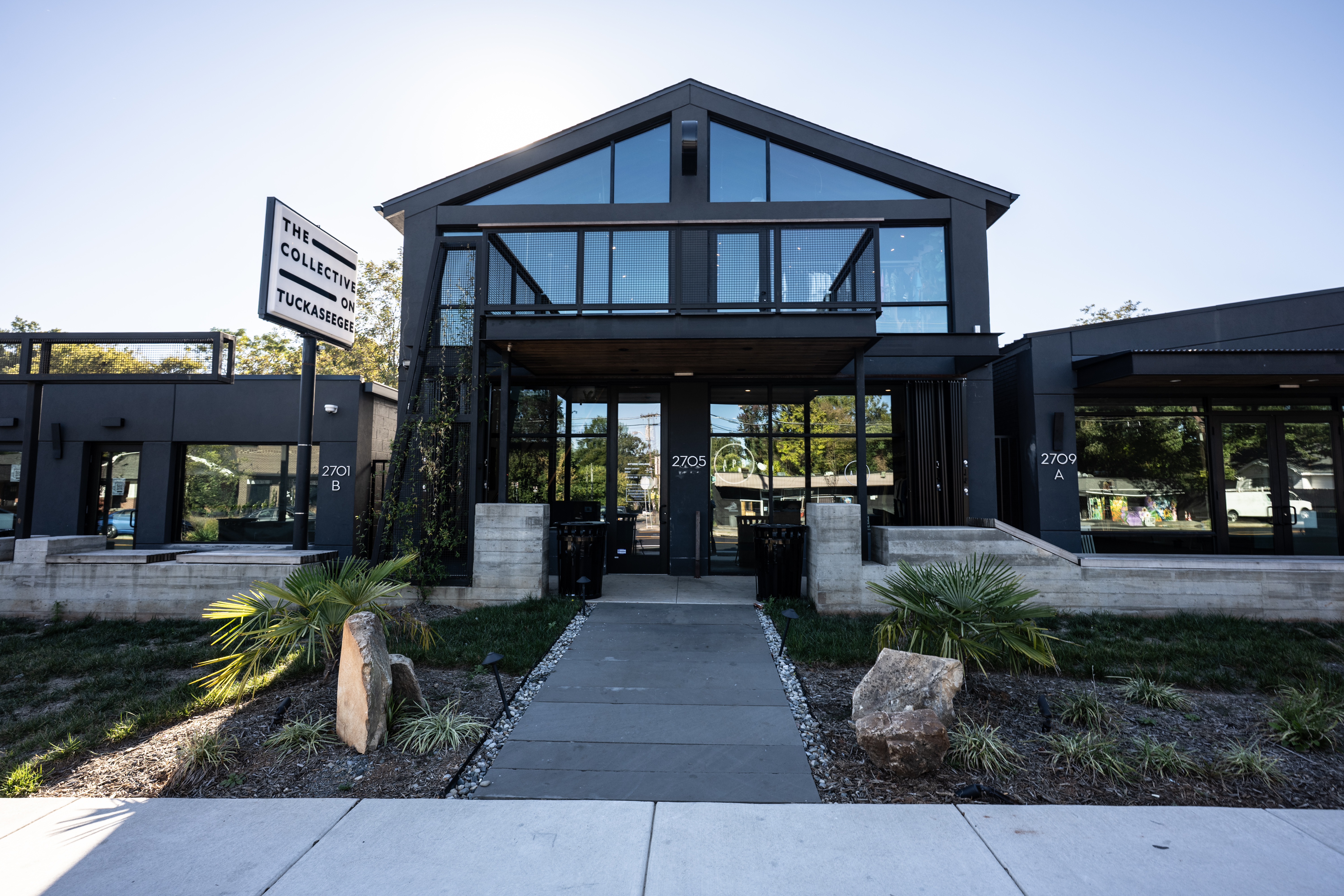
Great Urban Architecture – The Collective on Tuckaseegee
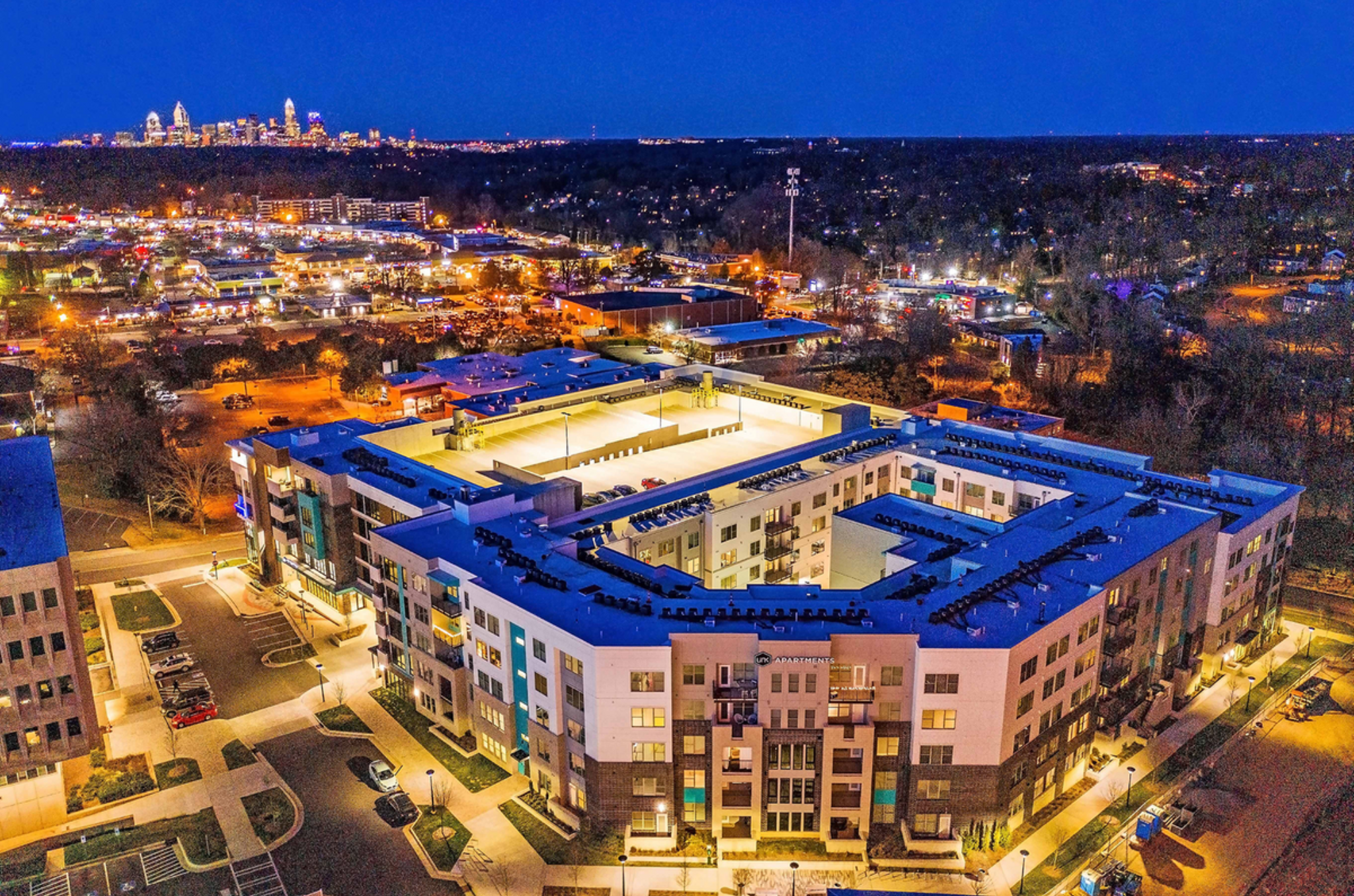
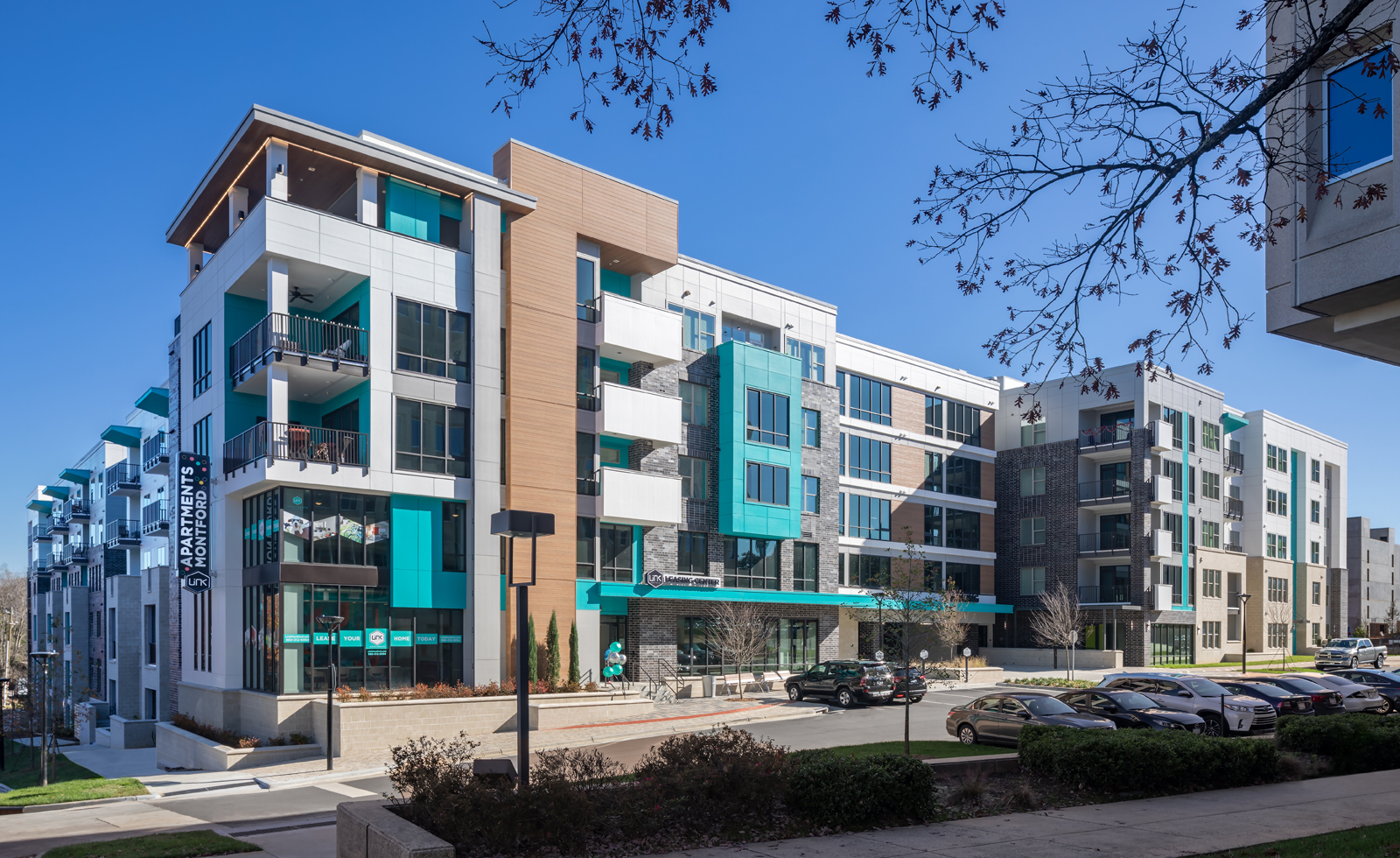
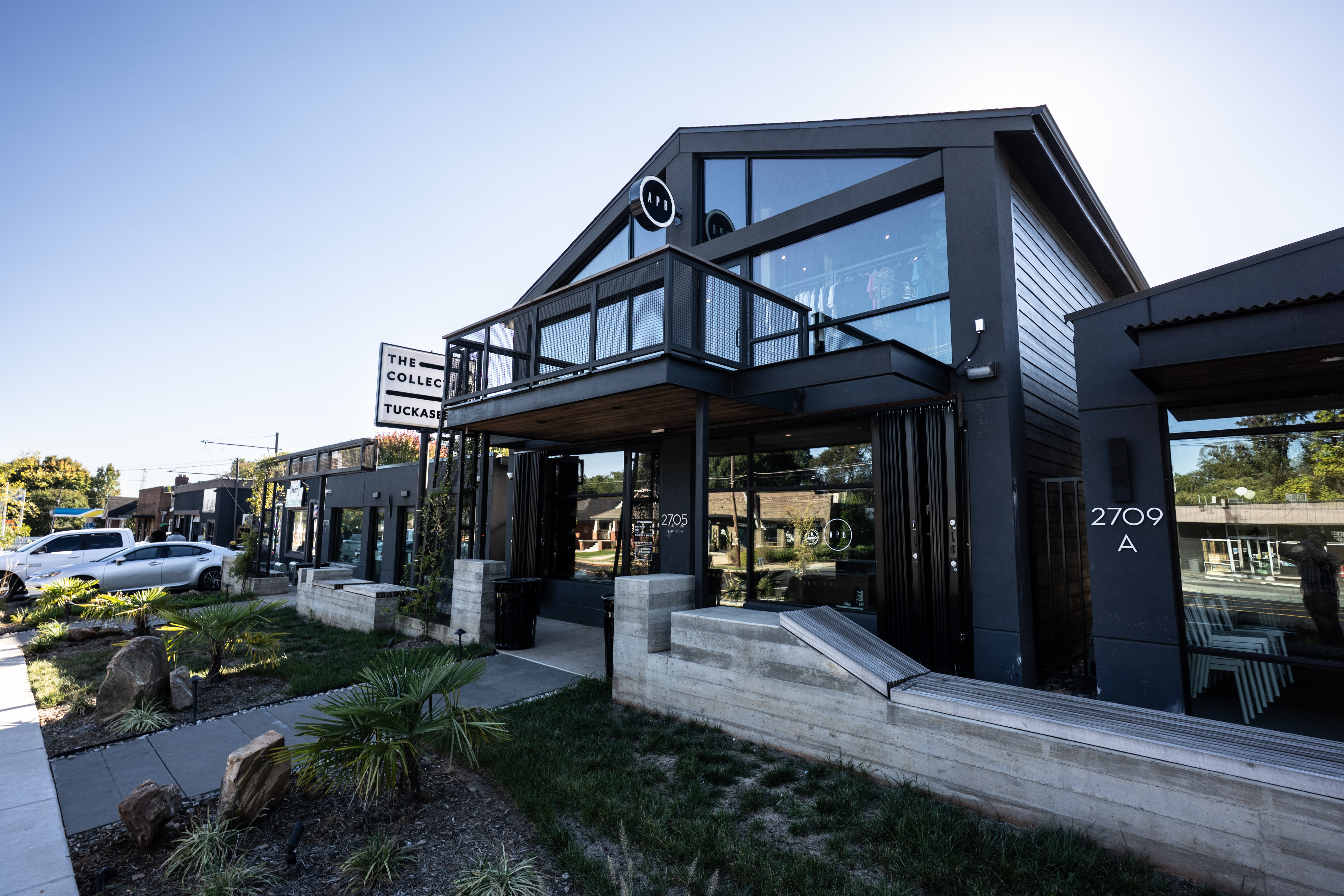
The Collective on Tuckaseegee redefines urban architecture by centering culture, community, and creativity in the heart of Charlotte’s Enderly Park. Spanning 13,000 square feet, this adaptive reuse project is home to ten unique spaces—including the new APB Charlotte retail location, the groundbreaking APB Skatepark, and the 38a Gallery—all designed to uplift the cultural legacy of Charlotte’s West Side. Developed by The Whitaker Group, the Collective is more than a building; it’s a platform for youth empowerment, streetwear innovation, and inclusive placemaking. The APB Skatepark, the first privately owned, Black-owned, publicly accessible non-DIY skatepark in the U.S., anchors the site as a space for movement, expression, and belonging. Through APBYou, the Collective hosts community programming like wellness events, skate sessions for women and girls, local vendor markets, and artist talks—turning the site into a living, breathing cultural hub. With its vibrant ground-floor uses and seamless connection to the street, The Collective on Tuckaseegee exemplifies how architecture can shape public space, celebrate identity, and foster community from the ground up.
Learn more about the Collective: https://www.axios.com/local/charlotte/2024/06/26/black-owned-skatepark-west-charlotte
Great Student Project – The Artist Touch
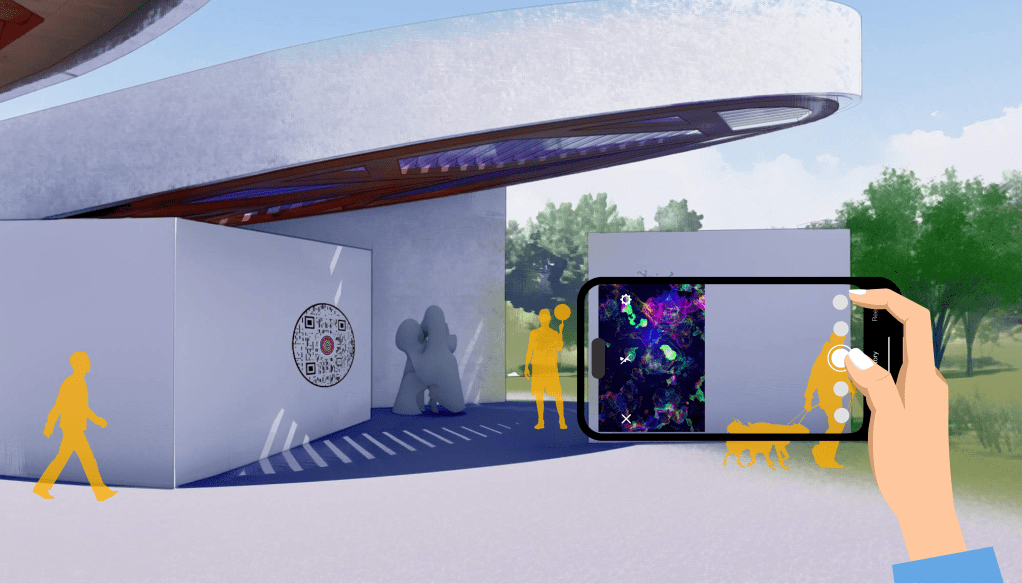
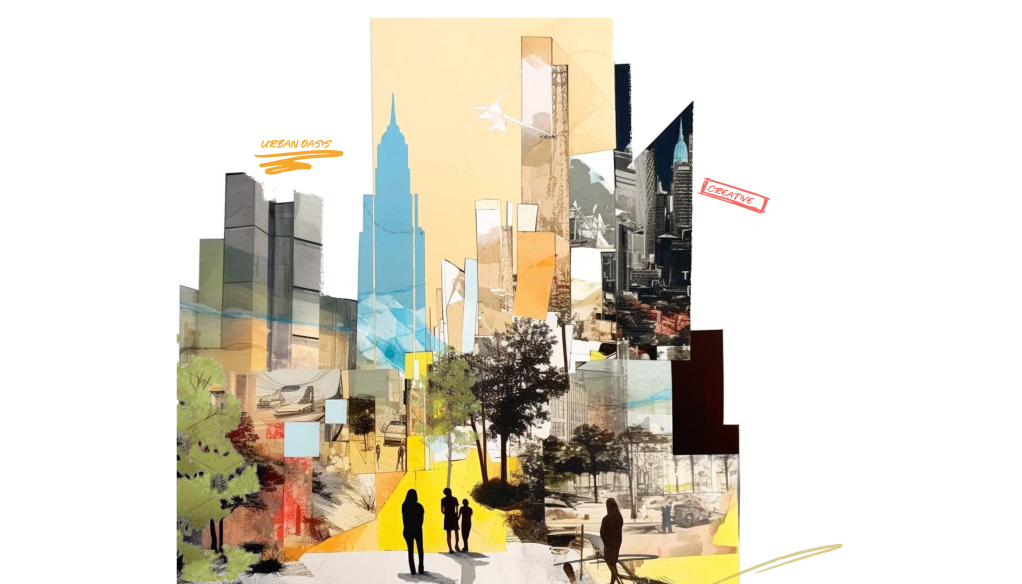
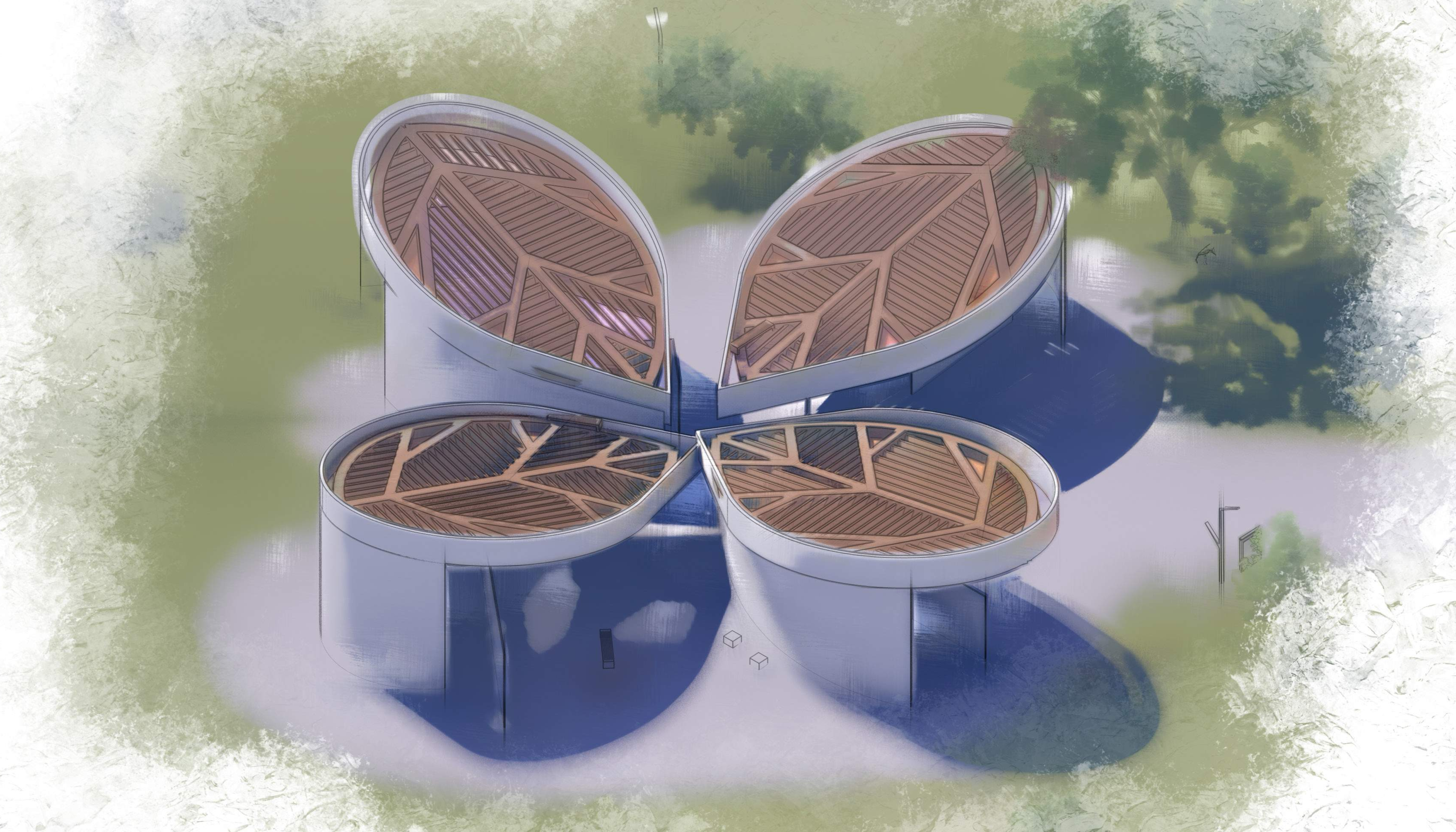
The Artist’s Touch by Nejla Harris is a standout student project that reimagines the Shoppes at University Place and its lakefront boardwalk through a lens of creativity, emotion, and innovation. Recognized for its outstanding academic merit, the project blends urban design fundamentals with imaginative storytelling, drawing inspiration from the whimsical, emotionally resonant worlds of Studio Ghibli. Harris integrates GIS mapping, animation techniques, and AI tools to explore how open space can foster artistic expression and emotional connection in the built environment. Her thesis envisions a more human-centered urban oasis—one that balances realism with creativity and invites people to experience the city not just as a place to move through, but as a place to feel. As the first individual student from this studio class to be recognized in this category, Harris sets a new precedent for how design education can merge technical skill with artistic vision to shape more meaningful public spaces in Charlotte.
Learn more about Nejla Harris at https://www.nejnstudio.com/about-me
Great Neighborhood Champion – Rickey Hall
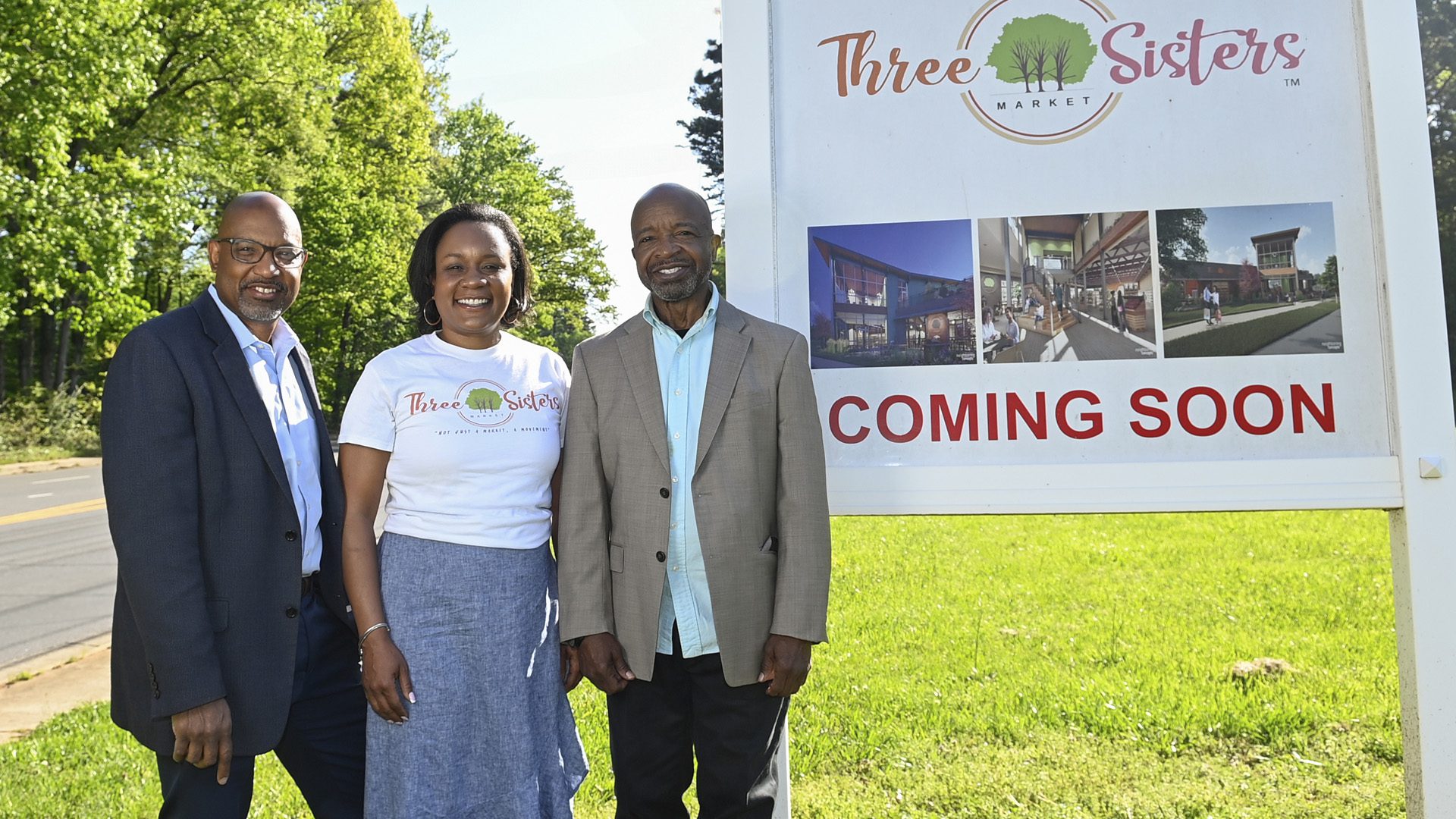
Rickey Hall is the embodiment of a Neighborhood Champion—an unwavering advocate whose leadership has shaped and uplifted the West Boulevard community for decades. A lifelong resident of the corridor, Hall’s deep roots in the neighborhood fuel his commitment to equity, access, and self-determination. As a leader within the West Boulevard Coalition, he has worked tirelessly to address systemic challenges, most notably the area’s long-standing status as a food desert. After years of unfulfilled promises from major grocery chains, Hall and his neighbors took matters into their own hands, planting the seed for what would become the Three Sisters Market—a community-owned grocery store built by and for the people it serves. His vision is grounded in lived experience and a belief that every neighborhood deserves dignity, resources, and opportunity. Whether advocating for mobility improvements, organizing community events, or mentoring the next generation, Rickey Hall’s work is a testament to the power of grassroots leadership and the enduring spirit of West Charlotte. Learn more about Rickey Hall: https://sites.charlotte.edu/food-oral-history/interviews/west-boulevard-neighborhood-coalition/
Great Urban Design Champion – David Walters
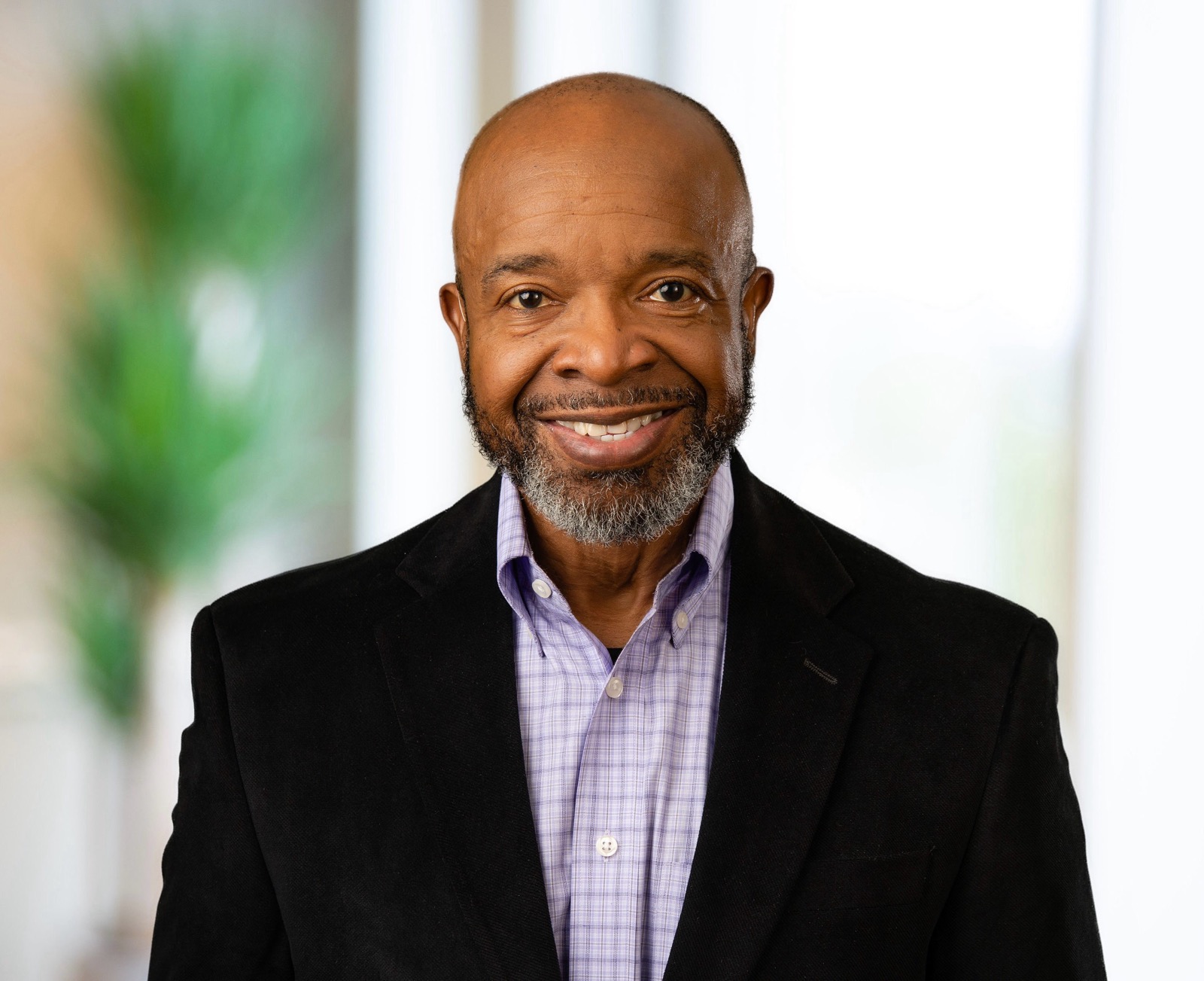
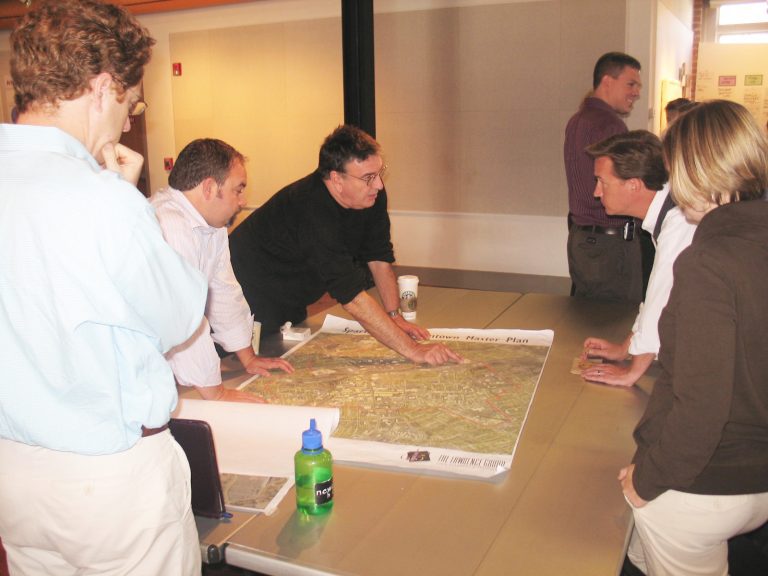
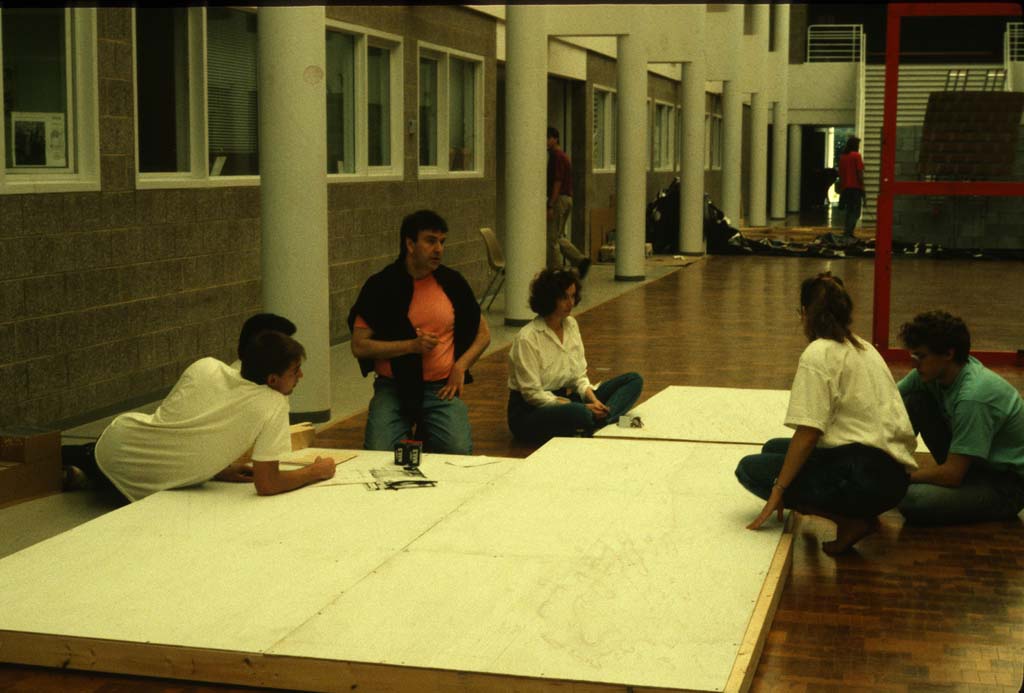
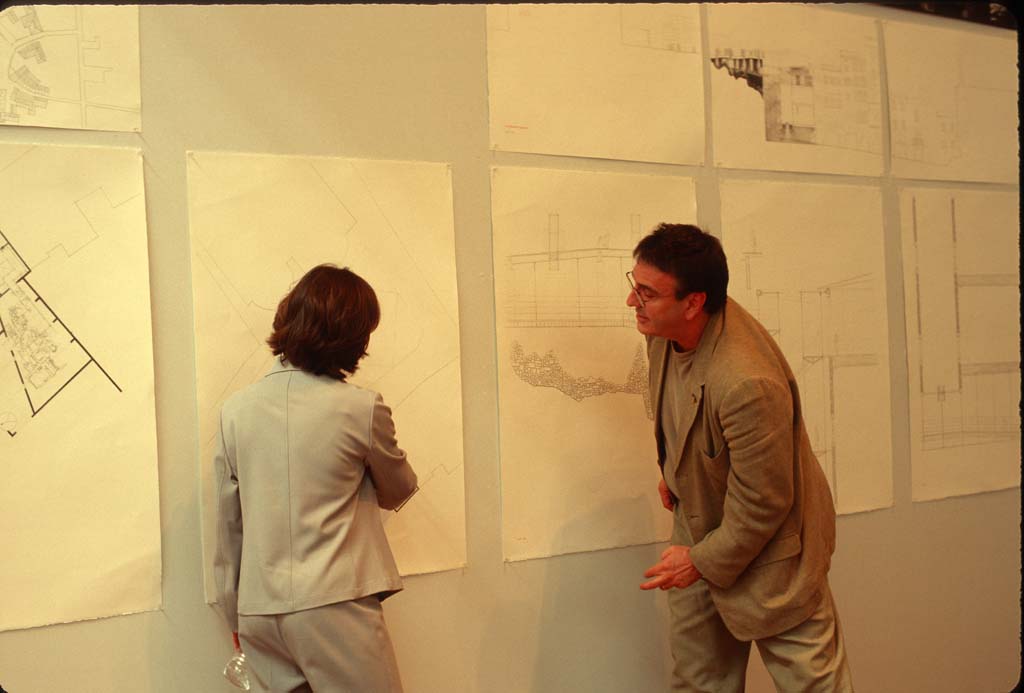
David Walters is a true Urban Design Champion—an educator, practitioner, and advocate whose decades-long career has shaped the way Charlotte thinks about people, place, and the built environment. As the founding director of the Master of Urban Design (MUD) program at UNC Charlotte, Walters has mentored generations of designers and planners, instilling in them a deep understanding of how thoughtful urban design can transform communities. Originally from England, Walters brought his award-winning experience in architecture and planning to the U.S., where he has worked across the South and made a lasting impact in North Carolina.
His influence extends beyond the classroom. Walters has helped towns across the state implement smart growth principles, authored key planning toolkits, and led award-winning design teams at The Lawrence Group. His work in places like Davidson, Cornelius, and Huntersville has become a model for sustainable, people-centered development. Through books, public speaking, and hands-on planning, Walters has consistently championed design that connects people to place and fosters vibrant, inclusive communities. His passion, knowledge, and tireless advocacy have made Charlotte a better place—and inspired countless others to do the same. Learn more about David Walters: https://www.davidwaltersriba.com/about/index.html
People’s Choice Award – Camp North End
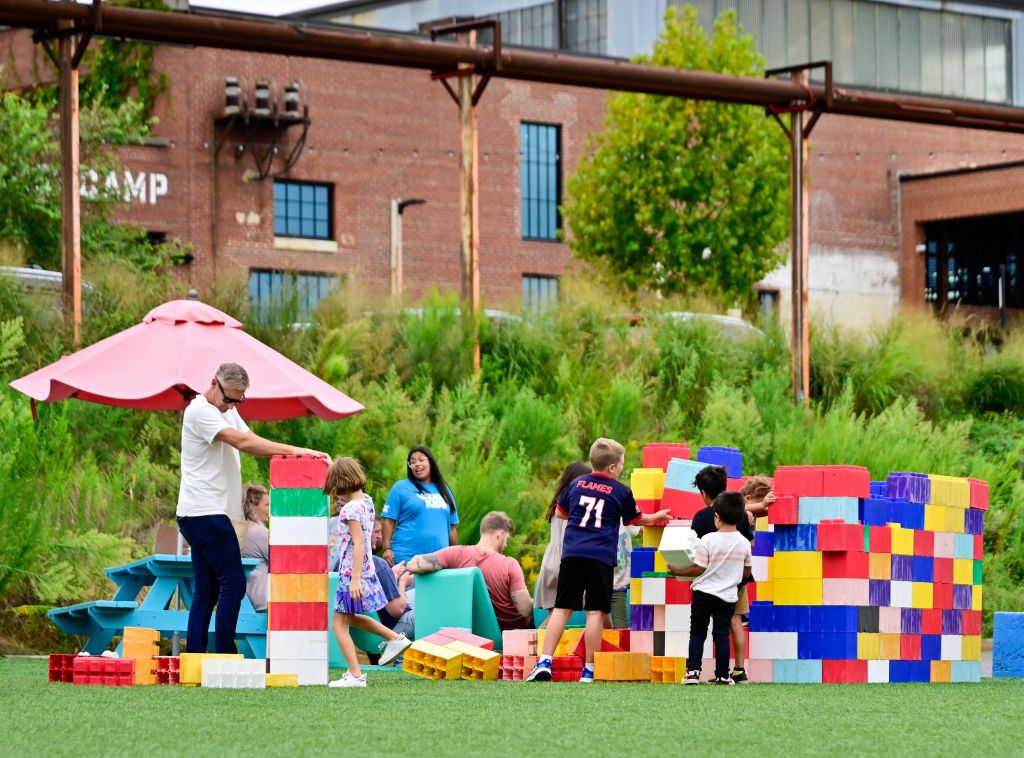
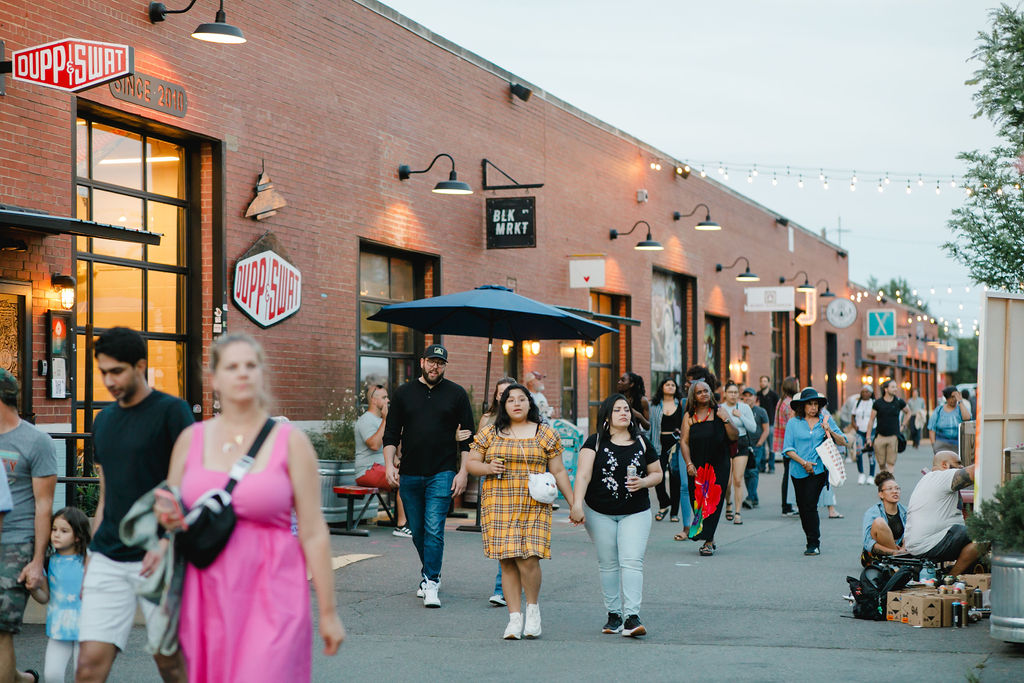
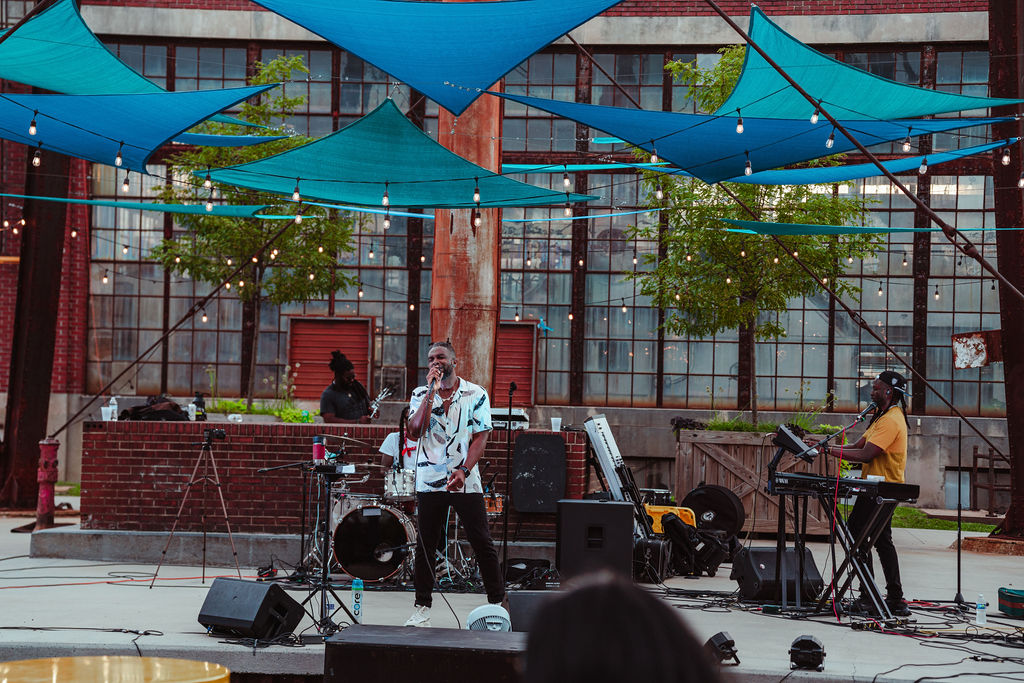
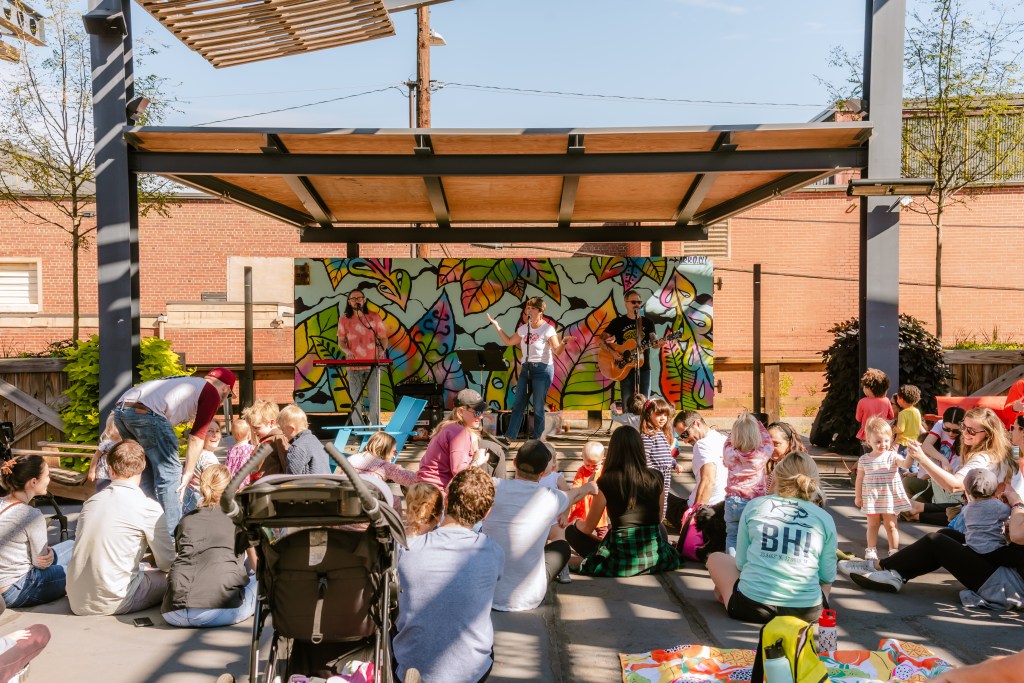
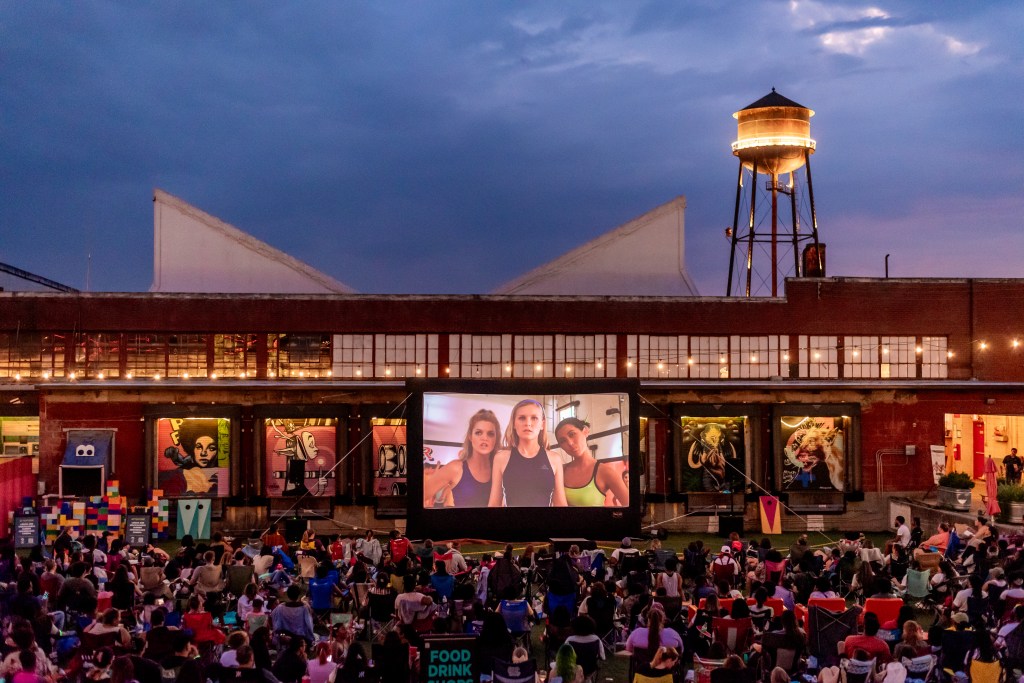
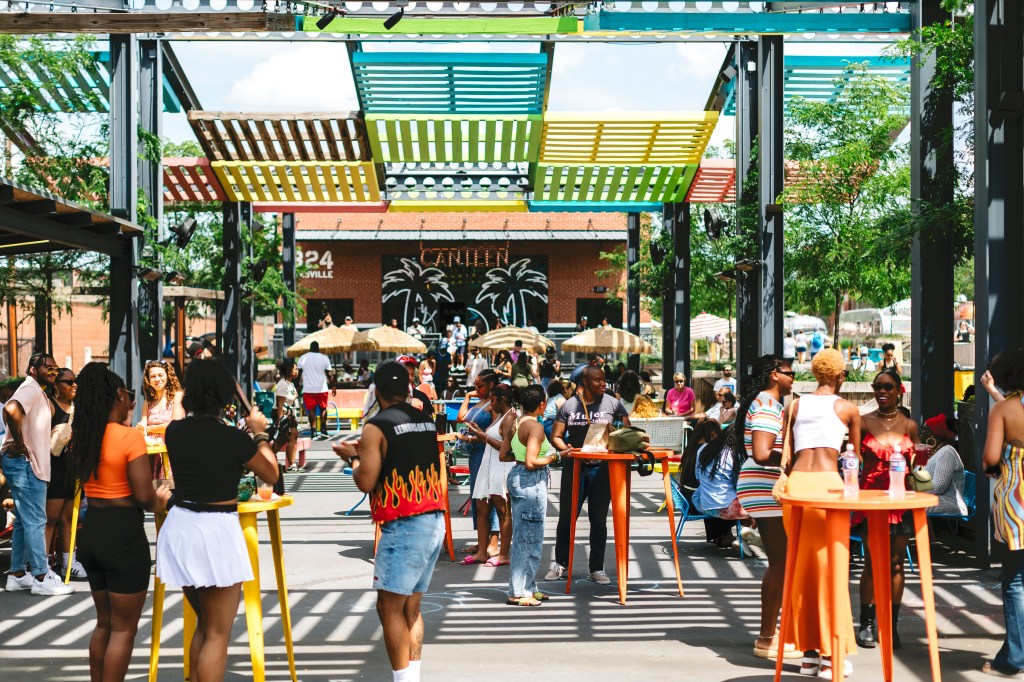
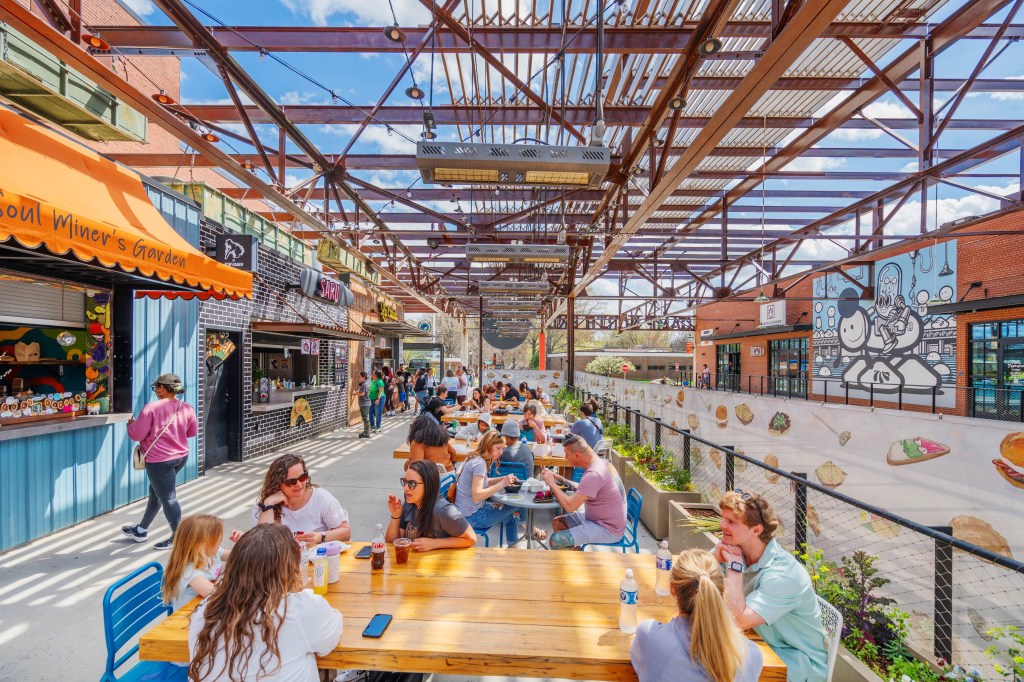
Camp North End is Charlotte’s People’s Choice for great urban design—a 76-acre transformation that has turned a once-inactive industrial site into one of the city’s most vibrant and beloved destinations. With over one million visitors in the past year, Camp North End is a living case study in the power of adaptive reuse. Once home to a Ford assembly plant, a Cold War missile factory, and a Rite Aid distribution center, the site now pulses with creativity, commerce, and community. Through a thoughtful mix of historic preservation, public-private partnerships, and bold placemaking, Camp North End has become a hub for innovation, featuring food halls, art galleries, creative offices, and public events that draw people from across the region. Its internal street network, repurposed industrial buildings, and unexpected green spaces create a walkable, immersive experience that honors the site’s past while shaping Charlotte’s future. More than just a development, Camp North End is a cultural landmark—where history, design, and community converge to create a place that feels both rooted and visionary.
Learn more about Camp North End: https://camp.nc/

Want to see the winning projects for yourself? We encourage you to visit these inspiring public spaces and experience firsthand how great design can transform our city.
Follow us on Instagram (@clturbandesign) for project highlights, invitations to upcoming events, and updates on future design initiatives. For more in-depth conversations about urban design here and across the globe, check out the rest of our blog. Sign up for our newsletter for creative opportunities, blog updates, and insights on the latest urban design news in Charlotte.
Let’s keep celebrating the people and places that make Charlotte a city for everyone!
 People make Cities