A kid obsessed with the Holiday Season
For those that know me well, it’s no secret that I love the holidays. I was the kid that would watch old holiday movies like White Christmas and Miracle on 34th Street every year (multiple times, too!) while members of my family would roll their eyes. That obsession has continued to this day, although I find myself enjoying holiday-adjacent movies like Die Hard and Gremlins more than old musicals.
I find my fixation around the Christmas season fascinating, especially since I grew up in the country adjacent to a town that had the tiniest semblance of a Main Street and, unfortunately, one devoid of real holiday traditions.
My best guess is that, until you reach that age, where things lose their magic, there is some real awe-inspiring charm considering the potential for a jolly old fat man to fly around the world bringing joy to little boys and girls (and to those of us who refuse to grow up 😊). Main Street or not, it’s still magical.
Now, as an adult with an understanding of what makes cities great – walkable blocks, public open space, authentic architecture, and strong mobility options – I see the holidays act as a magnifying glass. This season doesn’t create great places; it amplifies and validates the best, most intentional aspects of urban design and placemaking.
The title of this blog is a nod to Steve Mouzon’s concept of “Gifts to the Street” – the gestures that inform, entertain, or delight the pedestrian realm. The public realm, paired with those gifts and the accompanying “Sidewalk Ballet” (Jane Jacobs’ term for the unchoreographed flow of people in a city) that occurs is a city is an amazing thing to witness. Add in some festive lights, trees, and window shopping and the holidays offer this opportunity de rigueur.
So, what are some well-designed spots in the public realm that take these core placemaking concepts and create an unforgettable and elevated holiday experience? I’m listing a handful that I’ve experienced that seem to really get it right.
New York City
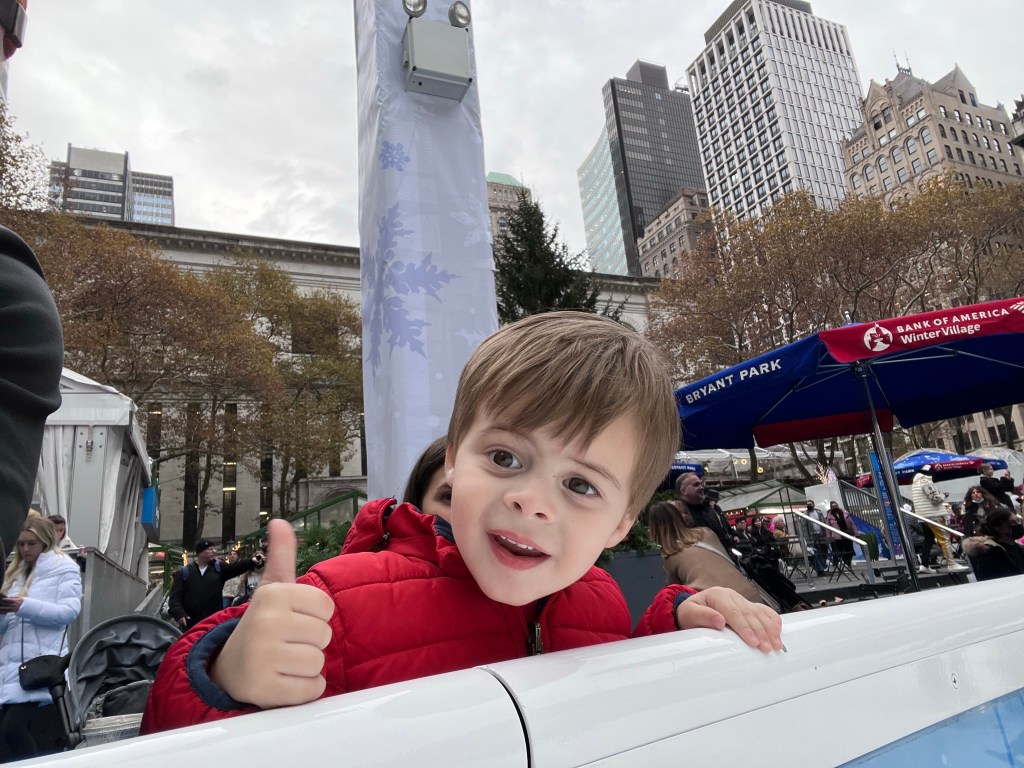
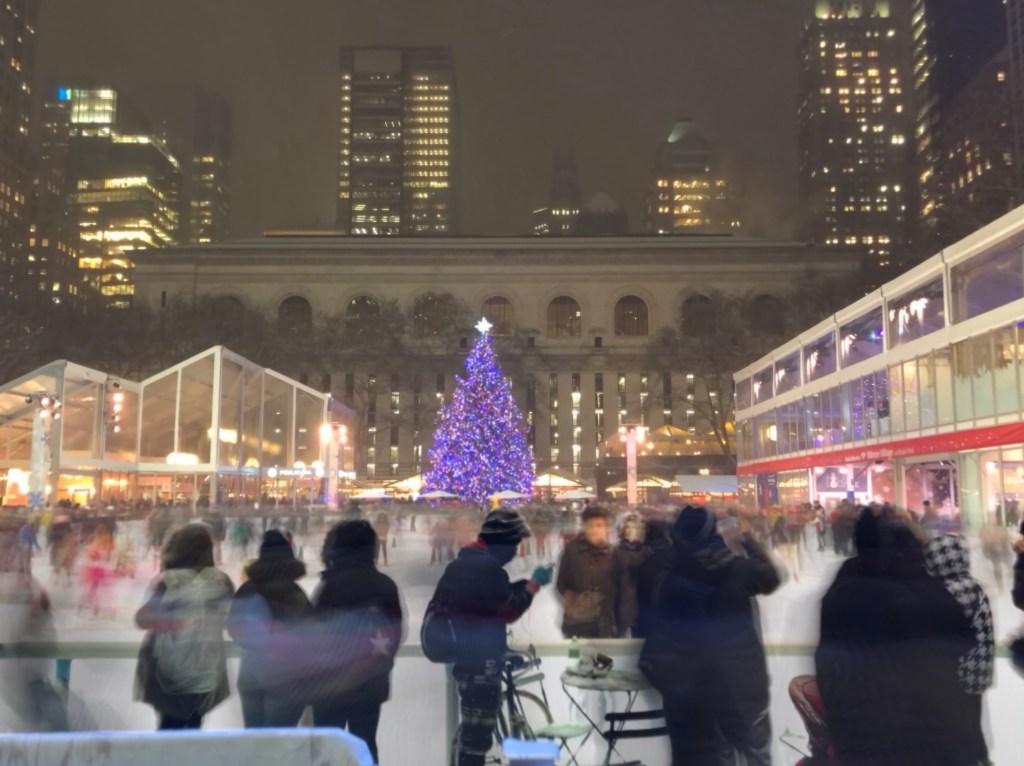
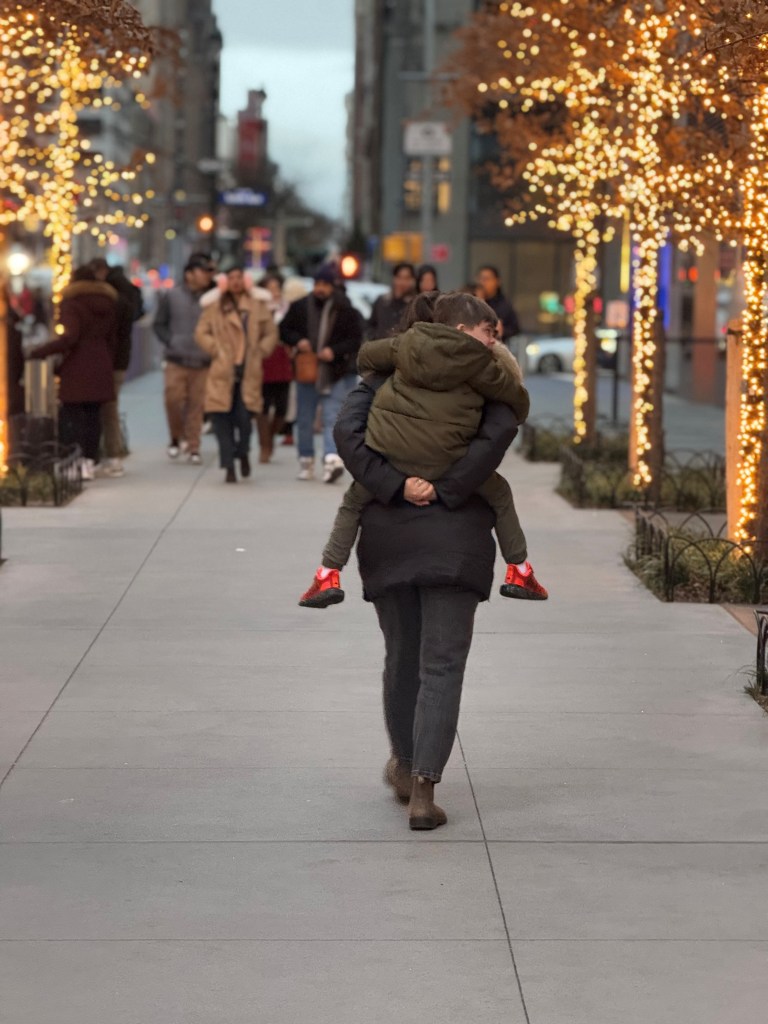
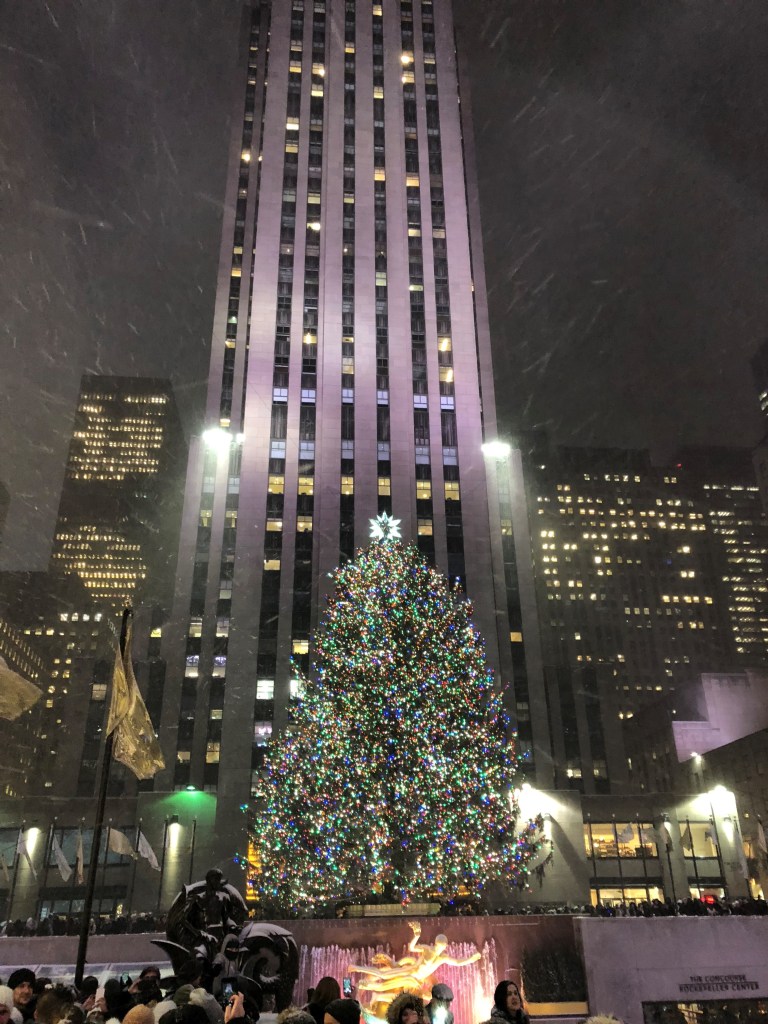
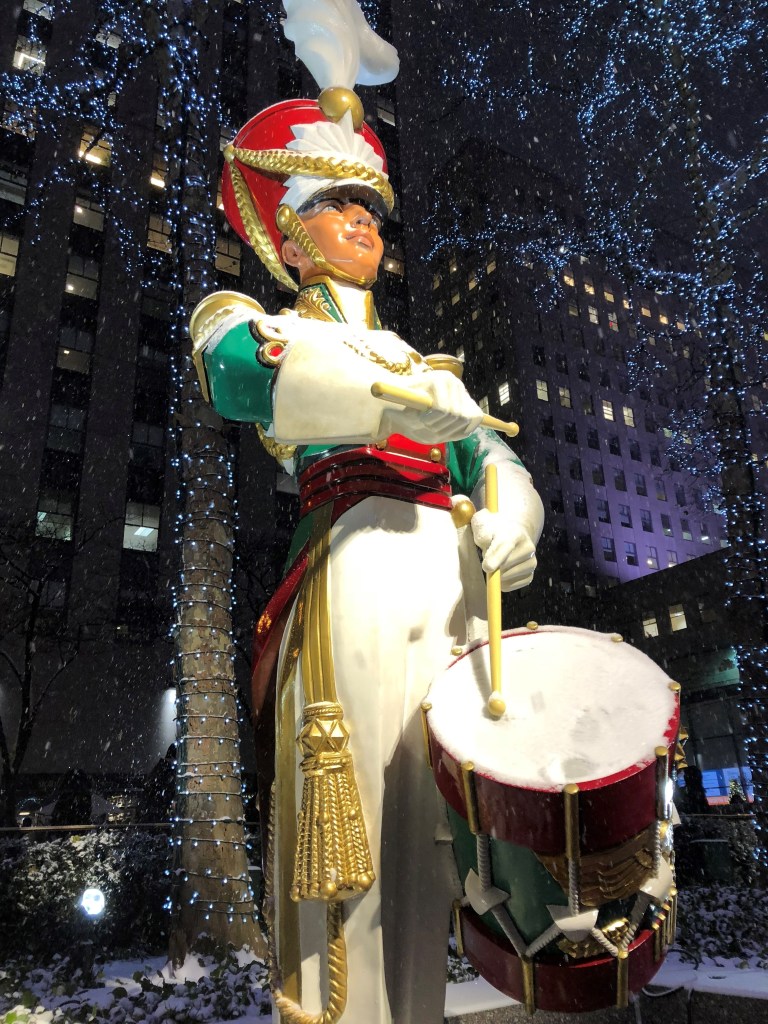
Each borough of NYC has an example of dozens of public spaces that already function incredibly well – they’re comfortable places to be during all seasons, but the holiday season really elevates the experience.
Rockefeller Center
Rockefeller Center and the buildings along 5th Avenue are a masterclass in mixed-use density and vertical placemaking. The towering Christmas tree, the sunken ice rink, and the wide sidewalks of Fifth Avenue (often temporarily shut down to accommodate the resulting sidewalk ballet) create a monumental yet pedestrian-focused experience. The window displays and the Saks light show are additional gifts of delight, confirming the success of design that prioritizes human awe amidst towering enclosure.
Bryant Park
This mid-block, human-scaled park is utilized every season, but its transformation into a Winter Village – packed with temporary market stalls and the ice rink – is the ultimate demonstration of flexible urbanism. The holiday programming and decorations (the wreaths around the lion’s neck are my personal favorite) proves that successful public space is defined by its ability to adapt and be reprogrammed to meet seasonal community needs.
Hudson Yards
While often panned for its exclusionary architecture, the development’s holiday transformation is instructive. Once the sun sets, the over two million holiday lights reveal a massive, highly curated, and elevated public realm. This shows that even in places prioritizing commerce, the power of strategic, high-quality lighting and seasonal spectacle can successfully draw and delight the public, providing a magical experience.
Chicago, IL
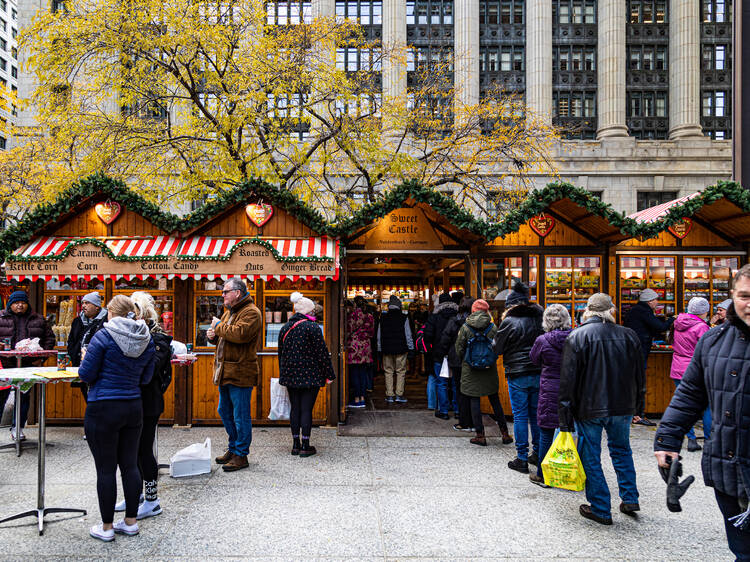
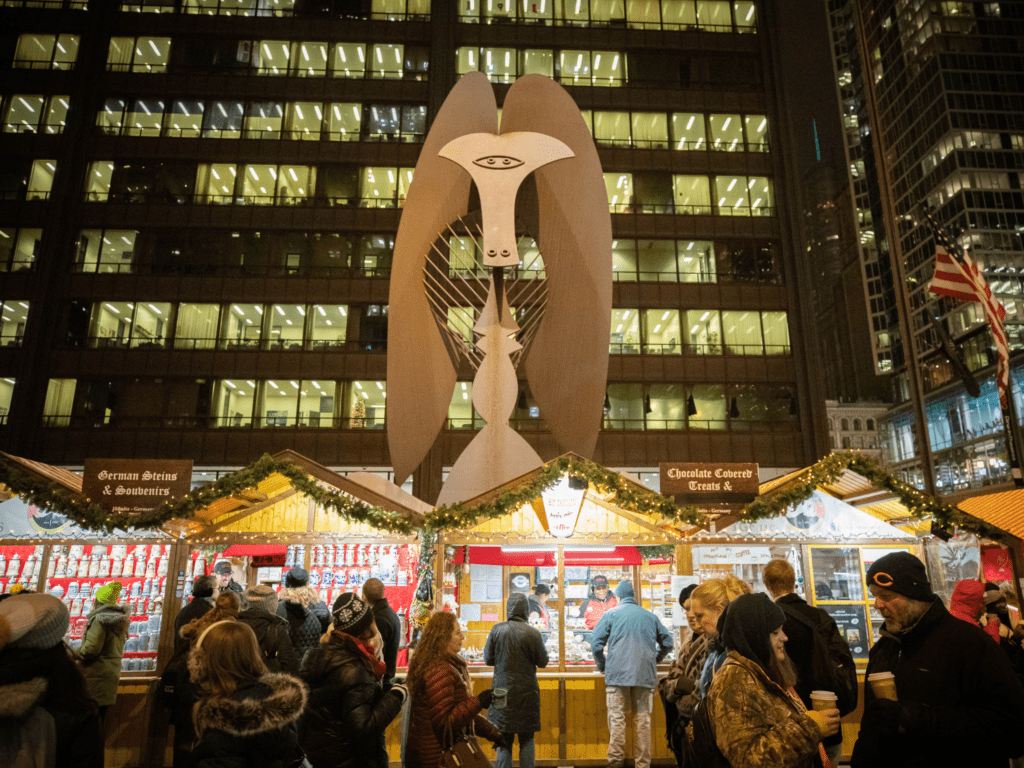
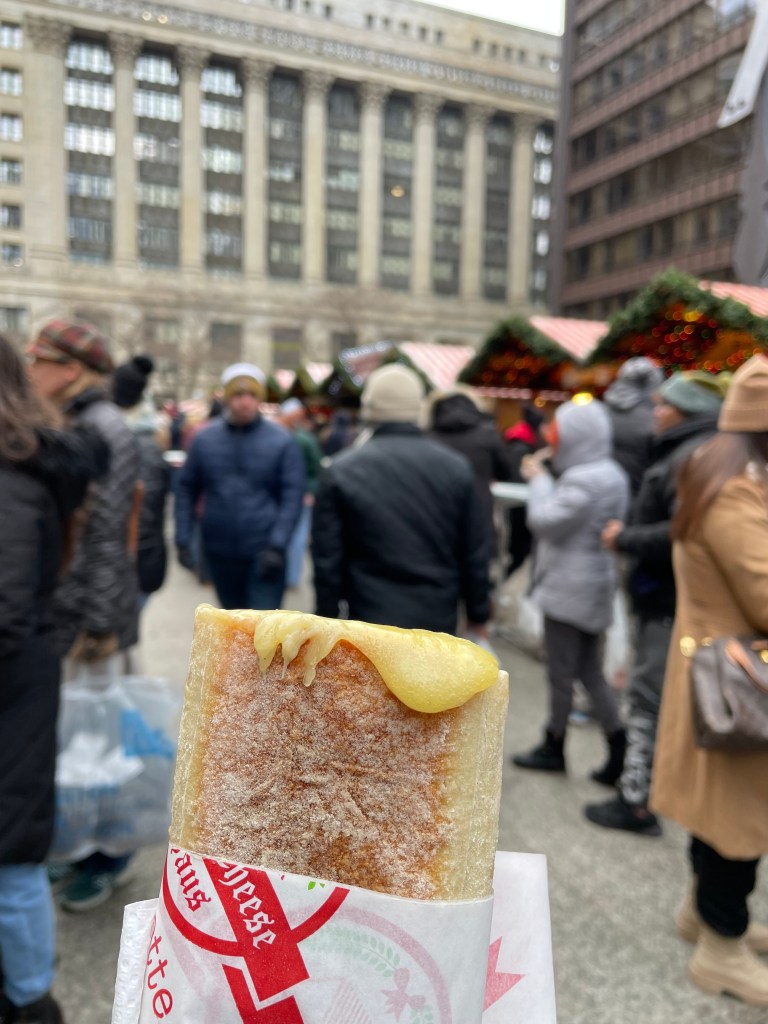
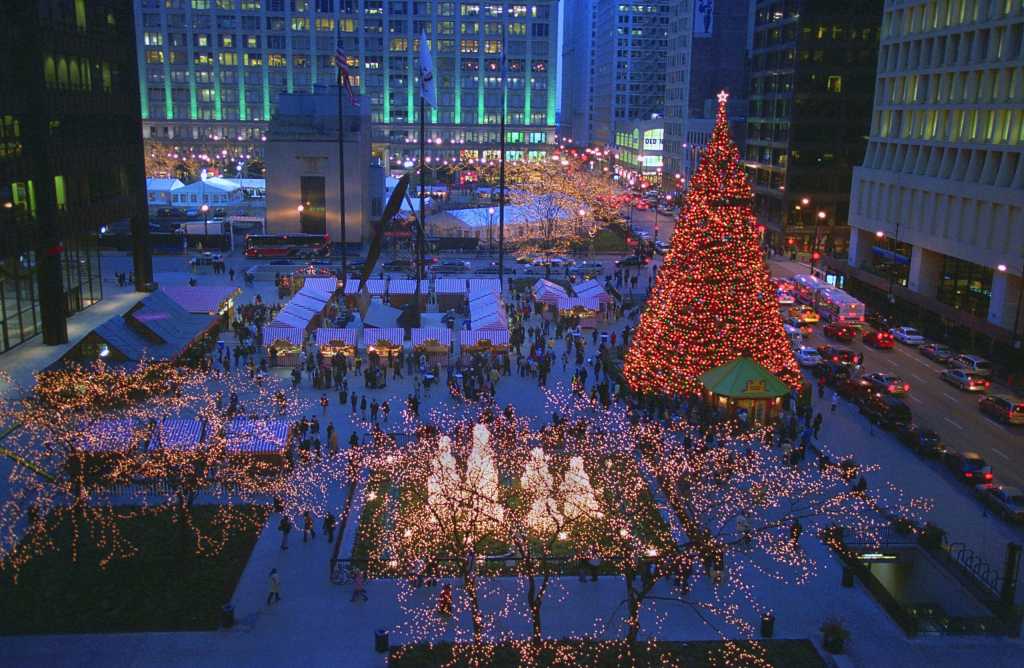
Like Bryant Park, Chicago elevates an existing public plaza by transforming Daley Plaza into a German Christkindlmarket. This intervention highlights the importance of cultural authenticity and theme in placemaking, building upon the city’s significant German and Polish ancestry. The market’s dense, human-scaled activity (the smells of mulled wine and the glow of temporary stalls) takes an otherwise sterile civic plaza surrounded by skyscrapers and fosters meaningful social interaction that only thoughtful programmatic design can achieve.
Bethlehem, PA
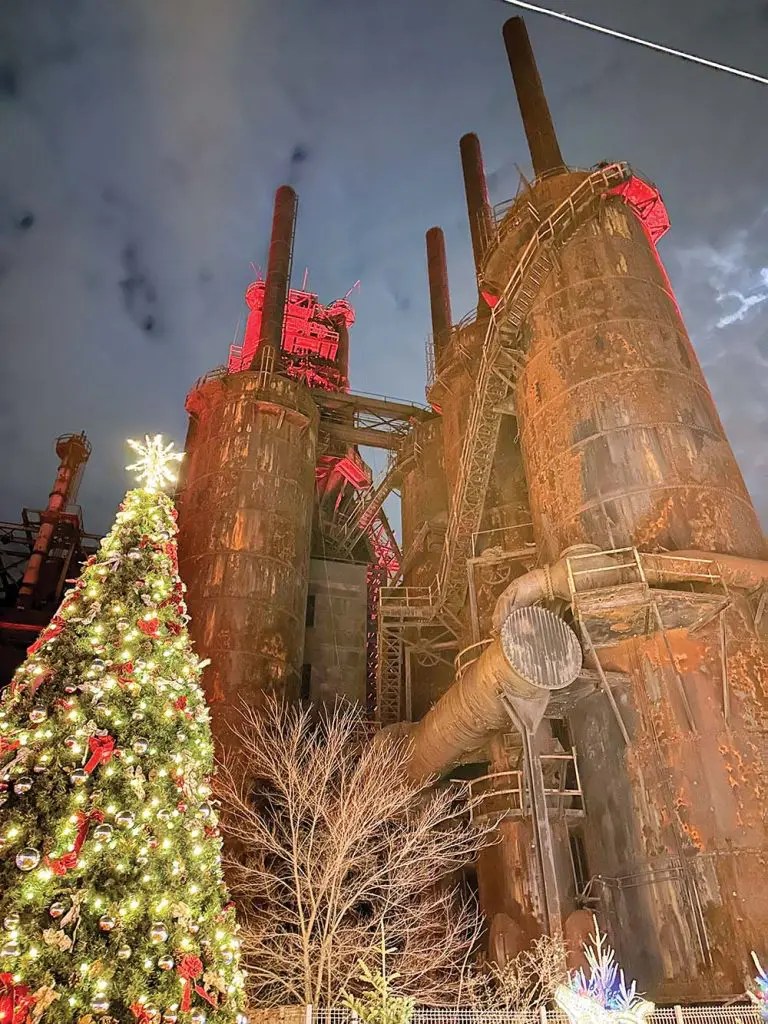
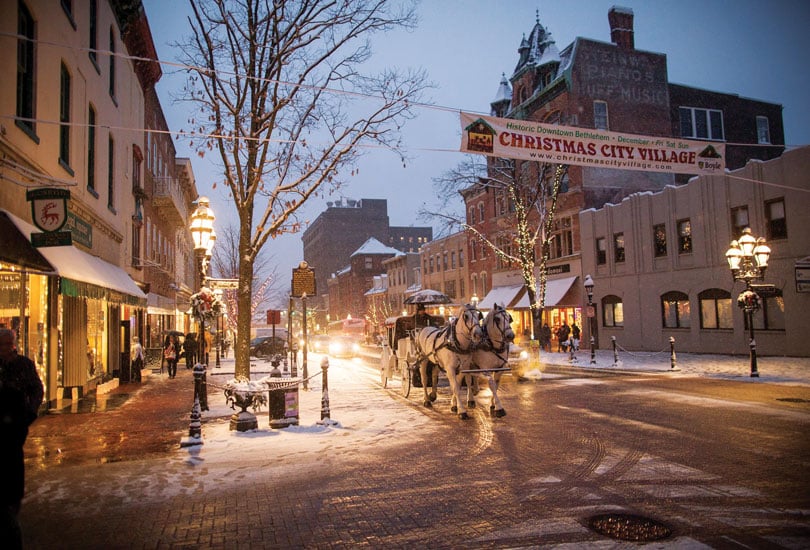
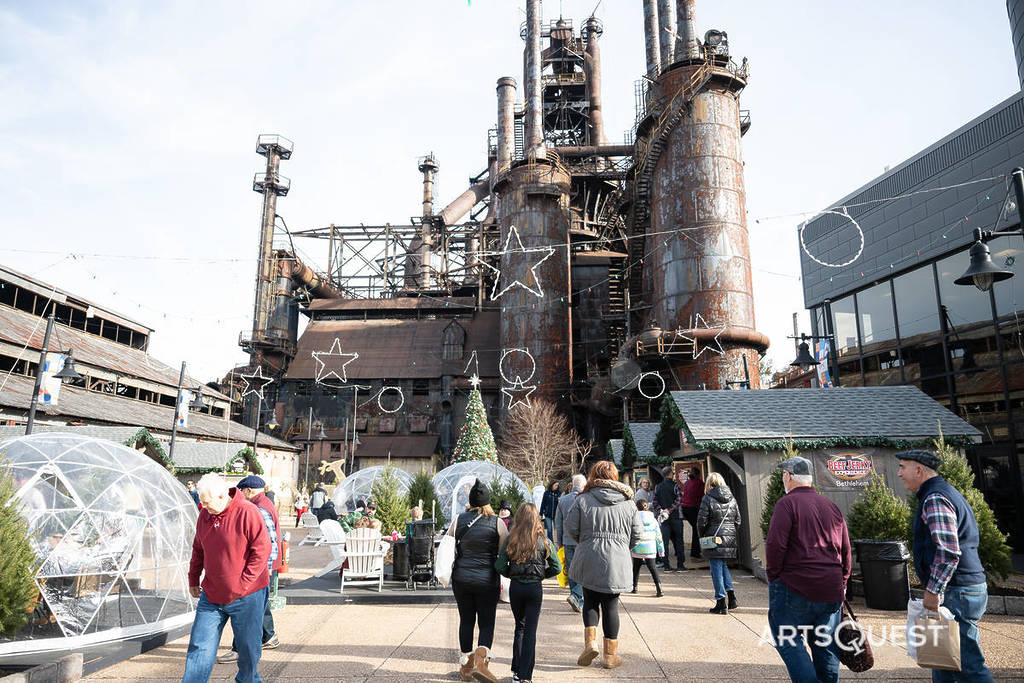
Contrasting the dense urban spectacles, towns like Bethlehem show the power of consistent, authentic, small-scale design.
Bethlehem benefits from a smaller, more pedestrian-scaled Main Street layout and historic architecture. These existing building blocks establish a strong sense of place and local identity. The city’s decorations and lighting amplify those design strengths, proving that powerful holiday placemaking is less about sheer spectacle and more about, in the case of the decorations around Bethlehem Steel Works, authenticity and consistency in reinforcing a sense of place.
Regional Shopping Malls


Growing up in a small town meant many Christmas experiences of my youth involved going to our local mall. That’s where we would meet family and friends to peek a glimpse of Santa, get a bite to eat, and shop for presents.
To respect our previous precedents, I must acknowledge that malls are generally only accessible by automobile – real failures of good external urban design. Their saving grace though (realizing I may be in a small subset of designers that feel this way), though, is that the internal design of shopping malls is inherently pedestrian-focused. Just as Bethlehem, Chicago, and NYC enhance the pedestrian experience along streets and against storefronts, shopping malls were no exception and did just that for their shoppers.
To this day, the decorations and visits from Santa at malls that are lucky enough to be thriving continue to provide a high-quality, memorable holiday experience that, one could argue, is most attainable to those without access to a functioning downtown. While divorced from the traditional street, malls proved that pedestrian scale, awe-inspiring decorations, and programmed human experiences are universal needs, regardless of the urban context.
Designing for Awe, Year-Round
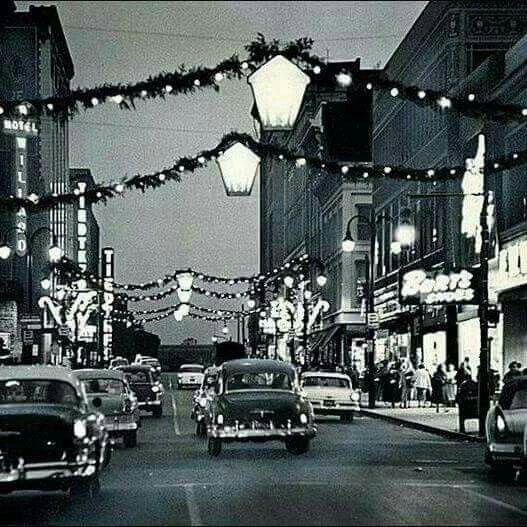
Whether it’s the monumental Christmas Tree at Rockefeller Center or the cozy queue for Santa at the local mall, the holiday season clearly reveals that successful urban design occurs when we focus on facilitating joy. We provide the public realm with Gifts to the Street that entertain and delight our senses, dramatically augmenting a city’s existing Sidewalk Ballet.
These places are great every day of the year, but they undoubtedly hit their stride during the holiday season because of intentional placemaking. This annual examination makes a strong case that we can (and should) focus on providing similar high-quality, emotionally resonant experiences the other eleven months of the year, using temporary events, public art, and thoughtful programming to sustain the spirit of awe and shared community year-round.
What are your favorite urban spaces that are elevated with holiday programming? Leave them in the comments below!
 People make Cities