This February, we’re sharing our love for Charlotte and the places that make it special. How you feel about your city depends on many factors—but most of them are tied to urban design! Well-being, belonging, and connection are amplified in public spaces, from streets to neighborhood coffee shops. Good urban design gives these spaces what they need to make that happen. Our team picked our favorite spots around Charlotte that remind us why we love this city.
Kara – The Little Sugar Creek Greenway
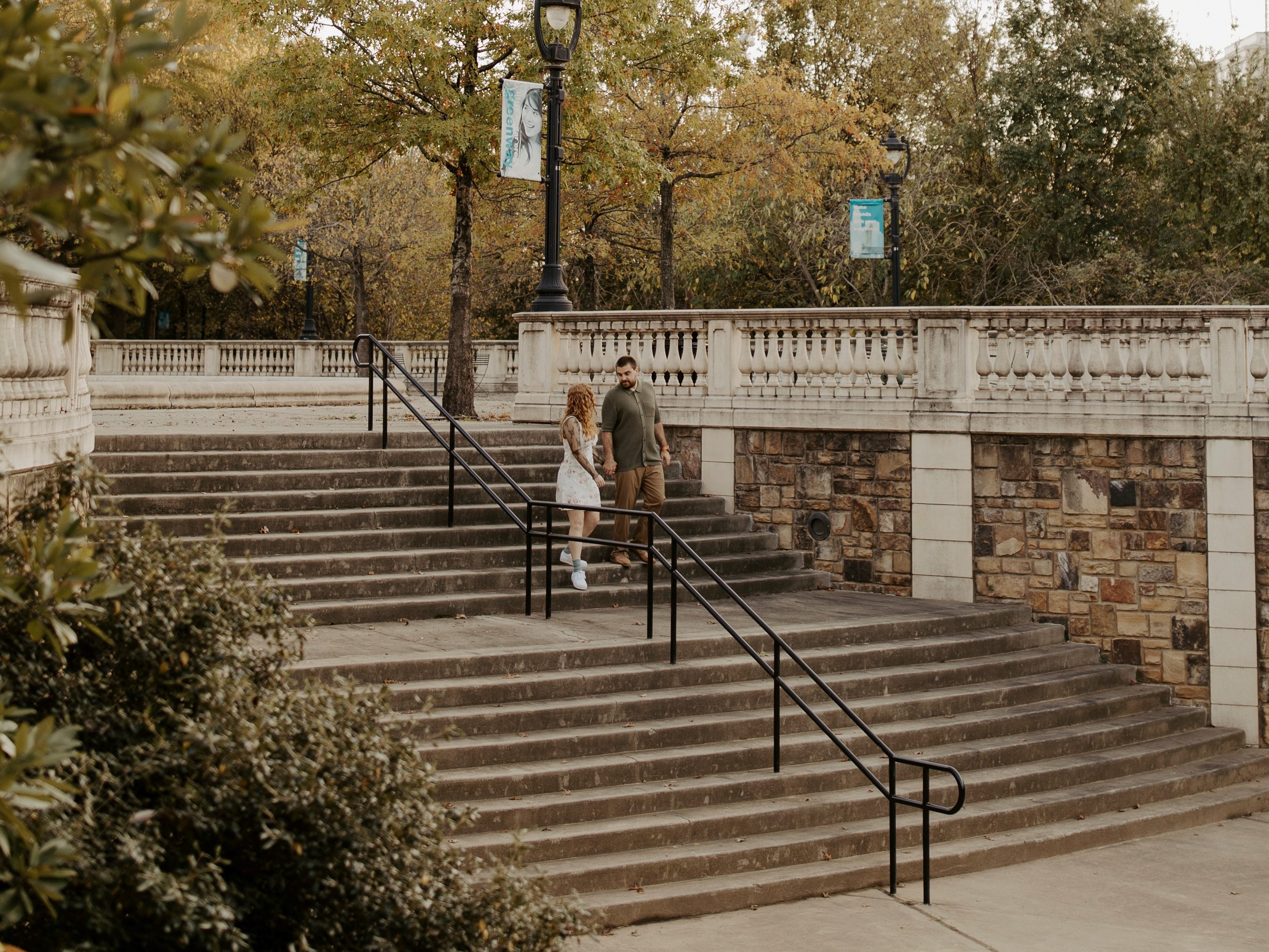
Immediately upon meeting the Little Sugar Creek Greenway, I was greeted with open arms with a festival showcasing local artists, full of kind, warm faces along the tree-lined pathway in the Kings Drive Art Walk. The greenway made me feel welcomed and excited to discover that I found my new home. A home that celebrates nature and local artists, is bustling full of neighbors, encourages physical activity, and connects me to my community, parks, and daily necessities. I fell in love with Charlotte first by spending a great deal of time on the Little Sugar Creek Greenway. I walked upon its paths to get to the farmer’s market, I biked along its lush canopy with my husband and dog, I trained for the Novant marathon along its lengthy course with critters capturing my attention on my long journey, I traveled to work, grocery stores and the clinic via its leisurely path, I bumped into familiar and new faces, I met friends for picnics via this route, and I even had my engagement photos captured on this scenic pathway that felt like the start to a new, exciting life for my husband and I. Charlotte became my home because this greenway connected me to the pulse of this city.
Gracie – The Market at 7th Street
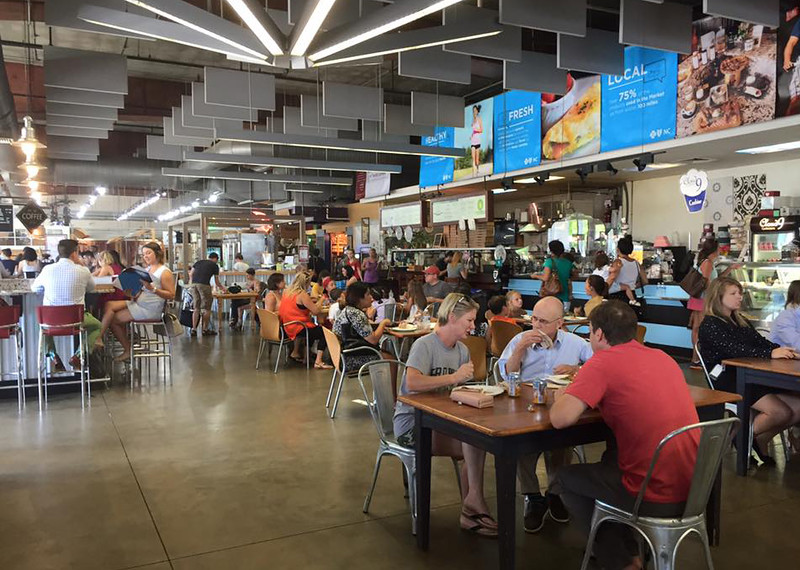
My favorite spot in Charlotte is The Market at 7th Street. It is a non-profit food hall that supports Charlotte’s small businesses. Right at 7th Street Station, I frequent it a lot, going to campus and meeting with classmates. It has multiple food vendors and retail vendors inside. One of my favorite parts of The Market at 7th Street is that it feels different each time you visit. Sometimes it’s full of professionals on their lunch breaks, students studying, or young children on a field trip visiting the city. The food is also incredible; they have a mix of amazing vendors, my personal favorite being Orrman’s Cheese Shop, which has the best grilled cheeses! The Market at 7th Street is Charlotte’s original food hall and really holds onto their spirit of inclusivity and community that makes it so special. Next time you’re on the blue line, take a stop at 7th Street Station!
Justin – Camp North End
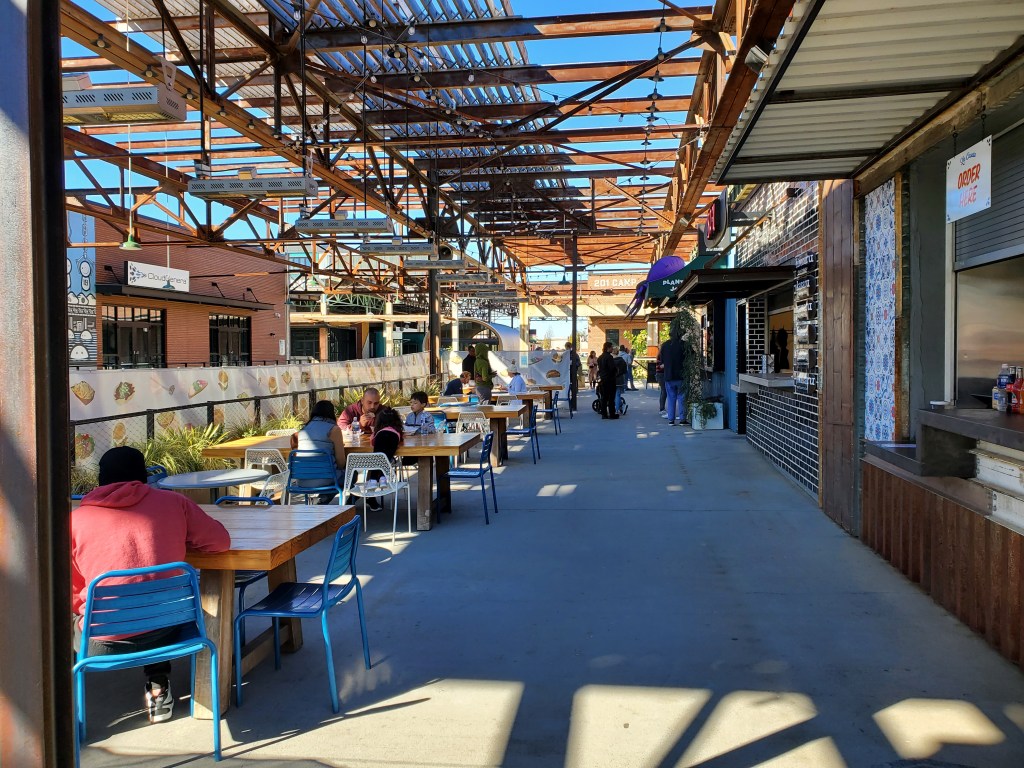
When I think of a beloved place and landmark of Charlotte, Camp North End comes to mind. Camp North End embodies Charlotte’s industrial past while showcasing 21st-century Charlotte through adaptive reuse. First built in 1924 as a Ford Model T factory and used as a missile plant during WWII, Camp North End was redeveloped into a mixed-use development project in 2017. Adapting and reusing the existing warehouse buildings, Camp North End is now home to businesses, artists, and entrepreneurs. The once-empty space is now activated by a mixture of uses, including food stalls, art galleries, breweries, and bars that all serve as gathering spaces to attract people. The site is transformed into pedestrian alleys and open spaces, providing comfortable places to sit, walk, and explore. Camp North End hosts monthly events that activate the space year-round, including farmers’ markets, movie nights, festivals, and concerts. In addition to event venues and office spaces, apartments have been built on site, allowing new residents to enjoy the amenities of a vibrant urban space. Camp North End has given an industrial warehouse new life as a vibrant urban hub for the community, where everyone can enjoy its various shops, placemaking, and events.
Charlotte – The Alley / Latta Arcade
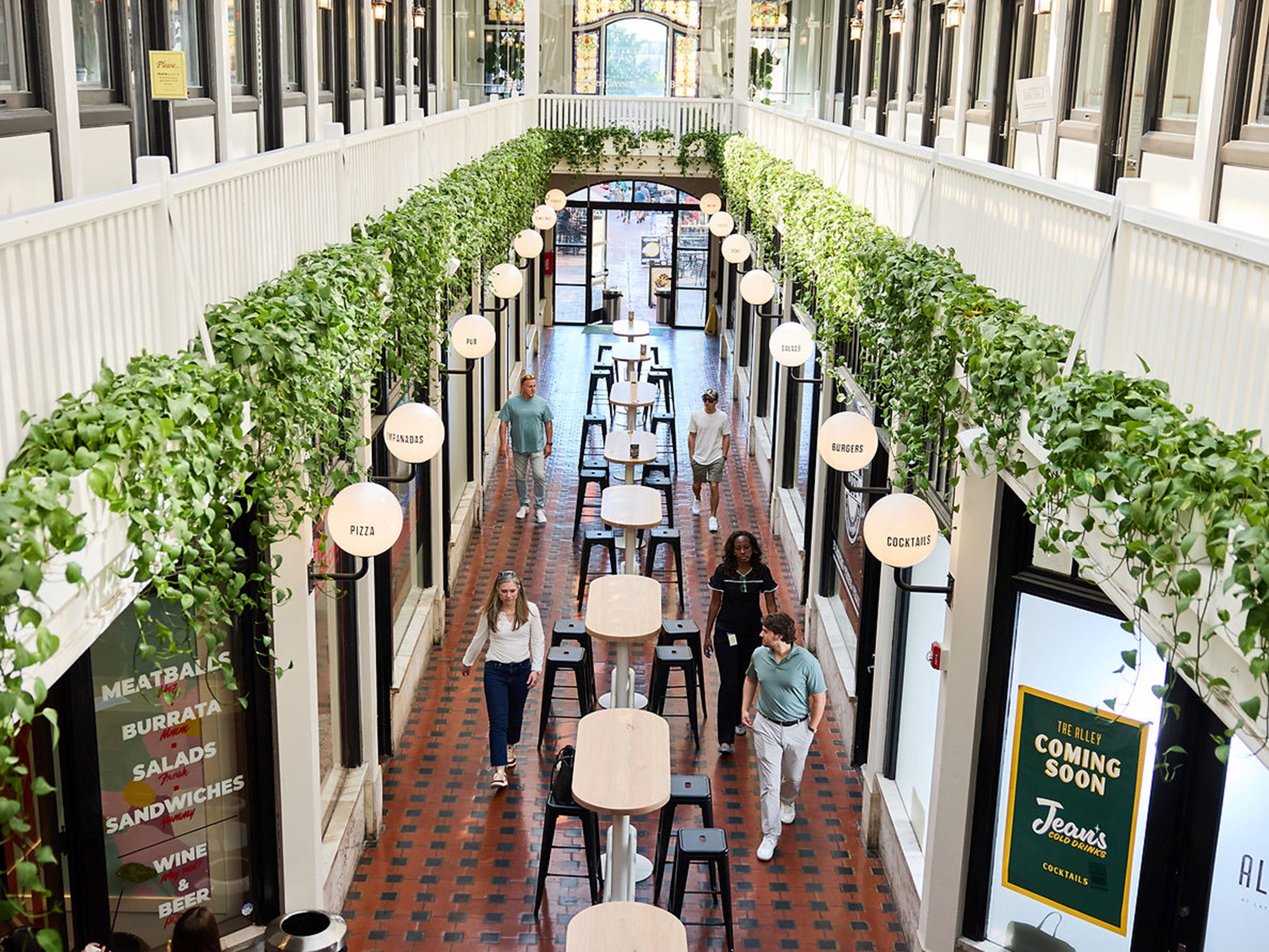
Stepping into Latta Arcade, recently renamed “The Alley”, feels like discovering Charlotte’s best-kept secret, even though it’s been hiding in plain sight since 1914. This pedestrian passageway connecting Tryon Street to Romare Bearden Park embodies what makes urban design truly inviting: human scale, visual interest, and the seamless blending of indoor and outdoor space. The narrow width creates an intimate atmosphere that slows your pace, while the skylit ceiling floods the space with natural light, making it feel both sheltered and airy. What I love most is how the small shops and cafés inside, each with their own character and charm, spill out onto the park side, giving you options for how to experience the space. You can grab coffee and linger at a table inside the climate-controlled arcade, or step outside onto the patio across from the park. This flexibility is brilliant urban design: it accommodates different moods, weather, and preferences while maintaining continuity between indoor and outdoor life. The storefronts themselves, with their large windows and welcoming entrances, create what urbanists call “transparency” and “permeability”—you’re never walking past blank walls, always past something engaging. It’s a place that demonstrates that good design isn’t about forcing people into a single experience, but rather creating a framework where they can choose their own level of engagement with the city around them.
Ria – Coffee Shops
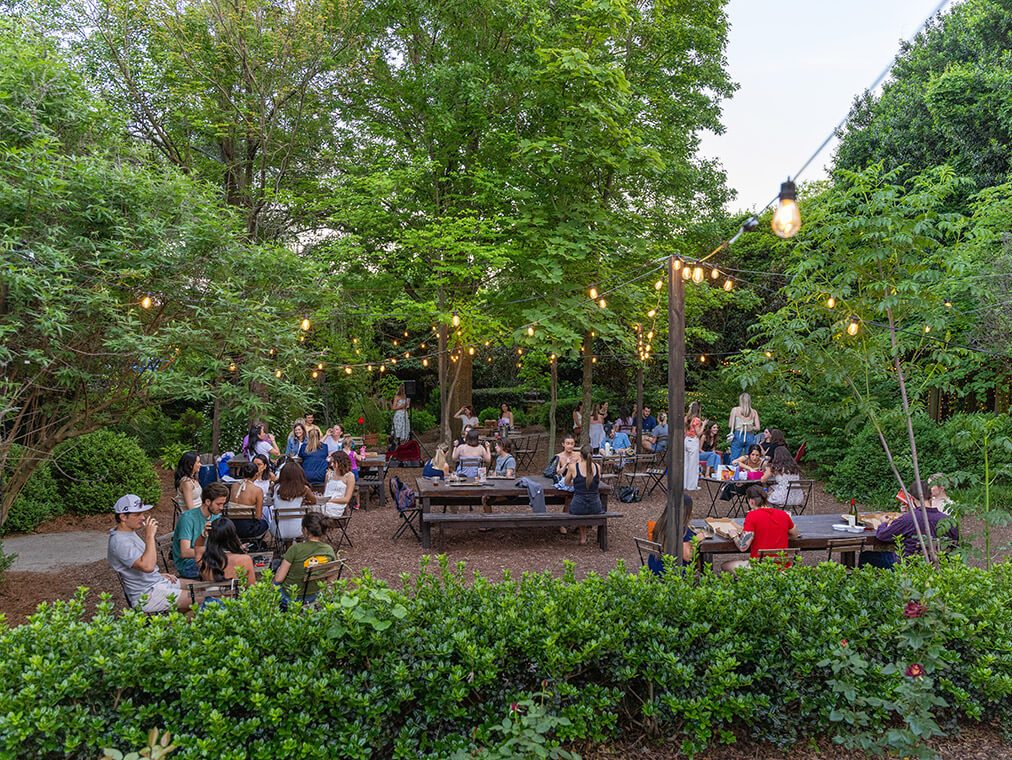
Like many Charlotte residents, I am not originally from this state. Moving here meant starting over and finding new friends and things to do. What started as visiting the nearest coffee shop for a quick caffeine boost before running after the train turned into long hours chatting with baristas and regulars every week. The greatest part about coffee shops like Provided, Hobbyist, and Rosies is that you can show up as you are that day. If you’re in the mood to chat about Lord of the Rings for three hours with strangers at the bar or just want to sit on a comfy couch and quietly crochet, there is space for you and a barista who knows your name and order. In urban design, spaces like coffee shops are referred to as “third places” and are essential to city life. They are the spaces between work/school and home where you can leave the stress of tasks and find community. If you frequent somewhere habitually, you’ll find strange faces become familiar, and eavesdropping becomes shared conversations and interests. I now have a strong network of friends who meet outside of the coffee shops for game nights, birthday parties, and outdoor adventures, all thanks to these neighborhood spots that welcomed me with love and lattes.
JT – The South Blvd Food Scene
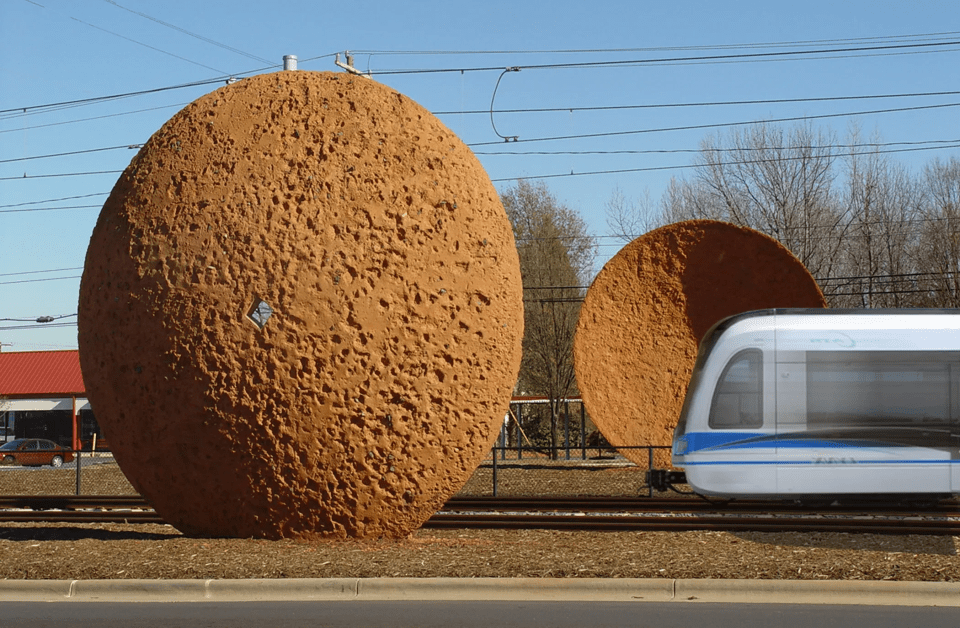
As Charlotte strives to provide spaces for its rapidly growing population to live and congregate, Southend has stood out as a triumph of urban design in an otherwise sprawling city. However, further down South Boulevard, between Woodlawn and Pineville, the development has slowed, and the area is still dominated by strip malls and auto shops. It’s here that I find the places in Charlotte that mean the most to me. Tucked away between the car dealerships, people have taken the risk to share their culture and cuisine with their neighbors. From Polish grocery stores and Japanese bodegas to Ecuadorian bakeries and Salvadorian pupuserias, this collection of hole-in-the-wall spots serving up authentic flavors from other countries turns this stretch into a culinary scavenger hunt. Places like these foster connection and understanding at a human level that is so easily lost in a growing metropolis. It’s this experience of exploring, learning, and sharing that makes this area of Charlotte such a special place for me.
Dhanya – NoDa
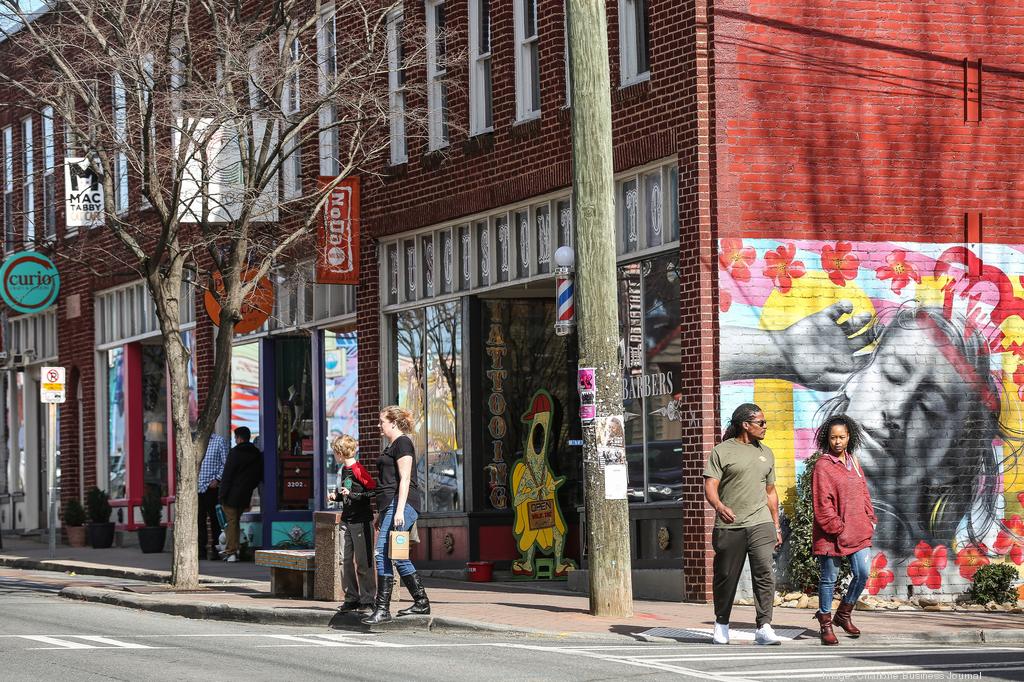
A few months into living in Charlotte, as I’m still orienting myself, I find the first month I got to spend in NoDa (a portmanteau of “North Davidson arts”) still standing as a favorite experience. The neighborhood’s transformation from a mill village to an arts community reveals itself in every corner: shops and restaurants spilling onto sidewalks, music drifting from venues, street vendors hawking vintage finds and handmade goods. Here, walking becomes discovery; the narrow streets slow me down, and murals demand attention. You won’t be able to drive through NoDa; you’ll feel the need to wander it.
The light rail’s 36th Street station drops one into walkable blocks. It sets the rhythm for exploration. For me, it’s usually having coffee at Smelly Cat before browsing Found’s curated racks or meandering past sidewalk vendors and murals. Sometimes it’s grabbing a slice of pizza at Zambies and people-watching by the window. Late evenings catching a film at The Independent Picture House is an absolute favorite activity as it’s a great anchor for the community, screening diverse, foreign, arthouse movies. On the whole, NoDa’s urban fabric invites lingering, and with the light rail getting me there from uptown or South End in minutes, I find myself wandering North Davidson Street often.
Will – Optimist Hall
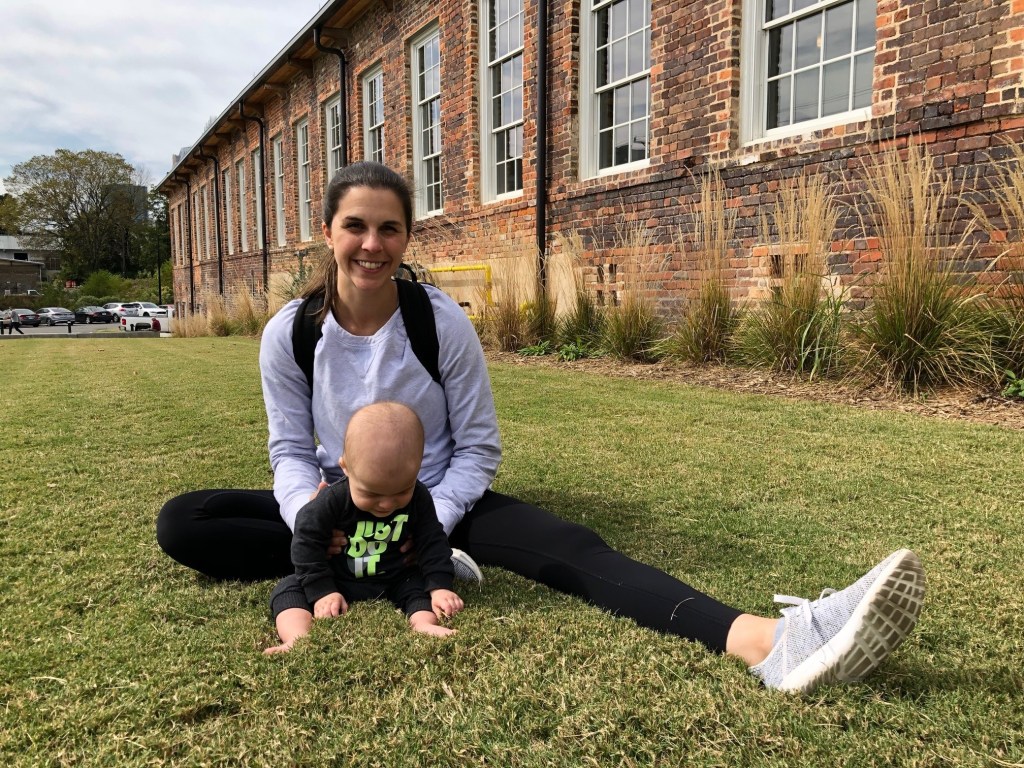
I love Optimist Hall because I feel it captures the essence of successful urban design in Charlotte. By repurposing a landmark industrial space, the project honors the city’s history while fostering a vibrant and modern third place.
I believe the hall succeeded by prioritizing a curated vendor list before residential growth surrounded it. People traveled there for the experience it provided, and that alone. That momentum is helping transform that entire enclave of the Optimist Park Neighborhood into a walkable neighborhood center. People also tend to gravitate towards adaptive reuse projects – modern takes on historic structures that feel 100% authentic to the neighborhood.
The approach to the hall is a highlight of my trips there. I love riding the Blue Line and spotting the historic smokestack as the train crests over the freight rail tracks as you move toward Parkwood Station. This visual landmark grounds the site in its industrial past and serves as an “Imageable Element” – a term coined by famed urban designer Kevin Lynch that refers to a physical object that helps people create mental maps of their surroundings.
Lastly, as a parent of two young boys, I value the atmosphere so much. It is a rare space that balances adult social life with a family-friendly environment. Even with vendors selling adult beverages, I feel that my kids are welcome to be kids – providing that well-designed urban spaces can truly serve everyone!
P.S. Don’t forget to sign up for our Connections Newsletter to stay up to date with UDC projects around the city!
 People make Cities